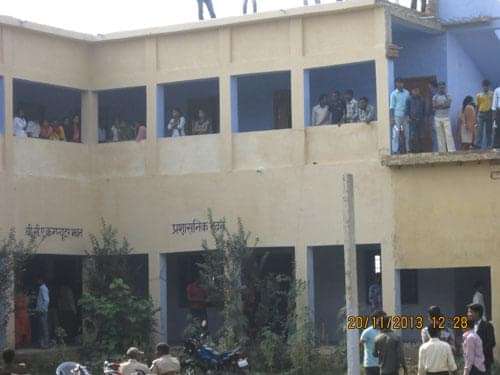
R.P.S College
About
OfficialR.P.S College is a other institution in Nalanda, established in 1979. R.P.S College, established in 1974 in Nalanda, Bihar, is a government-affiliated institution with a 50-year legacy of providing accessible higher education in one of India's most historically significant regions. Located in the ancient Nalanda district—home to the legendary Nalanda University that thrived for over 800 years—the college carries the responsibility of maintaining educational excellence in an area rich in scholarly tradition. The institution offers undergraduate and postgraduate programs across Sciences, Arts, and Commerce disciplines, with a growing emphasis on skill development and employability. The college serves primarily first-generation learners and students from economically weaker sections, making it a crucial ladder for social mobility in Bihar. R.P.S College operates under the affiliation of Magadh University and maintains NAAC accreditation status. The institution has gradually expanded its infrastructure over the decades, though it faces the typical constraints of tier-3 city colleges in terms of cutting-edge research facilities and industry partnerships. The college's strength lies in its experienced faculty, affordable fees, and commitment to comprehensive education. However, students should be aware that this is not a heavily resourced institution like central universities—the experience here is about foundational learning, personal discipline, and leveraging limited resources effectively. The campus is characterized by a quiet, studious environment with minimal distractions, which suits serious students but may feel isolating for those seeking vibrant metropolitan campus life. Nalanda's historical significance and religious tourism attract visitors, but the city itself is a small town with limited entertainment and commercial infrastructure. The college primarily recruits students from Bihar, Jharkhand, and parts of Uttar Pradesh, creating a relatively homogeneous student body with shared linguistic and cultural backgrounds. Placement outcomes have improved significantly over the past five years due to structured placement cells and industry tie-ups, though major technology and consulting firms rarely visit campus—most placements are in teaching, banking (clerical/PO), and small-medium enterprises. Research output is modest but growing; faculty members publish primarily in regional journals and participate in state-level academic conferences. The institution is best suited for: (1) First-generation learners seeking affordable, quality education; (2) Students from nearby districts unable to relocate to metros; (3) Candidates aiming for civil service examinations (the Arts stream particularly supports this); (4) Teachers and educators-in-training; (5) Students seeking a discipline-focused, distraction-free learning environment. The college is NOT recommended for: (1) Students seeking elite placement outcomes at IIT/IIM level; (2) Those requiring cutting-edge laboratory facilities; (3) Candidates needing a cosmopolitan, highly social campus environment; (4) International students expecting modern amenities. Notable alumni have pursued careers in education, administration, social work, and civil services rather than corporate sectors. The college's primary value proposition is affordability, accessibility, and a focused academic environment for students who will invest in self-study and external learning resources.