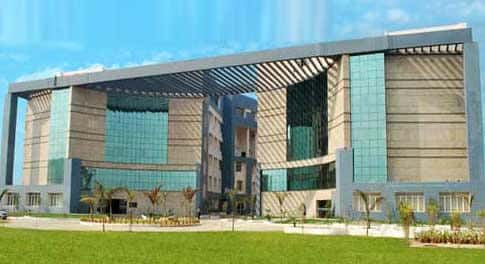
Royal School of Business
About
OfficialRoyal School of Business is a other institution in Guwahati, established in 2011. Royal School of Business (RSB), established in 2009, is one of Assam's pioneering private business education institutions. Located in the suburban Mirza area of Guwahati, approximately 15 km from the city center, RSB was founded with the vision of providing quality management education rooted in Indian values while maintaining global standards. The institution emerged during a period when Assam lacked dedicated, purpose-built business schools, filling a critical gap in the region's higher education landscape. The school operates under the aegis of a private educational trust and is recognized by the All India Council for Technical Education (AICTE) and the University Grants Commission (UGC). It is affiliated with Banaras Hindu University (BHU) for its academic programs, which provides institutional credibility and access to a network of universities across India. Academic Programs: RSB primarily focuses on management education through its flagship 2-year Full-Time MBA program offered across multiple specializations including Finance, Marketing, Human Resource Management, Operations Management, and Information Technology Management. The institution also offers a Post-Graduate Diploma in Business Management (1-year) for working professionals and diploma holders seeking management education. Recently, RSB has introduced executive education programs and short-term certification courses in emerging areas like digital marketing, supply chain management, and entrepreneurship. The MBA curriculum is structured around a blend of theoretical foundations and practical application. Students engage in live projects with local and national organizations, case study discussions, industry visits, and internship programs. The first semester emphasizes core management concepts—financial management, organizational behavior, strategic management, marketing management, and business analytics. The second semester allows specialization, with electives enabling deep dives into chosen domains. Internship placements typically occur between the third and fourth semesters, usually 8-10 weeks in duration. Research and Academic Strengths: While RSB is not a heavy research-focused institution like the IIMs, it has developed respectable strengths in applied management research. Faculty members have published in peer-reviewed journals, and the institution encourages field-based research projects. Key research areas include small and medium enterprise (SME) development, rural entrepreneurship, sustainable business practices, and technology adoption in Northeast India businesses. The institution has partnered with organizations like NASSCOM, CII, and FICCI for research initiatives and industry engagement. Campus Infrastructure: The campus is spread across 8.5 acres in a semi-developed area. The main academic building houses classrooms equipped with projectors and audio-visual systems, though WiFi connectivity varies in some older sections. The library holds approximately 12,000 volumes and provides access to digital databases including Harvard Business Review, JSTOR, and ProQuest. A computer lab with 40+ systems supports analytics training and coursework. The auditorium accommodates 300+ attendees and hosts seminars, guest lectures, and cultural events. Student facilities include a cafeteria, sports court for badminton and basketball, and a modest gymnasium. Placement Record: RSB has maintained a respectable placement record over the years. For the 2023-24 batch (approximately 180 students), the placement percentage hovered around 88-92%, which is reasonable for a regional business school but below the standards of premier IIMs. Average salary packages range from 8-12 LPA, with highest packages reaching 18-22 LPA in specialized roles. However, it's important to note that salary distributions are skewed—top 10-15% of students secure premium packages, while the bulk cluster around 8-10 LPA. Placement sectors include IT/ITES companies, financial services, FMCG, e-commerce, and consulting firms. Major recruiters include TCS, Infosys, Capgemini, Amazon, Flipkart, ICICI Bank, HDFC Bank, Deloitte, and regional enterprises. Campus Life and Student Experience: With approximately 850 students on campus, the community is intimate and collaborative. The student-to-faculty ratio is approximately 13:1, enabling closer interaction. Students report that the faculty, while dedicated, have varying levels of industry experience—some are accomplished professionals, while others are academicians with limited corporate exposure. The institution encourages participation in various clubs: Management Club, Entrepreneurship Cell, Finance Club, Marketing Club, IT Club, and cultural groups. Annual events include the business fest "Synergize," cultural fest "Spectrum," and sports day "Athletica." Hostel facilities are available for out-of-state students, though capacity is limited (approximately 120 seats). On-campus housing is relatively affordable at 8,000-12,000 INR per month including mess. However, many students opt for private PG accommodations in nearby areas like Panbazar or Guwahati city, which range from 6,000-15,000 INR depending on location and amenities. The mess food is generally decent, though complaints about monotony and variation are common. Internet connectivity is a mixed experience—adequate in the academic block but inconsistent in hostels. Challenges and Honest Assessment: Several factors prospective students should consider: First, the location in suburban Mirza is somewhat isolated from the main commercial and social hub of Guwahati city. This necessitates reliance on autos or personal transport for leisure activities, which can be inconvenient and costly. Second, while the faculty is competent, the institution lacks some of the industry-connected professors found at premier business schools, potentially limiting exposure to cutting-edge management practices. Third, the alumni network is still developing and concentrated primarily in the Northeast and some metros, limiting placement opportunities in other regions. Fourth, the campus infrastructure, while adequate, shows signs of wear and lacks some amenities (modern seminar halls, dedicated research centers) that would enhance the learning experience. Fifth, for students aspiring for roles in top-tier consulting firms or investment banking, RSB's brand recognition outside Assam is limited. Why Students Choose RSB: The institution appeals to candidates seeking quality management education in the Northeast without the premium fees and fiercely competitive entrance of IIMs. For Assamese students and those willing to stay in the region, RSB offers reasonable career progression and stronger local networking. The relatively smaller batch size fosters closer faculty-student relationships and mentoring opportunities. Working professionals appreciate the diploma program's flexibility. Students interested in entrepreneurship and SME development find the institution's focus on practical, ground-level business understanding relevant. Who Should Apply: RSB is best suited for candidates seeking a balanced management education experience in a developing business school with reasonable fees (approximately 13-16 LPA for 2-year MBA). Ideal applicants are those comfortable with a suburban campus setting, interested in careers in the Northeast or pan-India organizations, and seeking mentoring and collaborative learning. The institution is particularly attractive for candidates from Assam and neighboring states who wish to study close to home. Those aspiring exclusively for top consulting firms, elite corporate strategy roles, or international placements should consider whether RSB's current brand positioning aligns with their career goals—while possible, such placements are less common compared to tier-1 business schools. Conclusion: Royal School of Business represents the emerging tier-2 business school landscape in India. It offers legitimate, quality management education at accessible price points with a commitment to developing responsible business leaders. However, students must enter with realistic expectations about placement outcomes, campus infrastructure, and geographic positioning. The institution's strength lies in its community-oriented approach, practical curriculum, and growing regional influence rather than in brand prestige or extensive global networks.