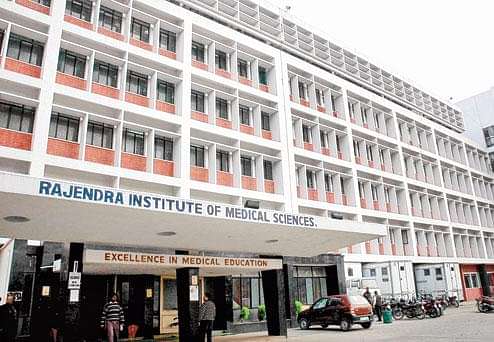
Rajendra Institute of Medical Sciences
About
OfficialRajendra Institute of Medical Sciences is a other institution in Ranchi, established in 1960. Rajendra Institute of Medical Sciences (RIMS), Ranchi, established in 1972, is one of Jharkhand's premier medical education and healthcare institutions. Located in the Bariatu area of Ranchi, approximately 12 km from the city center, RIMS serves as both an academic hub and a 750-bed tertiary care teaching hospital. The institute was founded to address the acute shortage of qualified medical professionals in eastern India and has evolved into a comprehensive medical sciences university offering undergraduate, postgraduate, and doctoral programs across medicine, dentistry, nursing, and allied health sciences. RIMS holds significant historical importance as the first medical college established in Jharkhand after independence. The campus sprawls across 45 acres with a blend of colonial and modern architecture, featuring well-maintained academic buildings, separate clinical departments, and state-of-the-art teaching hospital facilities that serve as the primary clinical training ground. RIMS operates under the Rajendra University of Health Sciences, Ranchi, which is the statutory body regulating medical education in Jharkhand. The institute is recognized by the Medical Council of India (now National Medical Commission) and maintains NAAC accreditation at Grade 'A' level, reflecting consistent quality standards in teaching, research, and clinical practice. The academic structure comprises multiple departments across preclinical, paraclinical, and clinical disciplines including anatomy, physiology, biochemistry, pathology, pharmacology, microbiology, forensic medicine, medicine, surgery, pediatrics, obstetrics and gynecology, and various super-specialty departments. RIMS has developed a reputation for rigorous clinical training, with students gaining hands-on experience in one of the busiest government teaching hospitals in eastern India, handling diverse patient demographics and complex medical cases. The hospital attracts patients from across Jharkhand, Bihar, and adjacent states, providing students with extensive exposure to various disease patterns and clinical presentations. The institute emphasizes evidence-based medicine and has been gradually strengthening its research infrastructure, with dedicated research laboratories and faculty mentorship programs encouraging scholarly work. RIMS faculty includes professors with national and international research publications, and several departments have contributed significantly to medical knowledge in tropical medicine, public health, and infectious diseases prevalent in eastern India. However, research output remains modest compared to premier All India Institutes of Medical Sciences (AIIMS) and other national medical colleges, though this is improving. The undergraduate medical program (MBBS) is highly competitive, with admissions through NEET, attracting students from across India. Postgraduate medical education is conducted through competitive entrance examinations, offering MD and MS degrees in multiple specialties. The institute also runs nursing programs (BSc Nursing, MSc Nursing, and PhD Nursing) and allied health sciences programs including radiography, medical laboratory technology, and physiotherapy. Campus infrastructure has undergone significant modernization in recent years with improved library facilities, digital learning platforms, and upgraded teaching hospital departments. The library houses an extensive collection of medical texts and journals with online access to major medical databases. Internet connectivity across campus has been strengthened, though bandwidth during peak hours can experience congestion. The hostel accommodation facilities are gender-segregated and reasonably maintained, though space constraints mean not all students are accommodated on campus, particularly in senior years. Ranchi, as a Tier-2 city, offers a relatively calm environment conducive to focused studies, yet with sufficient amenities for student recreation and entertainment. The city's pleasant climate for much of the year, with moderate summer temperatures and cool winters, adds to the appeal. The placement and career prospects for RIMS graduates are strong, particularly for postgraduate doctors who establish independent practices or join government health services. While MBBS graduates don't follow a traditional corporate placement model (being regulated by medical education norms), many pursue higher studies, government medical services, or establish private practices. The institute has produced numerous distinguished medical professionals now serving in leadership positions in government health departments, teaching institutions, and medical practice across India and abroad. Alumni networks of RIMS are active, particularly in Jharkhand and neighboring states, facilitating mentorship and professional opportunities for current students. The institute faces several challenges including constraints in maintaining world-class research facilities on government budget allocations, limited infrastructure for some newer specialties, and competition from private medical colleges in the region. Additionally, Ranchi's position outside major metropolitan centers means fewer multinational pharmaceutical and healthcare companies conduct campus recruitment, limiting certain career pathways for graduates. However, RIMS remains the primary institution for quality medical education in Jharkhand and continues to attract motivated students committed to medical practice and service. RIMS is ideal for students seeking rigorous medical education in an academic setting with emphasis on clinical training and patient care. It suits students who prefer government institutional environments, seek affordable medical education, and are interested in serving in eastern and central India's healthcare landscape. Students should be prepared for intensive academic schedules, demanding clinical rotations, and a campus culture that prioritizes professional development and medical ethics. The institute's location in Ranchi provides a good balance between focused academic environment and reasonable access to city amenities.