Rajiv Gandhi Vocational Education & Training College
About
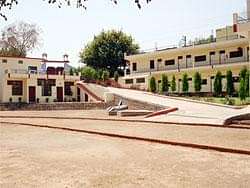
OfficialRajiv Gandhi Vocational Education & Training College is a other institution in Gwalior, established in 2001. Rajiv Gandhi Vocational Education & Training College (RGVET), established in 1995, is a premier government vocational institution in Gwalior, Madhya Pradesh, operating under the state's Department of Vocational Education & Training. The college was created as part of India's post-secondary skill development initiative, focusing on bridging the gap between academic education and industry-ready workforce preparation. Named after former Prime Minister Rajiv Gandhi, the institution has consistently served the central Indian region by producing skilled technicians, trade workers, and mid-level professionals across diverse sectors. RGVET Gwalior operates as a multi-disciplinary vocational hub offering Diploma and Certificate programs across engineering trades, hospitality, healthcare, information technology, and construction sectors. The college's primary mission is to provide affordable, quality vocational education to students from economically diverse backgrounds, with a particular focus on rural and semi-urban students who might not have access to traditional engineering colleges. With an annual intake of approximately 2,400 students across all programs, the institution maintains moderate class sizes averaging 40-50 students per batch, allowing for practical, hands-on training that characterizes vocational education. The campus spans 8.5 acres in Lashkar, a suburban area of Gwalior, providing adequate space for workshop facilities, laboratory infrastructure, and recreational amenities while remaining well-connected to the city center. RGVET's academic programs are structured primarily as 3-year diploma courses following the MSBTE (Maharashtra State Board of Technical Education) and DGET (Directorate General of Employment & Training) curriculum frameworks, though the college also offers 2-year certificate programs and some integrated vocational-cum-general education pathways. The institution maintains strategic alignment with industry requirements through regular curriculum updates driven by feedback from employers, industry associations, and alumni working across manufacturing, IT services, healthcare, and hospitality sectors. The college emphasizes practical skill development through extensive workshop training, internships, and project-based learning rather than theoretical examination-focused pedagogy. Faculty comprises approximately 145 teaching staff members, of whom roughly 35% hold relevant industry certifications (ICDL, Microsoft, Adobe, or sector-specific qualifications) alongside academic qualifications. The college has established industry partnerships with companies like Hero MotoCorp, Bosch, NIIT, and various hospitality chains, enabling curriculum co-development, guest lectures, and direct recruitment programs. Research and innovation activities are modest compared to universities but include focused initiatives in renewable energy applications, agricultural mechanization, and digital skill development relevant to the Gwalior-Indore industrial corridor. The placement ecosystem at RGVET is well-developed, with approximately 75-80% of graduates securing employment or further education within 6 months of graduation. Median starting salaries for diploma graduates range from ₹180,000 to ₹280,000 annually depending on specialization, with engineering trades commanding premium salaries compared to other sectors. Top recruiting organizations include multinational automotive suppliers, IT services firms offering entry-level technical roles, hospitality management companies, and government organizations hiring for specialized trade positions. The college maintains a dedicated placement cell with staff dedicated to employer engagement, resume coaching, and interview preparation. Notable alumni include individuals who have established successful independent businesses in manufacturing, hospitality, and IT services sectors, though the institution has not produced globally recognized figures given its vocational positioning. Campus life at RGVET reflects a working-class, skill-focused culture with strong emphasis on practical competency over theoretical excellence. The college operates substantial hostel facilities accommodating approximately 35% of the student body, primarily serving students from distant districts and economically disadvantaged backgrounds. Hostel life is spartan but well-managed, with common facilities including shared study areas, basic recreational spaces, and disciplined routines emphasizing time management and self-reliance. The institution hosts regular technical fests, workshop demonstrations, and skill showcases that celebrate student achievements in trades and applied technologies. Student clubs are primarily skill-focused rather than interest-based, with active forums around renewable energy, robotics applications, and hospitality service excellence. Sports facilities are functional but limited, with emphasis on individual skill development and health rather than competitive varsity sports. Safety records are strong, with the college maintaining strict discipline codes and dedicated security arrangements. The institution is particularly suitable for students seeking affordable, practical skill-based education; those from economically constrained backgrounds requiring government-subsidized quality training; students targeting early employment rather than further higher education; those interested in specialized trades like electrical, mechanical, plumbing, hospitality, and information technology; and individuals prioritizing hands-on learning over theoretical academics. RGVET is less suitable for students seeking advanced research opportunities, aspiring toward postgraduate studies in traditional universities, or those requiring extensive extracurricular and social development programs. The college's unique value proposition lies in its affordability (annual fees often below ₹30,000 for diploma programs), direct employment pathways, practical relevance, and genuine focus on skill development for India's semi-skilled workforce needs. The institution serves a vital role in India's vocational education ecosystem by providing accessible, quality training that enables social mobility for students who might otherwise lack formal technical qualifications, making it an excellent choice for pragmatic students prioritizing employment outcomes and practical competency over academic prestige.