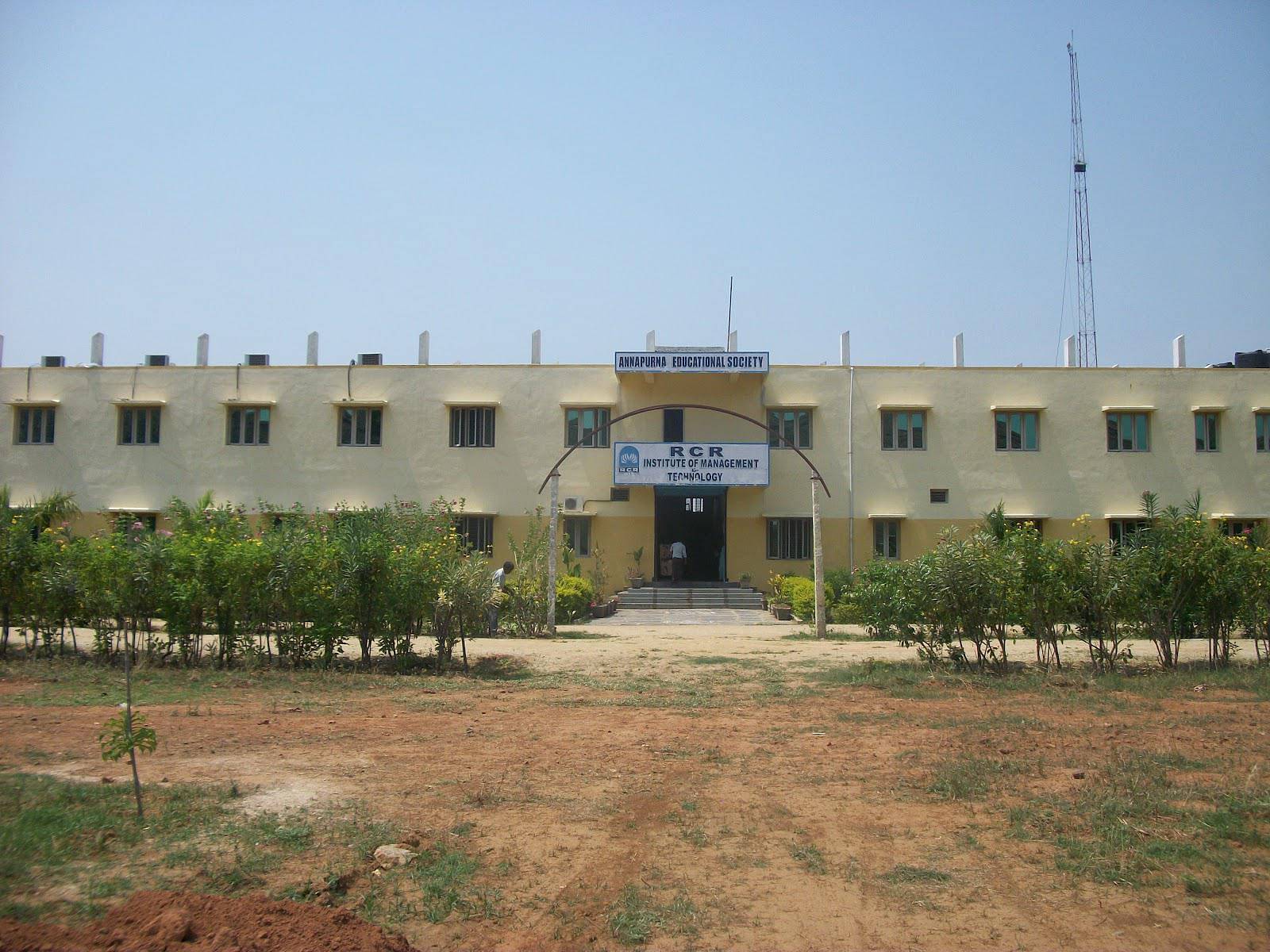
RCR Institute Of Management & Technology
About
OfficialRCR Institute Of Management & Technology is a other institution in Tirupati, established in 2008. RCR Institute of Management & Technology is a private engineering and management institution established in 2005 in Tirupati, Andhra Pradesh. Located in the temple city of Tirupati, the institute has grown to become a mid-tier engineering college offering undergraduate and postgraduate programs across engineering disciplines and management. The institute was founded with the vision of providing quality technical education accessible to middle and upper-middle-class families in South India, particularly catering to students seeking alternatives to oversubscribed government institutions while avoiding the premium fees of top-tier private universities. The campus is situated approximately 15km from central Tirupati, in a suburban setting with modern facilities built on 25 acres of land. RCR offers UG programs in Civil, Mechanical, Electrical, Electronics & Communication, and Computer Science Engineering, along with MBA and specialized diplomas. The institute has evolved from its early years of struggling with accreditations and faculty quality to achieving NAAC C+ rating (2020) and gradually improving placement outcomes. The academic environment is moderate-intensity, with a focus on industry-aligned curriculum rather than research excellence. Faculty members are primarily Master's degree holders with limited PhD representation (approximately 15-20%), which is below industry standards. The institute has partnerships with companies like TCS, Infosys, Cognizant, and regional manufacturers, though these relationships are primarily recruitment-focused rather than collaborative research or internship programs. Student-to-faculty ratio stands at approximately 13:1, which is reasonable for a tier-2 institution. The campus infrastructure includes separate hostels for men and women, a central library with moderate collection, computer labs with decent equipment, and sports facilities. However, infrastructure maintenance remains inconsistent—hostel facilities are basic, internet connectivity is patchy in some areas, and the library collection is limited compared to IITs or top NITs. Campus life is relatively subdued compared to larger metropolitan colleges, with limited cultural events and sports activities. The institute hosts an annual technical fest called 'Techzest' and cultural fest 'Ravenna', but these are modest in scale. Placement outcomes have improved from 65% (2018-19) to approximately 82-85% (2023-24), though this includes roles with lower salaries. Average salary has grown from ₹3.2L (2019-20) to approximately ₹4.8L (2023-24), with median salary around ₹4.2L. The highest salary offered hovers around ₹12-14L in competitive programming and analytics roles. Core engineering placements (civil, mechanical) remain weak with placements in 50-60% range and lower salary packages (₹2.5-3.5L). IT and CSE placements are stronger at 90%+ with better salary bands. The institution is best suited for students from Andhra Pradesh, Telangana, and neighboring states seeking affordable engineering education with moderate placement prospects. It's NOT recommended for students with clear research aspirations, those seeking world-class infrastructure, or students willing to wait for better college options through counseling. The college works well for pragmatic middle-class students who prioritize a degree at reasonable cost over brand value, students interested in IT roles willing to self-prepare through GATE/CAT, and those with geographical preference for South India. The campus culture emphasizes discipline and academics over innovation—ragging is reportedly rare with strong enforcement, and the institution maintains strict attendance policies. Safety for women is reported as good with dedicated wardens and security, though off-campus areas near Tirupati have average safety ratings. The student base is primarily from Andhra Pradesh (60%), Telangana (20%), and other southern states, creating a regional college environment rather than pan-India exposure. Alumni network is still developing with limited reach in major metros—most graduates settle in Bangalore, Hyderabad, and Chennai IT sectors. Notable career trajectories include software engineers at major tech companies, some banking sector placements, and limited entrepreneurship. The institution has faced challenges including low research output, brain drain of better faculty to higher-tier colleges, and competition from newer private engineering colleges. However, recent years have seen marginal improvements in infrastructure and consistent placement growth, making it a viable safety option in the tier-2 category for engineering aspirants.