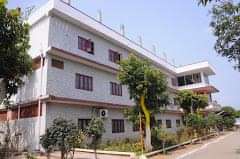
Ratnam Institute of Pharmacy
About
OfficialRatnam Institute of Pharmacy is a other institution in Nellore, established in 2007. Ratnam Institute of Pharmacy (RIP) was established in 2008 with the vision of creating quality pharmaceutical professionals equipped to meet global standards. Located on the outskirts of Nellore, Andhra Pradesh, on the highway connecting Nellore to Tirupati, the institution sits on a sprawling 22.5-acre suburban campus that provides a balanced blend of academics and practical learning. The institute is approved by the All India Council for Technical Education (AICTE) and the Pharmacy Council of India (PCI), making its qualifications recognized nationally and internationally. The college offers comprehensive pharmaceutical education across multiple levels—UG (B.Pharm), integrated PG (M.Pharm), and doctoral programs (Ph.D.). The B.Pharm program admits approximately 120 students annually through the Andhra Pradesh EAMCET examination, while M.Pharm programs (Pharmaceutics, Pharmacology, Pharmaceutical Analysis, and Pharmaceutical Chemistry) each take 20-25 students. The academic curriculum balances theoretical rigor with extensive practical training in modern laboratories equipped with chromatography systems, dissolution testing equipment, and advanced analytical instruments. Students gain hands-on experience through mandatory six-month internships at pharmaceutical manufacturing units and hospital pharmacy departments. Research at RIP has increasingly focused on phytopharmaceutical development, drug formulation optimization, and natural product chemistry. The institute maintains research partnerships with major pharmaceutical companies including Dr. Reddy's Laboratories, Aurobindo Pharma, and Mylan Pharmaceuticals. Faculty members have published 200+ research papers in peer-reviewed journals, and the institute has filed 15 patent applications related to novel drug delivery systems and herbal formulations. The college operates a dedicated research center for pharmaceutical innovation and a bioanalytical research laboratory. Placement outcomes have steadily improved over the past five years. In 2023-24, 84% of B.Pharm graduates secured employment within six months of graduation, with median salaries ranging from 3.2-3.8 LPA for freshers. Top recruiters include multinational pharmaceutical companies (Cipla, Abbott, GSK), contract research organizations (Covance, Charles River), and hospital pharmacy chains (Apollo, Continental). Several graduates work in regulatory affairs and quality assurance roles at international pharmaceutical companies. M.Pharm placements show higher salary packages (5.2-7.5 LPA), with many graduates pursuing management roles in pharmaceutical marketing and product management. Campus infrastructure reflects steady improvements. The library holds 12,000+ books with access to e-journals through IEEE and Taylor & Francis partnerships. Wi-Fi covers 95% of the campus with average speeds of 10-15 Mbps. Laboratory facilities were significantly upgraded in 2022 with new HPLC systems, UV-Vis spectrophotometers, and microbiology incubators. However, some older buildings on campus show signs of wear, and internet connectivity in certain hostel blocks remains inconsistent during peak hours. The cafeteria serves both vegetarian and non-vegetarian meals, though students frequently report monotony in the menu and occasional concerns about food quality consistency. Student life includes 18 active clubs covering technical (Pharma Analysis Club, Drug Discovery Club), cultural (Hindi Samiti, Dance Club), and sports domains. Annual events include Pharmacy Day celebrations, inter-class quiz competitions, and participation in state-level pharmacy conferences. Sports facilities include a basketball court, badminton court, and cricket field, though cricket ground maintenance has been inconsistent. The college organizes industrial visits to pharmaceutical manufacturing plants and hospital pharmacies 4-6 times per academic year, providing valuable industry exposure. Hostel facilities exist for 600 students across four blocks (East, West, South, and North). Hostel rooms are primarily double-occupancy with basic furnishing, and monthly charges average 4,500-5,800 INR. Mess charges are 1,800-2,200 INR per month. Separate hostel wings for women students maintain stricter curfew policies (10 PM weekdays, 12 AM weekends). On-campus accommodation quality varies—newer blocks (constructed 2019-2021) are reasonably comfortable with modern sanitation, while older blocks suffer from water scarcity during summer months (March-May). A significant portion of students prefer private PGs and shared apartments in Nellore town, where rents range from 3,000-6,500 INR. Nellore city, a tier-3 city in southern Andhra Pradesh, offers a quieter, cost-effective living environment compared to metros. The institution's suburban location (8-10 km from city center) provides relative calm for studies but requires transportation for city-based amenities. Auto-rickshaws are readily available; the average cost is 30-50 INR for a city commute. Regular bus services connect the college to Nellore and nearby Tirupati. The nearest railway station (Nellore Junction) is 12 km away, facilitating travel to Chennai (120 km, 2.5 hours by train) and Tirupati (70 km, 1.5 hours). Nellore Airport is 25 km away with limited commercial flights. Safety and discipline are generally well-maintained. No major ragging incidents have been reported in the past three years, though rare isolated cases of ragging have surfaced in hostel contexts. Women students report feeling safe on campus and in hostel facilities, with regular safety audits and closed-circuit camera coverage. The college prohibits alcohol and smoking within campus boundaries, rules broadly respected by the student community. What distinguishes Ratnam Institute from competitors: (1) Strong pharmaceutical industry partnerships providing real-world training opportunities; (2) Increasingly robust research output with patent filings; (3) Affordable education costs relative to private pharmacy colleges; (4) Faculty with industry experience (40% of faculty have 5+ years in pharmaceutical industry); (5) Internship placements at multinational manufacturing units, giving students exposure to cGMP-compliant processes. Who should apply: Students passionate about pharmacy and pharmaceutical sciences with realistic expectations about suburban campus life. The college suits those seeking solid pharmaceutical education at moderate costs without the competition intensity of top-tier institutions. Ideal for candidates planning careers in drug manufacturing, quality assurance, hospital pharmacy, or pharmaceutical research. Less suitable for students seeking elite branding or metropolitan campus experience—RIP competes in the mid-tier private pharmacy college segment. The college appeals to those willing to invest effort in lab work and research to build competitive industry profiles. Limitations worth noting: Limited international collaborations for student exchange programs; research funding is modest relative to government colleges; campus location creates transportation dependencies for city-based opportunities; placement cell infrastructure (mock interviews, GMAT coaching) lags behind top institutions; infrastructure maintenance is uneven across campus; faculty turnover is moderate (3-4% annually). Overall, Ratnam Institute represents a credible choice for pharmacy education in south India with improving academics and placements, suitable for middle-income families prioritizing value and practical industry exposure.