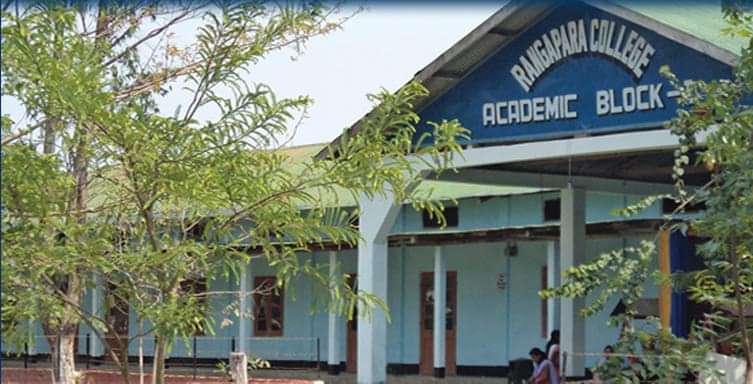
Rangapara College
About
OfficialRangapara College is a other institution in Sonitpur, established in 1979. Rangapara College, established in 1965, is a government-aided institution located in Sonitpur District in the heart of Assam's tea country. The college serves as an important educational hub for the North-East, particularly for students from smaller towns and semi-urban areas seeking quality higher education without relocating to metro cities. With over 55 years of academic legacy, the institution has evolved from a small community college into a recognized center of learning, currently offering undergraduate and postgraduate programs across Sciences, Arts, Commerce, and emerging technical disciplines. The college operates under the affiliation of Gauhati University and maintains accreditation from NAAC (Grade B achieved in 2019). The physical campus spans 18 acres with a mix of colonial-era heritage buildings and modern academic facilities, reflecting Assam's educational history. Rangapara College has gradually diversified its academic portfolio to meet changing employment demands while maintaining its foundational strength in traditional disciplines. The college serves approximately 2,400 students with a faculty strength of 85 dedicated educators, many of whom hold PhD qualifications and maintain active research interests. The institution is particularly known for its strong liberal arts curriculum, community engagement programs, and cultural preservation initiatives. The college library houses over 35,000 books and 15 research journals, serving as a resource center for the region. The institution emphasizes affordable education—tuition fees remain among the lowest in the region, making higher education accessible to economically weaker sections. However, the college faces the typical challenges of tier-3 academic institutions: limited placement infrastructure, modest research funding, and slower adoption of cutting-edge pedagogical methods compared to metropolitan institutions. The city of Rangapara itself is a quiet tea-garden town with minimal urban amenities, which is both a strength (low distractions, community-focused environment) and a weakness (limited internship opportunities, reduced student life excitement). Placement percentages hover around 55-65%, significantly lower than metropolitan engineering colleges but respectable for a regional liberal arts institution. The college is particularly strong for students seeking affordable education in humanities, social sciences, and basic sciences, or those from North-Eastern states preferring proximity to home. It is less suitable for students with ambitions in high-tech sectors or those requiring metropolitan exposure during college years. The institution has produced several notable academics, researchers, and social workers who have contributed meaningfully to their fields, though it lacks the brand recognition of central universities. The college's strength lies in holistic education, strong faculty mentorship, tight-knit student communities, and preparation for competitive exams and civil services. The college maintains active placement cells and has established partnerships with over 45 employers across sectors, though the salary band remains modest compared to tier-1 institutions. Recent infrastructural upgrades include a new academic building, expanded laboratory facilities, and Wi-Fi enabled campus, reflecting the institution's commitment to modernization within resource constraints.