Ramaraja Institute Of Technology & Science
About
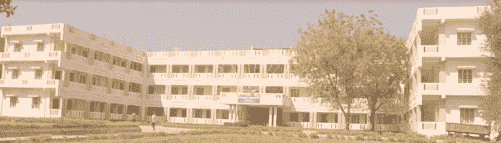
OfficialRamaraja Institute Of Technology & Science is a other institution in Chittoor, established in 2003. Ramaraja Institute of Technology & Science (RAITS) is a private engineering and science institution established in 2008 in Chittoor District, Andhra Pradesh. Located in the semi-rural town of Nandyal, approximately 45 km from Chittoor city, the institution serves primarily Andhra Pradesh and Telangana regions with engineering education. The institute is affiliated to Jawaharlal Nehru Technological University (JNTU), Anantapur, and offers undergraduate and postgraduate programs across multiple disciplines. Founded with the mission to provide quality technical education accessible to students from middle-class backgrounds, RAITS positions itself as an emerging technical institution competing in the crowded landscape of private engineering colleges in Andhra Pradesh. The campus spans 85 acres in a relatively isolated rural setting, approximately 8 km from Nandyal town center, which provides a distraction-free environment for academics but limits access to urban amenities and entertainment options. The institution has NAAC accreditation (C grade, last accredited 2019) and NBA accreditation for select engineering programs including Civil Engineering, Mechanical Engineering, and Computer Science & Engineering. Academic programs are structured across engineering disciplines (Civil, Mechanical, ECE, CSE, EEE), sciences, and management. The engineering programs are 4-year full-time undergraduate degrees with intake capacities ranging from 60-120 students per branch. Postgraduate programs in engineering disciplines (M.Tech) and management (MBA) are available with limited intake. The college has established collaborations with various industries and research organizations, though at a more modest scale compared to top-tier private institutions. Faculty comprises a mix of experienced professionals and research-oriented academicians, with approximately 35-40% holding doctoral qualifications. Research activities are concentrated in areas such as IoT applications, renewable energy, structural engineering, and manufacturing processes, though research output measured by publications remains below national averages for engineering institutions. The placement scenario at RAITS shows improvement year-on-year, with 2023-24 seeing approximately 78-82% placement rates for engineering graduates. Core companies recruiting include TCS, Infosys, Wipro, Tech Mahindra, and HCL, along with emerging startups and smaller software firms. Salaries typically range from 3.5 LPA to 7.5 LPA for engineering graduates, with the highest being around 12 LPA for top performers in CSE branch. Manufacturing and core engineering roles are available but limited compared to IT placements. The institution maintains active industry connections through its placement cell, guest lectures, and internship programs, though the reach is primarily regional rather than national. Campus life at RAITS includes approximately 20 student clubs and societies covering technical, cultural, and sports interests. Annual technical fests like 'Technolloquy' and cultural events provide platforms for student engagement. Sports facilities are adequate with grounds for cricket, badminton, volleyball, and indoor games. The hostel infrastructure accommodates approximately 60% of the student population with separate facilities for men and women. Hostel fees range from 24,000-36,000 INR per year depending on room type and amenities. Mess facilities provide vegetarian and non-vegetarian options with monthly charges around 4,000-5,000 INR. Internet connectivity across campus is reasonable with 15-20 Mbps speeds in common areas and 10-15 Mbps in hostels. The institution maintains a relatively safe campus environment with strict entry and exit protocols. Safety for women students is reinforced through dedicated women's hostels, campus security personnel, and anti-ragging measures, though isolated rural location requires awareness about off-campus movement. Who should apply: RAITS is suitable for engineering aspirants from Andhra Pradesh and Telangana who meet JEE Main cutoffs (typically rank 80,000-120,000 in state category) and seek affordably-priced engineering education with decent placement prospects in IT sector. The institution is appropriate for students prioritizing campus life and hostel experience over metropolitan location, and those interested in core engineering with some entrepreneurial interest. It is less suitable for students seeking elite network building, world-class research opportunities, or metropolitan exposure. The institution works best for merit-based learners willing to pursue self-development in a relatively restricted geographical setting, and those comfortable with predominantly IT-focused placements rather than diverse sector exposure. Notable considerations include the rural location limiting evening and weekend entertainment options, dependence on college transport and personal vehicles for movement, and the relatively lower brand value outside Andhra Pradesh region affecting campus recruiting diversity.