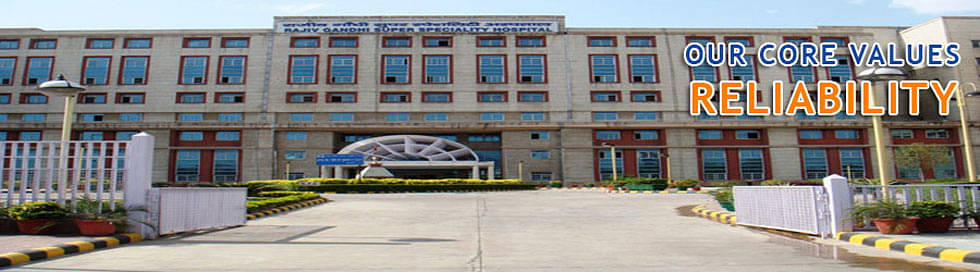
Rajiv Gandhi Paramedical Institute
About
OfficialRajiv Gandhi Paramedical Institute is a other institution in New Delhi. Rajiv Gandhi Paramedical Institute (RGPI), established in 1987, is one of Delhi's oldest and most respected paramedical education institutions. Located in the planned suburban area of Rohini, North-West Delhi, it operates under the governance of the Delhi government's health department. Over three decades, RGPI has built a solid reputation as a center for allied health science education, focusing on producing competent healthcare professionals who bridge the gap between doctors and patients. The institute was founded with the vision of democratizing healthcare education in India and creating skilled workforce in nursing, radiology, laboratory sciences, and other paramedical disciplines. The campus spans 8.5 acres with a planned, organized layout featuring separate administrative, academic, and residential zones. RGPI's academic strength lies in its integration of rigorous theoretical knowledge with extensive hands-on clinical training. Students rotate through affiliated hospitals including government facilities and private healthcare networks across Delhi-NCR, gaining real-world exposure to diverse patient populations and healthcare settings. The nursing program is particularly well-regarded, with graduates working in major hospitals across India and abroad. The institute's strength lies in its emphasis on clinical practice—students begin ward rotations from their first year itself, unlike many private institutions that delay clinical exposure. RGPI maintains affiliations with Delhi University for certain programs and operates under Delhi Nursing Council accreditation. The faculty comprises experienced practitioners with extensive clinical backgrounds; many continue part-time clinical practice, bringing contemporary healthcare knowledge into classrooms. Research culture is emerging, with faculty and final-year students conducting studies on clinical outcomes, patient care protocols, and occupational health. The institute has established partnerships with Apollo Hospitals, Fortis Healthcare, Max Healthcare, and various government facilities for clinical placements. Placement outcomes have historically been strong, with 85-90% of nursing graduates securing positions within 3-4 months of graduation. The institute produces approximately 350-400 graduates annually across all programs, with nursing being the largest intake (120-150 per batch). Campus infrastructure is functional but utilitarian rather than luxurious. The library houses 15,000+ volumes focused on medical and paramedical sciences, with limited digital database access compared to premier private institutions. Computer labs are basic but adequate for coursework. The hostel facilities serve approximately 60% of students, with separate blocks for men and women. Mess facilities provide vegetarian and non-vegetarian options at subsidized rates. The campus lacks some amenities like modern sports facilities, swimming pool, or premium recreational spaces, reflecting its government-institution nature. However, proximity to Rohini market and Delhi Metro connectivity makes off-campus living viable for many students. Student life at RGPI is centered around clinical learning and academic rigor rather than vibrant campus culture. Social clubs exist but are modest in scale. Annual events include inter-college nursing symposiums, health awareness camps in nearby communities, and sports days. The institute emphasizes social responsibility, with students conducting health awareness programs in slums and rural areas. Ragging is strictly prohibited and cases are rare, with strong disciplinary mechanisms in place. Safety for women students is generally good, though like many Delhi institutions, standard precautions apply. RGPI attracts students primarily from Delhi, Haryana, and neighboring states who seek quality paramedical education at government-institution affordability. The institute is ideal for candidates genuinely interested in nursing and allied health careers rather than those treating paramedical education as a backup option. It appeals particularly to students from middle-income backgrounds seeking subsidized education with strong clinical exposure. The alumni network is extensive in Delhi hospitals and healthcare systems but less visible in international markets compared to private nursing colleges. Notable alumni work as nursing supervisors, infection control specialists, and healthcare administrators in major hospital chains. Several have pursued higher education abroad, completing MSc in Nursing or health-related specializations. The institute's culture emphasizes patient-centric care, professional ethics, and continuous learning. Competition among students is moderate, with focus on collective learning rather than cutthroat competition. Internships and field placements form the core of final-year experience, with students spending 70-80% of final year in clinical settings. The institute genuinely prepares students for healthcare careers, though students should have realistic expectations about campus amenities and should value clinical education over comfort.