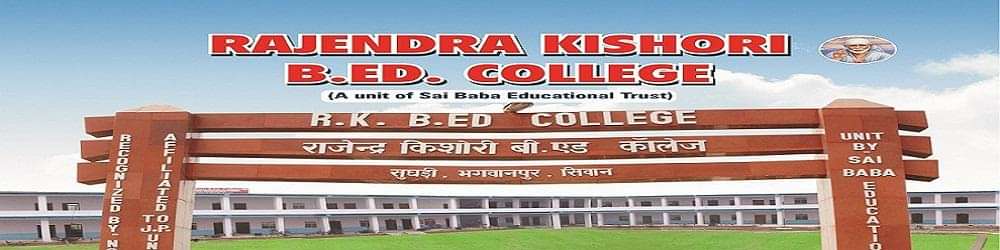
Rajendra Kishori B.Ed College
About
OfficialRajendra Kishori B.Ed College is a other institution in Siwan. Rajendra Kishori B.Ed College in Siwan, Bihar, is a women-only teacher education institution established in 2003 with the mission of preparing quality educators for India's secondary education system. Named after Rajendra Kishori, a social reformer, the college operates under the umbrella of the National Council for Teacher Education (NCTE) framework and is affiliated with Jai Prakash University, Chapra. The institution serves as a critical feeder institution for the teaching profession across Northern Bihar, a region historically underserved by quality teacher education resources. The college's founding emerged from a grassroots initiative by local educators and community leaders who recognized the acute shortage of professionally trained female teachers in rural Bihar. While the institution began with modest infrastructure in 2003, it has gradually expanded to serve approximately 480 students across multiple cohorts, making it one of the larger B.Ed colleges in the Siwan district. The college's primary mandate is to bridge the quality gap in teacher preparation by offering rigorous pedagogical training combined with subject matter expertise. Academic Programs: The college offers a two-year B.Ed (Bachelor of Education) program as its flagship offering, with specializations in various subject combinations including English, Hindi, Mathematics, Science, and Social Studies. The intake capacity is approximately 120 students per academic year across all combinations, with admission primarily through state-level entrance examinations or merit-based selection depending on Bihar government regulations for that academic year. The curriculum strictly adheres to NCTE guidelines and emphasizes both theoretical foundations of education and practical classroom teaching skills through extensive practicum components. Additionally, the college offers a one-year Diploma in Education (D.Ed) program, which serves as an alternative pathway for candidates aspiring to teach at the primary level. Some affiliated schools also offer skill development courses in digital pedagogy and educational technology, though these are not formally credited programs. Research and Academic Strengths: While Rajendra Kishori B.Ed College is primarily a teaching-focused institution rather than a research powerhouse, the faculty have gradually initiated action research projects related to classroom effectiveness, teacher development, and rural education challenges. The college has partnered with Jai Prakash University for minor research initiatives, though doctoral research remains limited. Research strengths concentrate on pedagogical innovation, inclusive education practices for rural contexts, and gender-responsive teaching methodologies. The faculty, though limited in numbers (28 teaching staff), include individuals with M.Ed qualifications and some with NET/SLET certifications, though PhD holders among faculty remain below 15%. The college has established a modest research cell that encourages faculty and senior students to conduct action research projects focused on improving teaching-learning outcomes in Bihar's schools. Campus Infrastructure and Facilities: The 3.5-acre campus is situated in a rural setting, providing a quieter, distraction-free environment for teacher education studies. The institution houses a functional library with approximately 8,000+ volumes primarily focused on education, pedagogy, psychology, and subject-specific content. The physical infrastructure includes basic but functional classroom facilities, though internet connectivity and digital learning resources remain inconsistent. The college has made efforts to establish a computer lab with 25 systems, but access is often limited and internet bandwidth is frequently insufficient for online learning demands. The campus includes separate hostel facilities exclusively for women students, reflecting the institution's women-only policy. The college also operates a small cafeteria and basic health center staffed by a part-time nurse and a visiting physician twice weekly. Sports facilities are minimal, consisting of an open ground for badminton and volleyball, and limited gymnasium equipment. The institution lacks a dedicated auditorium, conducting large events in the main classroom block or open spaces. Campus Life and Student Experience: Life at Rajendra Kishori B.Ed College is characterized by a close-knit, supportive community atmosphere typical of smaller women's institutions in rural India. Students often develop strong peer bonds and benefit from mentorship-oriented relationships with faculty. The college encourages student participation in educational clubs, debate forums focused on pedagogy, and cultural programs. Annual events include Teachers' Day celebrations (September 5), Foundation Day, and regular seminars on contemporary education topics. However, the rural setting and limited urban amenities mean that students should expect a quieter social scene with fewer external entertainment options compared to urban colleges. The hostel community is central to student life, with many students residing on or near campus. The college organizes regular academic workshops, guest lectures from education practitioners, and exposure visits to model schools in nearby urban centers like Patna. Social life revolves heavily around studies, campus-based cultural activities, and informal peer interactions. Placement and Career Outcomes: Rajendra Kishori B.Ed College graduates primarily pursue teaching careers across Bihar and adjacent states, with placement data indicating that approximately 65-75% of B.Ed graduates secure teaching positions within 12-18 months of graduation. Placements occur primarily through Bihar Public Service Commission (BPSC), State Eligibility Test (SET) for college lecturers, and direct recruitment by schools in Bihar, Jharkhand, and Uttar Pradesh. The median salary for school teachers ranges from 28,000 to 42,000 INR per month depending on school type (government vs. private) and experience. The college has established a dedicated placement cell that coordinates with district education departments and school management bodies. Some graduates pursue higher education, enrolling in M.Ed programs at universities like Banaras Hindu University, Delhi University, or Jamia Millia Islamia. A small proportion pursue NET/SLET examinations to qualify for college lectureship positions. The college maintains alumni networks, though formal alumni tracking and outcomes data remain incomplete. Notable placement partners include government schools under Bihar government education department, private school chains operating in Northern India, and educational NGOs focused on rural education. Who Should Apply and Why: Rajendra Kishori B.Ed College is ideal for women candidates who are passionate about teaching and have a genuine commitment to contributing to India's school education system, particularly in underserved rural regions. The college is particularly suitable for students from Bihar, Jharkhand, and neighboring states who seek affordable, accessible teacher education without relocating to distant metropolitan centers. Students should be prepared for a rural educational environment with basic but functional infrastructure, a slower-paced academic setting, and limited external entertainment options. The institution welcomes students from rural and semi-urban backgrounds who may find large metropolitan colleges overwhelming. Women seeking a supportive, all-female community with close faculty mentorship will thrive here. However, candidates expecting world-class infrastructure, cutting-edge technology integration, or cosmopolitan campus culture should consider alternative institutions in metropolitan areas. The college is most suitable for students with realistic expectations about rural Bihar's educational landscape and a genuine desire to become teachers rather than pursuing teaching as a fallback career option.