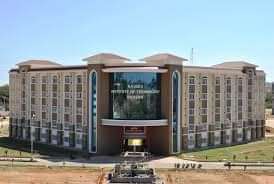
Rajeev Institute of Technology
About
OfficialRajeev Institute of Technology is a other institution in Hassan, established in 2008. Rajeev Institute of Technology (RIT), established in 2001, is a private engineering college located in Hassan, a tier-3 city in the Hassan district of Karnataka. Founded with the vision of delivering quality technical education to aspirants from tier-2 and tier-3 cities, RIT has evolved into one of the more recognized private engineering institutions in the region. The college is affiliated with Visvesvaraya Technological University (VTU) and offers undergraduate and postgraduate programs in multiple engineering disciplines. The institution has grown substantially over two decades, moving from modest beginnings to operating across a 28-acre campus with modern infrastructure. Hassan's location on the NH-48 corridor, between Bangalore and Mysore, provides connectivity advantages despite its smaller city status. The college operates under the philosophy that quality engineering education should be accessible beyond metropolitan centers, attracting students primarily from Karnataka, Maharashtra, Andhra Pradesh, and Telangana. RIT's approach has been student-centric, with emphasis on industry interface and practical skill development alongside theoretical learning. The college has progressively strengthened its academic rigor, faculty credentials, and industry partnerships. Academic programs span core engineering branches (CSE, ECE, Mechanical, Civil) alongside emerging domains like AI/ML specializations. Research initiatives have expanded, though the college remains primarily teaching-focused rather than research-intensive compared to NIT/IIT standards. The placement ecosystem at RIT has matured significantly, with consistent recruitment from mid-tier IT companies, manufacturing firms, and engineering services organizations. Median packages have stabilized around 5.5-6.5 LPA for core engineering branches and 6-7 LPA for CSE, reflecting realistic market positioning for a private regional college. The college does NOT command the premium salaries or Tier-1 recruiter interest of top-5 private colleges, but maintains respectable outcomes for its student profile. Campus life at RIT benefits from its suburban Hassan setting - lower costs, quieter environment, fewer distractions - but students must accept limited urban entertainment options. The student population is relatively homogeneous, drawn largely from middle-class backgrounds, with a significant percentage being first-generation engineers. This creates a collaborative rather than intensely competitive atmosphere. Women's safety is generally good within campus boundaries, though Hassan as a city has average safety ratings. The college has invested in hostel infrastructure, sports facilities, and technical clubs. However, student sentiment reflects consistent concerns: outdated lab equipment in certain departments, limited WiFi reliability in older hostel blocks, inconsistent mess quality, and occasional administrative delays. Faculty quality is mixed - senior professors are well-qualified with relevant industry experience, but junior faculty turnover remains an issue. The college's strength lies in its affordability (annual fees 2.8-3.2 LPA), accessible admission criteria, and practical placement outcomes for students from non-metro backgrounds. It's particularly suited for students seeking quality engineering education without relocating to expensive metros, those focused on core engineering careers, and students who value collaborative learning environments. The college would disappoint students expecting cutting-edge research, exceptional campus facilities, or consistent high-package placements across all branches. Students from premium coaching backgrounds may find the overall academic ecosystem less intense than expected. The college's positioning is solidly in the 'good regional engineering college' category - above struggling private institutions, below top-20 national rankings, and significantly different from NIT/IIT trajectories.