Rajeev Gandhi Memorial Teachers' Training College
About
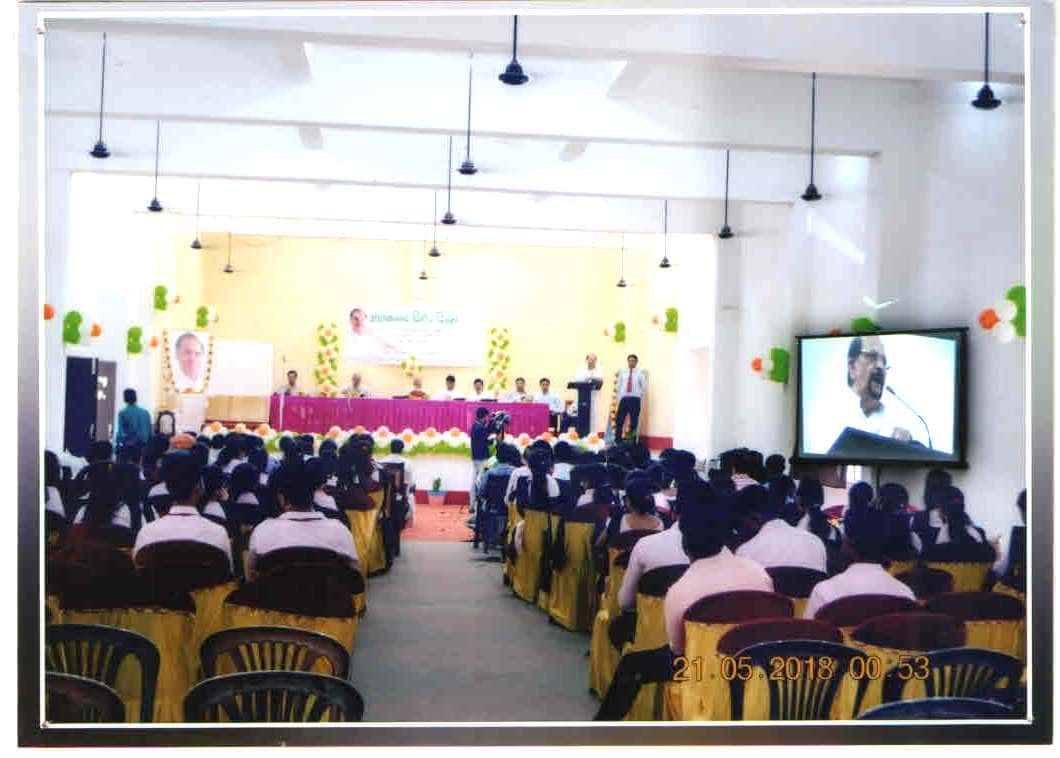
OfficialRajeev Gandhi Memorial Teachers' Training College is a other institution in Dhanbad, established in 2009. Rajeev Gandhi Memorial Teachers' Training College (RGMTTC) in Dhanbad, Jharkhand, is a premier teacher-training institution established in 1995 with the mission to develop competent, committed, and compassionate educators for India's schooling system. Named after the late Prime Minister Rajiv Gandhi, the college embodies his vision of modernizing education and creating socially conscious leaders. The institution is recognized by the National Council for Teacher Education (NCTE) and affiliated with the Vinoba Bhave University, Hazaribagh, making it one of the accredited B.Ed colleges in eastern India. The college operates across a 18-acre suburban campus on Govindpur Road in Dhanbad, strategically positioned between the city center and residential areas, providing students with relative tranquility while maintaining accessibility to urban resources. RGMTTC offers comprehensive teacher education programs spanning undergraduate and postgraduate levels, with specializations in English, Hindi, Mathematics, Science (Physics, Chemistry, Biology), Social Studies, and Physical Education. The two-year B.Ed (Bachelor of Education) program remains the flagship offering, designed to prepare graduates for roles as secondary school teachers with both pedagogical depth and subject matter expertise. The college has expanded into M.Ed (Master of Education) programs for specialized educational research and leadership training. Beyond formal coursework, RGMTTC emphasizes experiential learning through school-based teaching practice in partner schools across Dhanbad and surrounding districts. The curriculum integrates ICT-enabled teaching methodologies, recognizing that modern teachers must leverage technology effectively in classroom instruction. The college maintains partnerships with over 45 government and private schools in the region for practice teaching placements. Research strengths include educational psychology, curriculum development, inclusive education practices, and pedagogical innovation. Faculty members actively publish in peer-reviewed journals and contribute to district-level educational policy discussions. The college has established a dedicated research center focusing on teacher effectiveness and student learning outcomes in rural educational settings—a critical area for eastern India. Campus infrastructure reflects a functional, learner-centered design rather than luxury. The college operates a well-stocked library with 18,000+ volumes including NCERT textbooks, educational journals, and teaching resource materials. Computer laboratories with internet connectivity support digital literacy development. Demonstration schools on campus serve as living laboratories where student-teachers design and deliver lessons under supervision. Hostel facilities accommodate approximately 450 students, with separate accommodations for women and men. The college maintains gender-sensitive policies regarding safety and discipline. Student life emphasizes both academics and character development. Cultural fests (typically held in February-March) celebrate diverse art forms and promote communal bonds. Sports facilities include a multipurpose court, basketball court, and gymnasium. Student clubs focus on teaching methodologies, literature, science education, and social service. The annual 'Shikshak Diwas' (Teachers' Day) celebration in September includes seminars, competitions, and community outreach activities. Placement outcomes are strong for a teacher-training institution, with approximately 88% of B.Ed graduates securing teaching positions within 6-12 months of graduation. Most placements are in government and private secondary schools across Jharkhand, Bihar, and West Bengal. Some graduates pursue higher studies in educational research or administrative roles. The college has produced over 3,000 educators since inception, many now holding positions as school principals, district education officials, and education policy consultants. Notable alumni include Dr. Priya Sharma (Education Director, Jharkhand State), Arun Kumar Singh (Principal, Delhi Public School, Dhanbad), and Meena Yadav (literacy program founder, working in rural Bihar). The college is uniquely positioned for students passionate about teaching and social impact rather than those seeking high salaries. It attracts idealistic individuals who view education as a tool for social transformation. The institution actively recruits from tier-2 and tier-3 cities where quality B.Ed programs are limited. Admission is highly competitive, with merit-based selection from state-level B.Ed entrance examinations. RGMTTC maintains rigorous academic standards while remaining socially conscious—approximately 35% of student body comprises candidates from economically disadvantaged backgrounds through reserved category admissions and fee waivers. The college strongly encourages graduates to work in government schools in underserved areas, offering modest incentive scholarships for those committing to rural teaching. Practical realities: the institution operates with resource constraints typical of Indian public colleges, including occasional infrastructure maintenance issues, limited library technology upgrades, and modest hostel amenities. However, these constraints enhance students' resilience and practical problem-solving skills valuable in actual school teaching environments. Faculty comprise experienced educators with 8-20 years of teaching experience in school settings before entering teacher training. Monthly seminars feature accomplished school administrators and educational researchers, keeping curriculum current. The college does not push students toward competitive exams (unlike management or engineering colleges) but instead focuses on deepening pedagogical understanding and classroom practice competence. This singular focus makes RGMTTC ideal for individuals certain about pursuing teaching careers and less suitable for those exploring multiple options. Living in Dhanbad as a student-teacher provides exposure to a semi-urban industrial town in transition—offering authentic insights into India's educational challenges in Tier-3 contexts where most teaching jobs actually exist. The college's location is neither glamorous nor disadvantageous, representing the India where most teachers will actually work.