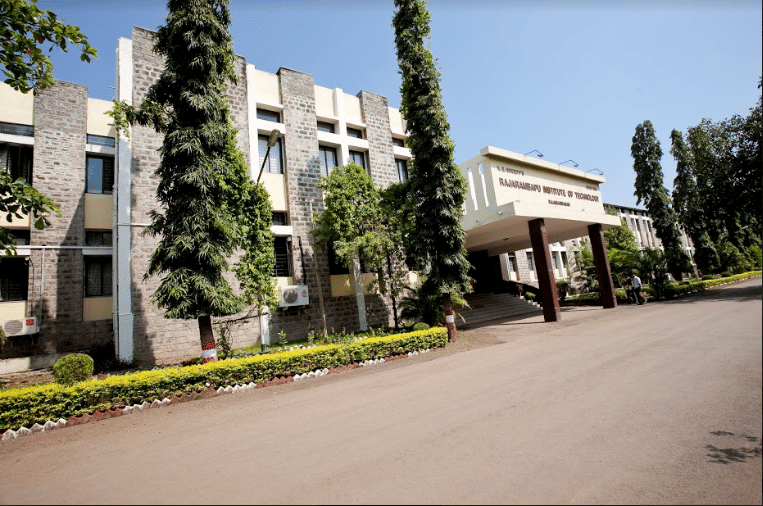
Rajarambapu Institute of Technology
About
OfficialRajarambapu Institute of Technology is a other institution in Sangli, established in 1983. Rajarambapu Institute of Technology (RIT), established in 1983 in Sangli, Maharashtra, is one of the pioneering engineering colleges in the Deccan region. Named after the legendary Marathi warrior Chhatrapati Rajarambapu, the institute was founded with a mission to blend technical excellence with cultural values. It operates under the guidance of Shrimant Rajaram Educational and Medical Trust. Over four decades, RIT has emerged as a respected engineering institution producing engineers, technologists, and industry leaders across multiple sectors. The college is affiliated with the Savitribai Phule Pune University and is recognized by the All India Council for Technical Education (AICTE). RIT's academic programs span 15 undergraduate engineering disciplines plus postgraduate and doctoral offerings, attracting students from across India and internationally. The institute's strength lies in its balanced approach—rigorous technical curriculum coupled with emphasis on soft skills, entrepreneurship, and social responsibility. The faculty comprises 280+ members, with approximately 35% holding doctoral degrees and active involvement in research and consultancy projects. The college has established itself as a feeder institution to premier companies in IT, automotive, pharmaceutical, and manufacturing sectors. The campus is spread over 125 acres in suburban Sangli, providing a blend of academic rigor and a relatively quieter learning environment compared to metro-based colleges. RIT has been progressively upgrading its infrastructure with state-of-the-art laboratories, a modern library with 150,000+ volumes, research centers focused on robotics, IoT, and sustainable engineering, and an innovation hub supporting student startups. The institute conducts regular industry interaction sessions, guest lectures from senior professionals, and industry-sponsored projects. Student placement is a major focus, with dedicated placement cells, aptitude training, and industry partnerships ensuring consistent placement rates above 95% in recent years. The college culture emphasizes holistic development through participation in national and international technical competitions, cultural programs, and social outreach initiatives. RIT's location in Sangli, while not a metropolitan hub, offers advantages of a growing industrial region with several manufacturing units, textile industries, and emerging IT parks nearby. The student community is diverse, with representations from urban and rural backgrounds, creating a culturally rich campus environment. The institute maintains strong alumni networks across technology hubs globally. Recent years have witnessed RIT's efforts toward digital transformation, online course offerings, and research collaborations with international universities. Notable strengths include strong placements in core engineering roles, a vibrant entrepreneurship ecosystem, and consistent improvements in research publication metrics. However, prospective students should note that Sangli is a tier-3 city with limited metropolitan amenities, which may require lifestyle adjustment for students from larger cities. The college's growth has occasionally strained hostel accommodations during peak admission periods, and while academic quality remains high, some specialized facilities available at IITs or metro-based private universities may be limited. RIT is ideal for students seeking solid engineering education with industry relevance, placement-focused curriculum, and a campus that balances academic seriousness with cultural and social dimensions. It particularly suits students from middle-class backgrounds seeking value-for-money education, those interested in core engineering roles, and those willing to invest in personal development and competitive programming. Students seeking purely metro-lifestyle experience or cutting-edge research environments comparable to top-tier institutions should consider their priorities carefully.