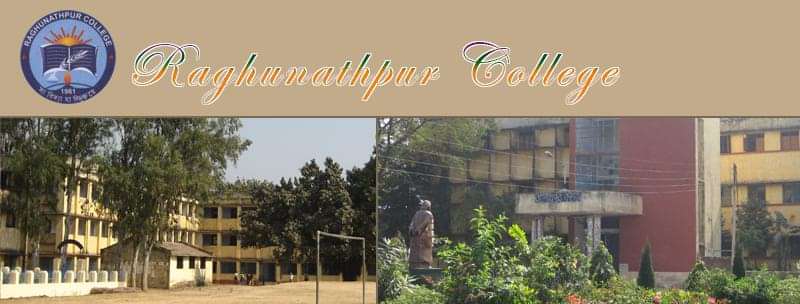
Raghunathpur College
About
OfficialRaghunathpur College is a other institution in Purulia, established in 1961. Raghunathpur College, established in 1974, is a government-aided undergraduate and postgraduate institution located in the Purulia district of West Bengal. Situated in a semi-rural setting approximately 40 km from the district headquarters, the college has evolved into a regional educational hub serving students primarily from Western Bengal, Jharkhand, and Odisha. The institution is affiliated with Sidho-Kanho-Birsha University (formerly Purulia University) and offers a diverse range of undergraduate and postgraduate programs across Sciences, Commerce, and Arts streams. The college was founded with the objective of providing accessible higher education to rural and semi-urban populations in the Chota Nagpur plateau region, historically underserved by premier institutions. Over five decades, it has maintained a steady reputation for academic rigor and community engagement, though it remains less known compared to metropolitan colleges. The college operates under the governance structure typical of government-aided institutions in West Bengal, with representation from the state government, university affiliations, and local stakeholders on its governing body. Raghunathpur College's academic strength lies primarily in its Science programs, particularly Physics, Chemistry, and Biology, which have produced competent graduates in teaching, research, and civil services. The Commerce stream has gained traction in recent years, with growing enrollment in B.Com and M.Com programs. The Arts faculty offers traditional disciplines like History, Political Science, English, and Sanskrit, maintaining departmental libraries and fostering humanities scholarship at the regional level. The college has no engineering or professional programs like medicine, law, or management, positioning itself as a pure arts and sciences institution. Research output remains modest but consistent, with faculty publications primarily appearing in regional and national journals rather than high-impact international venues. The college does not have a formal dedicated research center, though individual departments conduct minor research projects funded by UGC and state government schemes. Campus infrastructure reflects the typical constraints of rural government-aided colleges: basic but functional teaching facilities, a central library with approximately 42,000 volumes, basic laboratory equipment updated sporadically, and limited digital infrastructure compared to urban counterparts. Internet connectivity has improved since 2018 but remains slower and less reliable than in city-based institutions. The campus is spread across 18.5 acres with substantial green space, a notable advantage for environmental studies and outdoor activities. Placements are a significant challenge for the institution. The overall placement rate across all programs hovers around 35-45%, considerably lower than national averages. Most placements are in teaching (government and private schools), civil services preparation, and small-scale trading enterprises. Formal corporate recruitment is virtually absent except for occasional campus visits by regional insurance companies and banking institutions. Many graduates pursue further education (M.A., M.Sc., competitive exams) rather than seeking direct employment. The college does not have a dedicated placement cell with professional infrastructure; placements are coordinated informally through department heads and faculty networks. Alumni networks are weak in terms of professional connections; most notable alumni work in government sectors, education, or have migrated to metropolitan areas for career advancement. Student intake comprises primarily first-generation learners from agricultural and small business backgrounds; educational aspirations are genuine but often constrained by socioeconomic factors and limited awareness of career pathways beyond traditional government jobs. The college has a modest student culture with minimal clubs and societies compared to metropolitan institutions. Annual college fests occur but are small-scale affairs. Sports facilities exist but are basic; the college does not have a swimming pool, modern gymnasium, or professional sports training infrastructure. Hostel accommodation is available for approximately 25% of students, primarily targeting girls and students from distant locations. Hostel quality is basic but secure, with 3-4 students per room and minimal amenities. Ragging has been reported occasionally but the administration takes it seriously and enforces anti-ragging measures. Safety for women students is reported as average; while the campus is generally secure, commuting options are limited and social attitudes in the surrounding semi-rural area reflect conservative gender norms. The college environment is academically focused but lacks the vibrancy and cosmopolitan exposure of tier-1 institutions. Who should apply: First-generation learners seeking affordable, quality undergraduate education in sciences or commerce; students from economically disadvantaged backgrounds prioritizing low fees over prestige; individuals committed to teaching or civil services careers; students preferring a close-knit, academically rigorous environment over large-scale campus culture; those from Purulia, Birbhum, and Bankura districts seeking to study near home. Not recommended for: Students aspiring to corporate careers requiring extensive campus recruitment; those seeking research-intensive education or PhD pathways; individuals prioritizing hostel amenities and metropolitan exposure; engineering or professional degree aspirants; students requiring extensive extracurricular and sports facilities. The institution's primary value proposition is affordable, government-regulated education with reasonable academic standards and low corruption, making it a practical choice for merit-based students with financial constraints rather than a premier destination institution.