Pydah College of Engineering
About
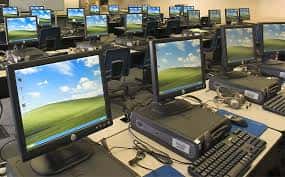
OfficialPydah College of Engineering is a other institution in Kakinada. Pydah College of Engineering, established in 2000, is a private engineering institution located in Kakinada, Andhra Pradesh. Named after the Pydah family's philanthropic contributions, the college has evolved into a significant engineering hub in the coastal region of Andhra Pradesh. The institution operates under AICTE approval and offers undergraduate and postgraduate programs across multiple engineering disciplines. Kakinada, historically known as a port city and petroleum hub, provides the college with proximity to industrial clusters, making it relevant for engineering education. The college offers 8 UG branches including Civil Engineering, Mechanical Engineering, Electrical Engineering, Electronics and Communication Engineering, Computer Science Engineering, Chemical Engineering, Information Technology, and Petroleum Engineering. Postgraduate programs include M.Tech in several specializations like Structural Engineering, Power Systems, VLSI Design, and Computer Networks. The petroleum engineering program is particularly noteworthy given Kakinada's industrial landscape, though students report limited research depth in this area. Academically, the college follows the JNTU Hyderabad curriculum for most programs. Faculty strength stands at 185 members, of which approximately 35-40% hold PhDs. The college has NAAC accreditation with a B+ grade (last reviewed 2018), and several engineering programs have NBA accreditation, though not all branches are covered. Research output remains modest, with limited publications in high-impact journals. The college has established MoUs with a few foreign universities for student exchange, but these remain largely unutilized. Placements are the college's strongest metric. For 2023-24, the overall placement percentage reached 87%, with 2,100+ students placed across 900+ companies. The median salary for engineering graduates stands at 3.8 LPA, with top-tier placements in IT sector reaching up to 12 LPA. Core engineering placements average 2.5-3.2 LPA. Top recruiters include TCS, Infosys, Wipro, HCL, Cognizant, HDFC Bank, ICICI Bank, L&T, Reliance, and Shell. The IT sector dominates placements (65%), followed by finance (15%) and core engineering (12%). Computer Science and IT branches achieve 95%+ placement rates, while Civil and Chemical branches struggle with 65-70% placement. Campus infrastructure is functional but aging in places. The college operates a modern computer lab facility with 400+ systems, a central library with 85,000+ volumes, physics and chemistry labs meeting AICTE standards, and a basic innovation center. Internet connectivity covers most campus areas with reasonable 10-15 Mbps speed during off-peak hours, though bandwidth congestion occurs during peak usage. The 45-acre campus includes separate hostel blocks for boys and girls, a sports complex with basketball courts, volleyball courts, and cricket ground, a small medical center, and multiple cafeterias. One significant weakness is the aging architecture of some classroom blocks—many buildings lack air-conditioning and have poor ventilation, making summers (March-May) difficult for students. The laboratory equipment, while adequate for undergraduate coursework, lacks cutting-edge instruments for advanced research. Student life is moderately vibrant. The college hosts an annual fest called "TechnoVibe" (February), primarily technical in nature, along with a cultural fest "Sangam" (November). Around 40 registered clubs exist, including robotics, coding, entrepreneurship, and cultural organizations. The robotics club has won several inter-college competitions. Sports participation is encouraged, though the sports facilities are basic compared to tier-1 institutions. Hostel life is structured with separate facilities for men and women; boys' hostels are more crowded (4-5 per room) while girls' hostels offer 2-3 per room. Mess food is adequate but repetitive—students report meal quality varies by season. Ragging is formally prohibited and appears controlled, though isolated incidents may occur. Safety for women students is generally good, with proper gate security and CCTV coverage, though isolated areas near the periphery warrant caution late evenings. Placement training is systematic. The college operates a dedicated placement cell with 6 staff members who conduct aptitude coaching, interview preparation, and resume workshops from the 3rd semester onwards. Mock interviews are conducted quarterly. For non-placed students, the college offers bridge programs in emerging technologies. However, students report that career counseling is generic and lacks personalization based on individual strengths. Notable alumni include Rajesh Kumar (Batch 2005), now a senior project manager at Shell Global; Priya Sharma (Batch 2008), technology lead at Goldman Sachs; and Arun Reddy (Batch 2003), founder of a software startup acquired by a larger firm. While success stories exist, the alumni network is not particularly strong in terms of industry mentorship or investment in student ventures. The college is best suited for students seeking a balanced engineering education in a smaller-city environment with strong placement support, particularly those targeting IT and ITES sector roles. Students with research aspirations or those seeking world-class infrastructure should consider tier-1 NITs or IITs. The college offers good value for money compared to metropolitan private colleges, with annual fees around 2.1 lakhs for most branches (3.2 lakhs for petroleum engineering). Living costs in Kakinada are significantly lower than tier-1 cities, making this an attractive option for cost-conscious families. The college's petroleum engineering program, while less rigorous than standalone petroleum institutes, provides decent employment opportunities in the energy sector. However, students should be aware that Kakinada's job market is limited to petroleum, port operations, and IT services; broader opportunities exist only in nearby Hyderabad (140 km away). Weaknesses include: limited research culture, outdated facilities in some blocks, slow internet during peak hours, moderate faculty qualifications in some departments, and limited access to industry internships during the academic year (most occur post-placement). The college's academic rigor, while meeting AICTE standards, is not exceptional—students report that hard work can lead to good grades, meaning academic pressure is manageable but perhaps too lenient for ambitious learners. Peer quality is mixed; some batches have highly motivated students while others are more casual, making peer learning inconsistent.