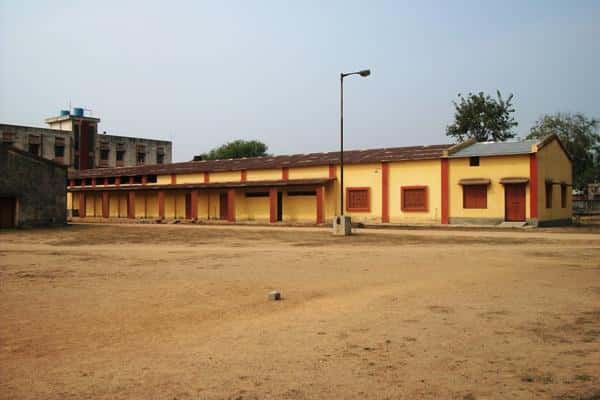
Purulia Polytechnic
About
OfficialPurulia Polytechnic is a other institution in Purulia, established in 1980. Purulia Polytechnic is a state-run diploma and degree polytechnic institution located in Purulia district, West Bengal, approximately 200 km from Kolkata. Established in 1991 as part of West Bengal government's initiative to democratize technical education in tier-3 cities, it has evolved into one of the region's significant polytechnic colleges. The institution operates under the Directorate of Technical Education, West Bengal, and offers both diploma (3-year) and degree (4-year) programs across engineering disciplines. The college serves a critical niche in providing affordable, quality technical education to students from economically weaker sections and underserved rural backgrounds across eastern India. Purulia Polytechnic's founding was driven by the state government's vision to decentralize engineering education beyond metropolitan centers like Kolkata and create skilled manpower for local industries, particularly in sectors like mining, manufacturing, and infrastructure development in the Purulia region, historically known for coal mining and iron ore extraction. Over three decades, the institution has trained approximately 15,000+ graduates who now work across India and abroad. The college has gradually upgraded its infrastructure, faculty qualifications, and curriculum to meet evolving industry standards while maintaining affordability—annual fees remain exceptionally low at INR 50,000-80,000 for diploma programs and INR 100,000-120,000 for degree programs, making it highly accessible to first-generation engineers. The campus is spread across 45 acres in a semi-rural setting on the outskirts of Purulia town, featuring multiple academic blocks, workshops, laboratories, a central library, student hostels, and sports facilities. The college operates under a hybrid model: while it is primarily a government-funded polytechnic focused on diploma education (3-year programs across 8 specializations), it also offers 4-year degree programs in engineering through affiliation with Maulana Abul Kalam Azad University of Technology (MAKAUT), West Bengal. This dual-stream approach allows students to pursue either quick entry into employment (diploma) or higher education pathways (degree). The academic calendar follows semester-based instruction with practical training integrated throughout. The institution has received NAAC accreditation (Grade B, valid through 2027) and several programs hold NBA accreditation in civil, mechanical, and electrical engineering. The faculty strength includes approximately 185 permanent and contractual staff, with about 35% holding postgraduate qualifications and 15% pursuing or holding PhD degrees. The college has established collaborations with local industries, particularly in mining, power generation, and construction sectors for student internships and project work. Research activities are limited compared to IITs or older NITs, but there are active faculty research groups in renewable energy, water treatment technologies, and sustainable construction practices. The college conducts annual technical fests (Technozeal), cultural festivals (Purulia Utsav), and sports meets that attract participation from neighboring institutions. Campus life is relatively structured with emphasis on discipline, punctuality, and practical skill development—reflecting its heritage as a government polytechnic with accountability to public funds. Student sentiment about the college is decidedly pragmatic: students appreciate the low cost of education, hands-on exposure to real equipment and workshops, decent placement outcomes for local and regional companies, and a relatively stress-free environment compared to competitive entrance exams. However, common criticisms include limited research opportunities, outdated curriculum in some areas, lack of placement visibility in top-tier tech companies (Infosys, TCS, Google rarely recruit from here), weak internet connectivity in certain campus zones, average hostel facilities, and the perception of being a "tier-3" institution that may face stereotyping during higher education or international job applications. The college is best suited for: (1) first-generation engineers from economically weaker backgrounds seeking affordable technical education, (2) students from Purulia, Jharkhand, and neighboring districts who prefer staying close to home, (3) those who prioritize practical/vocational training over theoretical research, (4) students aiming for regional/local employment in manufacturing, mining, power, and construction sectors, (5) candidates whose board exam marks didn't qualify for better-ranked polytechnics but who want genuine engineering skills. The college is NOT recommended for: students seeking IIT-equivalent prestige, those targeting multinational tech companies, research-focused individuals, students with expectations of modern smart classrooms and cutting-edge labs, or those from urban backgrounds expecting metro-level campus life. Over the past 5-7 years, the college has seen gradual improvements in placements (now averaging 65-70% across programs), increased focus on soft skills training, and modest infrastructure upgrades, though systemic challenges of being a rural government polytechnic (brain drain of faculty to private institutions, budget constraints, competition from newer private polytechnics) persist. Notably, alumni of Purulia Polytechnic have gone on to senior positions in NTPC, RITES, WBSEDCL, DMRC, and various construction/mining companies, validating the college's role in producing competent mid-level engineers for critical national infrastructure sectors.