President College Of Education
About
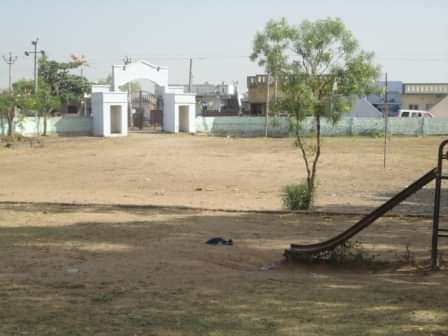
OfficialPresident College Of Education is a other institution in Gandhinagar, established in 2015. President College of Education is a private teacher training and higher education institution located in Gandhinagar, Gujarat, established in 2006. The college operates under the UGC framework and offers undergraduate and postgraduate programs primarily in education, arts, sciences, and commerce. The institution serves the educational ecosystem of North Gujarat and has become a significant feeder college for teacher recruitment in the region. The college was established with the vision of creating academically competent and socially responsible educators, particularly for primary and secondary education sectors. Over the past 18 years, it has evolved into a multi-disciplinary institution offering not just B.Ed and M.Ed programs but also degree programs in arts, sciences, and commerce at the undergraduate level. The campus is located in the suburban vicinity of Gandhinagar, approximately 25 km from Ahmedabad, which provides students with relative peace for academics while maintaining accessibility to city amenities. President College maintains affiliation with Gujarat University and operates under the regulatory framework of the National Council for Teacher Education (NCTE) for education programs. The college's primary strength lies in teacher education, where it consistently produces graduates who secure positions in government schools across Gujarat. The B.Ed program at President College is recognized for its practical teaching methodology and school-based training. The college has established partnerships with several government and private schools in Gandhinagar and surrounding districts for practice teaching and internship programs. Faculty members are primarily M.Phil and Ph.D. holders, with many holding teaching experience in both higher education and school sectors. The institution emphasizes a blend of theoretical knowledge and practical application, particularly relevant for education graduates. Research activities are modest but focused on educational pedagogy, curriculum development, and social sciences. The college has a small research unit that facilitates faculty publications in regional and national journals. Campus life at President College is relatively informal and community-oriented. Being an education college, the student body tends to be more academically focused and serious compared to typical arts colleges. The student population is diverse, with a significant number of mature students pursuing B.Ed after completing their undergraduate degrees. Social activities include annual day celebrations, inter-class competitions, and community outreach programs, though the intensity of cultural and sports events is moderate. The college maintains a dress code for B.Ed students during their final year, reflecting its traditional approach to teacher education standards. Infrastructure at President College is functional but basic. The library houses approximately 8,000 books with limited digital resources. Computer labs are equipped for educational software and e-learning tools. Classroom facilities are standard with blackboards and projectors in most rooms. The campus has a small cafeteria and basic sports facilities including a badminton court and volleyball court. Wi-Fi coverage extends across the campus but reliability can be inconsistent during peak hours. Placement outcomes for President College are primarily focused on government school teacher recruitment through the Teacher Eligibility Test (TET). Approximately 65-70% of B.Ed graduates successfully clear state-level TET examinations and secure positions as teachers in government schools. This is considered a strong outcome in the education sector. For non-education streams (BA, B.Sc, B.Com), placement rates are moderate at around 40-45%, with graduates typically entering teaching, civil service preparation, or small business sectors. The highest salary placements are limited, with maximum packages reaching around 4-5 lakh per annum for select commerce graduates in corporate roles. Admission to President College is relatively straightforward compared to premier institutions. For B.Ed programs, admission follows Merit-Based Common Entrance Test (MBCET) conducted by the college, along with a merit list compiled from aggregate marks. The college does not participate in national-level teacher education entrance tests. For BA, B.Sc, and B.Com programs, admission is based on 12th standard aggregate marks and merit. The college typically admits approximately 180-200 B.Ed students per academic year and 150-180 undergraduate students across other streams. Acceptance rates are high due to moderate competition, with approximately 15-20% of applicants being selected. The college has strategic importance for students from middle to lower-middle-class backgrounds seeking affordable teacher education in North Gujarat. Student feedback indicates mixed sentiment. Strengths include affordable fees, dedicated faculty in education programs, practical teaching emphasis, and reasonable placement rates in government teaching positions. Weaknesses include limited campus amenities, minimal research opportunities, outdated library facilities, weak industry partnerships (except for school sector), and limited career options beyond teaching for education graduates. The campus culture is formal and academically disciplined, reflecting the tradition of teacher education institutions. The college is particularly suitable for aspirants wanting to become school teachers, especially those aiming for government positions, and for students from Gujarat seeking affordable higher education. It is less suitable for those seeking research-oriented education, liberal arts experience, or corporate career training. Faculty members are generally experienced in pedagogy but publish limited research. The institution does not have recognized research centers but has informal teaching and learning research groups. Industry partnerships are primarily with schools for practice teaching rather than corporate sector engagement.