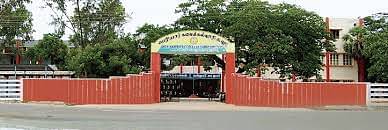
Periyar Government Arts College
About
OfficialPeriyar Government Arts College is a public institution in Cuddalore, established in 1964. Periyar Government Arts College, established in 1967 in Cuddalore, Tamil Nadu, is a mid-tier government arts and science college serving the Cuddalore district and surrounding regions. Named after the social reformer Periyar E.V. Ramasamy, the institution reflects the state's commitment to affordable, quality higher education in the humanities and sciences. The college operates under Tamil Nadu government affiliation and is recognized by the University of Madras for its undergraduate and postgraduate programs. Academic Programs: The college offers 8 undergraduate programs spanning English, Tamil, History, Economics, Political Science, Mathematics, Physics, and Chemistry, with a total undergraduate enrollment of approximately 1,500 students. Postgraduate programs in English, Tamil, Economics, and History serve around 300 students. The curriculum emphasizes classical humanities education with foundational science options, typical of government arts colleges in Tamil Nadu. The college does NOT offer engineering, commerce, or management programs—it is strictly arts and sciences focused. Academic Strengths: The English and Tamil departments have moderate recognition within Tamil Nadu, with occasional publications in state-level journals. The college conducts seminars on Indian philosophy and social sciences annually. However, national-level research output is limited compared to central universities. Faculty engagement in research is uneven; senior faculty publish occasionally in regional journals, while junior faculty are encouraged but face time constraints due to large class sizes (35-45 students per class is common). Campus Infrastructure: The 18-acre suburban campus includes a central library with approximately 45,000 books, basic computer labs with 60 systems shared across departments, a small auditorium (capacity 400), and open grounds for sports. Internet connectivity is limited to administrative blocks and the library; hostel WiFi is absent. The campus lacks modern research facilities, innovation hubs, or specialized labs common in well-funded institutions. Classroom facilities are basic—most lecture halls have chalkboards and overhead projectors rather than smart boards. The campus feels dated but is well-maintained with significant green cover. Placement and Career Outcomes: The college does NOT have a formal placement cell. Career support is minimal and ad-hoc. Students must pursue competitive exams (UPSC, TNPSC), further studies (MA, PhD), or self-driven job searches independently. Approximately 15-20% of graduates pursue higher education in Indian universities; 10-15% secure civil service positions after clearing UPSC/TNPSC exams; 30-40% pursue teaching or informal sector employment; remaining students migrate to metros for non-degree positions. Average salary for those employed: ₹15,000-22,000 monthly in teaching or government roles; self-employed outcomes vary widely. This is a critical weakness for career-focused students. Campus Life: The college maintains an active cultural calendar with annual Tamil language fest (Tamizh Vaalkai), English literary fest (Wordsmith), and intercollegiate sports competitions. Student clubs exist but are underfunded and rely on student initiative. Hostel facilities for women (capacity 150) and men (capacity 100) are basic—shared rooms, common bathrooms, basic food in mess. Ragging is monitored but occasional incidents occur; the college has anti-ragging committees. Mental health support and counseling are absent. Student safety, particularly for women, is adequate on campus but limited after hours due to poor street lighting near the college. Notable Alumni and Impact: The college has produced several regional Tamil writers, TNPSC officers (estimated 40-50 per decade), and academics at state universities. However, it lacks nationally prominent alumni in research, business, or public service at the scale of IITs or central universities. Alumni networks are weak; reunion events are infrequent and poorly attended. Who Should Apply: This college is ideal for students seeking affordable, government-funded higher education in arts and sciences with no pressure for immediate corporate placements. It suits students aspiring to civil service exams (UPSC, TNPSC), teaching careers, or further academic study. Students must be self-driven, as institutional support for skill development and placements is minimal. The college is NOT suitable for students expecting campus placements in IT, finance, or corporate sectors. It is also NOT recommended for students prioritizing modern infrastructure, extensive research opportunities, or cosmopolitan campus experiences. It is a survival-focused, exam-prep-intensive institution for academically motivated, frugal students from Cuddalore and surrounding districts. What Makes It Unique: As a government arts college in a semi-urban district capital, Periyar offers the lowest fee structure in Tamil Nadu (total 4-year cost under ₹40,000), making it accessible to economically weaker sections. The college's Tamil department is historically significant with connections to Tamil language movements. The institution serves as a social mobility lever for students from government schools with no alternative options. However, these strengths come with trade-offs: limited exposure to contemporary education, weak industry connections, and minimal post-graduation career infrastructure.