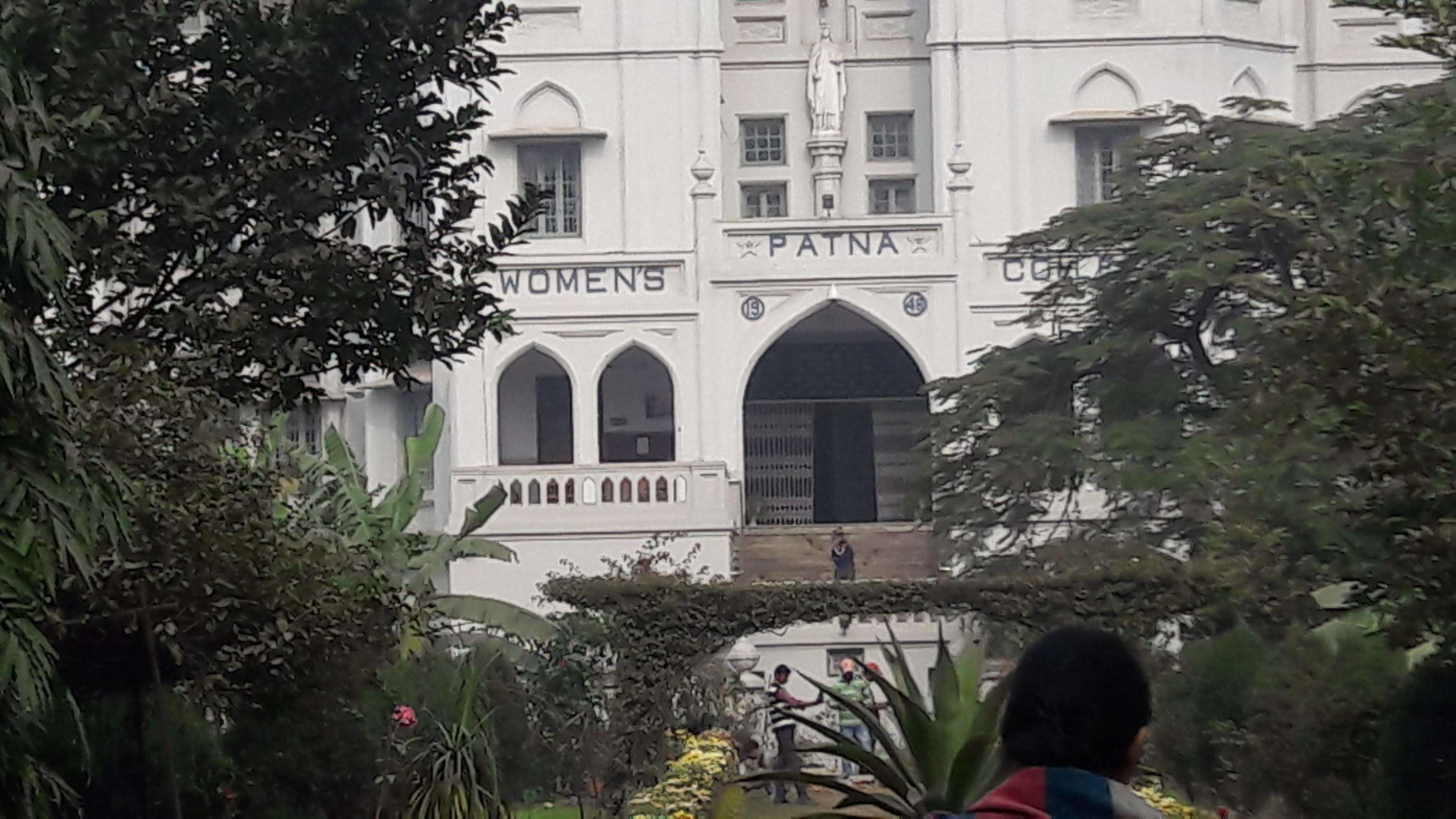
Patna Women's College
About
OfficialPatna Women's College is a other institution in Patna, established in 1940. Patna Women's College, established in 1874, is one of the oldest and most prestigious women's educational institutions in India. Located in the heart of Patna, Bihar, the college has been a beacon of women's education for nearly 150 years. The institution has evolved from a traditional arts college into a comprehensive multi-disciplinary center offering undergraduate and postgraduate programs across Sciences, Arts, Commerce, and Computer Science. The college's founding was a pioneering effort during the British colonial period when women's education was still considered unconventional. Over the decades, it has produced countless women leaders, administrators, academics, and professionals who have contributed significantly to society. The college campus, situated in the urban Keshab Nagar area, spans approximately 8.5 acres with a mix of heritage buildings and modern facilities. The institution currently serves around 2,800 students with a faculty strength of 185, maintaining a reasonable student-faculty ratio. Academically, the college offers 18 different undergraduate and postgraduate programs spread across multiple disciplines. The Science faculty includes departments of Physics, Chemistry, Botany, Zoology, and Mathematics, all maintaining good laboratory facilities and research infrastructure. The Commerce and Economics departments are particularly strong, offering specialized certifications in accounting, finance, and economics. The Arts faculty covers English, Hindi, History, Political Science, Sociology, and Philosophy. The newly established Computer Science department has emerged as one of the most sought-after programs, offering both undergraduate and postgraduate degrees in B.Sc. (Hons) Computer Science and M.Sc. Computer Science. The college has been recognized by the UGC under Section 12(B) of the UGC Act. It holds NAAC accreditation with a 'B' grade as of 2021. The college library houses over 65,000 volumes, making it one of the better-stocked libraries among women's colleges in eastern India. The digital learning resources include e-books, online journals, and access to academic databases. The college has established research centers in Environmental Science, Women's Studies, and Ancient Indian History. Faculty members are actively engaged in research projects funded by UGC, DST, and other national agencies. The placement record has improved significantly over the past five years, with major recruiters from technology, education, finance, and publishing sectors visiting the campus. Average placement percentage ranges from 65-75% across programs. However, it's important to note that placement opportunities are more abundant for Science and Commerce graduates compared to Arts. The campus is women-only, creating a supportive and empowering environment specifically designed for women students. This exclusivity means all hostel facilities, sports centers, and recreational spaces are exclusively for women. Campus safety is exceptionally strong with 24/7 security, CCTV coverage, and a zero-tolerance policy on ragging. The college has never reported ragging incidents in the past 15 years. The hostel accommodation is available for around 800 students, with demand far exceeding supply. Life on campus is characterized by academic rigor combined with numerous cultural, sports, and entrepreneurial activities. The college hosts its annual cultural fest 'Jagriti' in March, which is a three-day celebration attracting participation from across the state. The college has active sports teams competing in badminton, basketball, volleyball, table tennis, and athletics at the state and national levels. Several women students have represented Bihar and India in national sports competitions. Clubs and societies cover technical domains (coding club, data analytics club), cultural activities (debate society, dramatics club, music club), and social causes (environmental club, women's rights forum). What makes Patna Women's College unique is its historical significance combined with its evolution into a modern educational institution. For women from Bihar and neighboring states seeking quality higher education in a women-centric environment with strong academic rigor, the college offers exceptional value. The college is particularly recommended for women students interested in pursuing careers in academics, research, social sciences, economics, business, and emerging fields like data science. The principal and faculty are approachable and genuinely concerned about student welfare. Alumni networks, while not as aggressively maintained as IITs or IIMs, are strong in Bihar and include several accomplished women in government, education, and corporate sectors. The main limitations include: infrastructure is aging in some buildings, limited tech integration in classrooms compared to newer private colleges, placement numbers are modest for Arts graduates, the job market in Patna itself is limited (most placements require relocation), internet speed is inconsistent, and the college town ecosystem lacks the vibrancy of metros. Patna as a city is developing but not comparable to Bangalore, Delhi, or Mumbai for career opportunities. Students should come with realistic expectations about city amenities and job market dynamics. However, for undergraduate education, particularly for women seeking a secure, academically rigorous, and historically significant institution with strong alumni legacy, Patna Women's College delivers excellent value at reasonable costs.