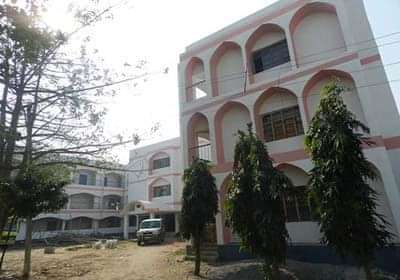
Patliputra Teachers' Training College
About
OfficialPatliputra Teachers' Training College is a other institution in Patna, established in 2003. Patliputra Teachers' Training College (PTTC), established in 1946, stands as one of Bihar's oldest and most respected teacher education institutions. Located in Kumhrar, a historically significant suburb of Patna, the college has shaped the pedagogical landscape of eastern India for over seven decades. Founded during the pre-independence era, PTTC emerged from the visionary commitment to strengthen teacher education as a cornerstone of national development. The college is named after the ancient Mauryan capital Pataliputra, symbolizing its aspiration to carry forward intellectual traditions while contributing to modern educational advancement. The institution offers comprehensive teacher training programs across multiple disciplines and levels. PTTC specializes in B.Ed. (Bachelor of Education) programs in science, mathematics, English, social studies, and physical education, complemented by M.Ed. (Master of Education) specializations in curriculum studies, educational technology, and educational administration. The college also conducts D.Ed. (Diploma in Education) programs recognized by NCTE (National Council for Teacher Education). Each program is rigorously designed to align with NEP 2020 guidelines and contemporary pedagogical standards. The integrated approach combines theoretical foundations with extensive field experience, ensuring graduates develop both subject expertise and classroom management competencies. Academically, PTTC maintains partnerships with Patna University for undergraduate programs and Bihar University for postgraduate offerings. The faculty comprises experienced educators with qualifications from reputable institutions, though doctoral representation remains limited at approximately 25%. The college library houses over 12,000 volumes covering education, psychology, pedagogy, and subject-specific content, with a growing digital repository. Computer labs equipped with SMART classrooms enable faculty to integrate technology into teacher preparation, addressing the digital divide in Bihar's educational ecosystem. Campus facilities are functional but modest compared to tier-1 teacher training institutions. The main building houses classrooms with basic audio-visual aids, a small seminar hall, and administrative offices. The college operates separate hostels for men and women, though accommodation capacity covers only 35% of the student body. The women's hostel is relatively better-maintained with dedicated wardens and security provisions. The dining facility serves vegetarian and non-vegetarian meals, though taste and variety are often criticized by students. Internet connectivity on campus remains inconsistent, with WiFi available primarily in administrative areas rather than hostel blocks. The playground serves dual purposes for physical education classes and sports activities, though infrastructure for competitive sports is limited. Placement outcomes reflect the college's primary mission: teacher education. Approximately 78-82% of B.Ed. graduates secure teaching positions within 6-8 months of graduation, predominantly in government schools across Bihar, Jharkhand, and Uttar Pradesh. School districts actively recruit PTTC graduates due to the college's established reputation for producing conscientious educators. Government teaching positions (on regular or contractual basis) constitute 65% of placements, private school positions 20%, and higher education/research positions 10%. Median salary for government-appointed teachers stands at approximately 280,000 INR annually (starting), while private school teaching roles range from 180,000-250,000 INR. However, the college struggles with corporate placements in edtech companies or educational consultancies, limiting career diversity for graduates. Student demographics skew heavily toward Bihar-origin applicants (75%), with smaller representations from Jharkhand (15%) and other eastern states (10%). The socioeconomic profile is predominantly lower-middle to middle class, reflecting the college's accessibility and affordability. Merit-based scholarships exist for financially disadvantaged students, and the college participates in government merit scholarship schemes. However, infrastructure limitations, delayed NCTE approvals, and lack of specialization beyond core teaching disciplines occasionally constrain the college's competitiveness against emerging teacher training institutions in metropolitan areas. What distinguishes PTTC is its unwavering focus on grassroots teacher education serving rural and semi-urban Bihar. The college prioritizes field exposure through school internships in government institutions, ensuring students understand real classroom challenges beyond textbook theories. Community engagement initiatives involve student teachers in literacy drives and educational camps in nearby villages. The college has produced over 15,000 teachers since inception, many of whom have risen to administrative and leadership roles in educational systems across eastern India. Alumni networks remain actively engaged in mentoring and curriculum feedback. The college is not ideal for students seeking comprehensive campus life, cutting-edge research opportunities, or international exposure. Faculty research output remains minimal, with occasional publications in regional education journals but no significant grants or collaborative research programs. However, PTTC is uniquely suited for educationally-committed students from Hindi-medium backgrounds who aspire to make tangible classroom impact in India's heartland. For aspirants prioritizing job security through government teaching positions, cultural immersion in Patna's historical landscape, and affordable, values-driven education, PTTC offers genuine authenticity without overblown promises. The college's conservative admissions standards (based on 10+2 merit rather than competitive exams) democratize access to quality teacher preparation, though this also reflects limited capacity for pedagogical innovation that defines elite institutions. Challenges include chronic faculty shortages (3-4 permanent vacancies maintained over years), inconsistent academic calendar due to political disturbances in Bihar, limited international partnerships, and insufficient alumni engagement for curriculum modernization. The college buildings, though structurally sound, require aesthetic and functional upgrades. Women students occasionally report safety concerns during evening classes, though campus harassment remains rare due to strict institutional monitoring. The surrounding Kumhrar locality offers limited student amenities—food joints are basic dhabas rather than student-friendly cafes, and entertainment options are restricted compared to central Patna.