Parks-College
About
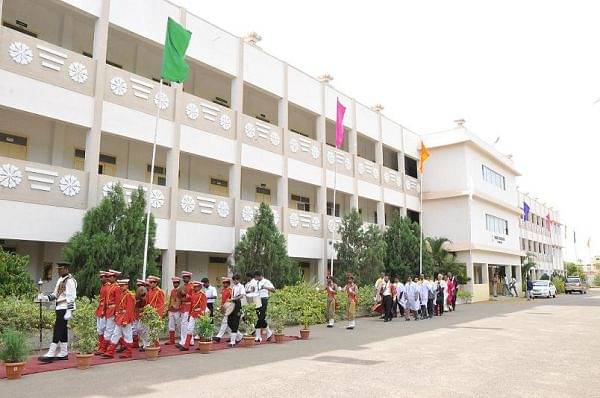
OfficialParks-College is a other institution in Tiruppur, established in 1993. Parks College, established in 2003 by the Park Educational Trust, is a self-financed engineering and management institution located in Tiruppur, Tamil Nadu. Situated approximately 45 km from Coimbatore and 500+ km from Chennai, the college has evolved into one of Tamil Nadu's notable private engineering colleges, particularly known for its textile engineering and manufacturing-focused programs aligned with Tiruppur's industrial ecosystem. The institution emerged during a period of rapid privatization in Indian higher education and has carved a niche by emphasizing industry-academia collaboration and practical skill development. Over two decades of operation, Parks College has established itself as a regional player serving primarily Tamil Nadu and neighboring states, with a growing reputation in mechanical, civil, and electrical engineering disciplines. The college's founding vision centered on creating engineers equipped not just with theoretical knowledge but hands-on expertise relevant to textile, manufacturing, and automotive sectors—industries that dominate Tiruppur's economy. This regional focus, while limiting national recognition, has resulted in strong placement outcomes within Tamil Nadu's industrial corridor. The academic structure comprises undergraduate engineering (4-year), postgraduate engineering (2-year), and MBA programs. The engineering curriculum follows AICTE guidelines with periodic updates to incorporate emerging technologies, though curriculum innovation remains slower compared to top-tier institutions. Faculty composition reflects a mix of experienced practitioners from industry and academicians, with approximately 35% holding PhDs. This blend creates a practical-oriented teaching environment but sometimes lacks cutting-edge research depth. Research activities at Parks College remain modest, with a focus on applied research in textile technology, manufacturing processes, and sustainable engineering rather than fundamental scientific breakthroughs. The institution has established collaborations with textile industry leaders based in Tiruppur and a few international universities for faculty exchange programs. However, peer-reviewed publication output remains below national averages for engineering colleges. Campus infrastructure spans 45 acres in a semi-rural setting with adequate laboratories, workshops, and computing facilities. The library houses approximately 35,000 volumes with digital access to select journals, though the collection is narrower than tier-1 institutions. Hostel facilities accommodate roughly 60% of students, with separate hostels for men and women. The campus features standard amenities including a health center, cafeteria, sports ground, and indoor sports facilities, though the overall infrastructure quality is functional rather than exceptional. Internet connectivity across campus is reliable at 10-15 Mbps, sufficient for academic purposes but occasionally congested during peak usage. The placement ecosystem is a significant strength, driven by Tiruppur's industrial presence and the college's deliberate cultivation of employer relationships. In the 2023-24 academic year, overall placement rates reached approximately 78-82% across branches, with median salaries in the 5.2-6.8 lakh INR range for engineering graduates. Top recruiters include textile machinery companies, automotive suppliers, manufacturing firms, and IT/IT services companies recruited for campus roles. A notable observation is that off-campus placements (through student networks and family connections) supplement on-campus statistics, suggesting actual employment rates may exceed reported figures. The MBA program maintains placement rates above 85% with median salaries in the 6-8 lakh INR range, primarily into supply chain, operations, and textile management roles. Campus life reflects a mix of vibrant student activity and constrained resources. The college organizes annual technical fests (Technova), cultural festivals, and sports meets with reasonable student participation. Cultural and sports clubs operate actively, though the breadth of specialized clubs is narrower than metropolitan colleges. Student governance structures exist but wield limited institutional influence. The student body comprises largely first-generation engineers from Tamil Nadu and neighboring states, creating a relatively homogeneous demographic. Gender diversity in engineering programs remains below national averages (approximately 15-20% women), though the MBA program shows better gender balance (30-35%). Ragging incidents have been rare and effectively managed; the college maintains strict anti-ragging policies with dedicated grievance cells. Safety for women students on campus is generally reported as good, with adequate lighting, security personnel, and women-only facilities, though the surrounding area requires standard precautions. The institution's unique positioning lies in its deep integration with Tiruppur's industrial base—many faculty members maintain consulting relationships with local industries, and the curriculum incorporates real-world problems from textile and manufacturing sectors. Internship placements are generally strong, with approximately 85% of students securing industrial internships, many with stipends. This industry proximity creates practical learning opportunities but may also limit exposure to emerging sectors like software development and data sciences that require different ecosystem nurturing. Parks College is particularly well-suited for students from lower-middle-class and middle-class backgrounds seeking affordable engineering education with strong regional placement prospects. The institution appeals to students interested in manufacturing, textile, mechanical, or civil engineering rather than aspirants targeting tier-1 tech roles or startup ecosystems. It serves as an effective stepping stone for students aiming for stable employment within Tamil Nadu's industrial sector and those considering higher studies (approximately 10-15% pursue MTech/MBA at other institutions). The college is less ideal for students seeking research-intensive environments, international exposure, or careers in cutting-edge technology sectors. Geographic location poses both advantages and constraints—proximity to Tiruppur industries enables strong placements but relative isolation from major metros limits exposure to emerging sectors and top-tier corporate recruitment. The college culture emphasizes practical competence and industry readiness over research innovation or academic rigor; students value the pragmatic approach and local employment security but sometimes perceive the institution as lacking aspirational prestige. Overall, Parks College represents a functional, industry-aligned institution meeting genuine educational needs within its regional context, with honest strengths in practical training and placements offset by limitations in research, national recognition, and diversity of opportunities.