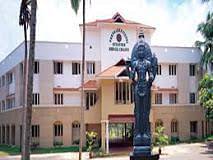
MVR Ayurveda Medical College & Hospital
About
OfficialMVR Ayurveda Medical College & Hospital is a other institution in Kannur, established in 2002. MVR Ayurveda Medical College & Hospital, located in Kannur, Kerala, is one of India's premier Ayurveda institutions established to promote and preserve the ancient science of Ayurveda while meeting modern healthcare standards. The college represents a significant investment in traditional Indian medicine education in Kerala, a state historically rich in Ayurvedic tradition and practice. Founded with the vision to create competent Ayurveda practitioners who can bridge traditional knowledge with contemporary research, MVR has established itself as a credible medical institution serving both academic and healthcare purposes. The institution operates under strict UGC and CCIM (Central Council for Indian Medicine) regulations, ensuring that its curriculum meets national standards for Ayurveda education. The college is situated in Kannur district, an area deeply rooted in Ayurvedic culture and practice, providing students with exposure to authentic Ayurvedic practitioners and community health systems. This geographical advantage allows students to interact with real-world applications of Ayurveda in healthcare delivery across Kerala's predominantly Ayurveda-friendly population. Academic Programs: MVR offers comprehensive undergraduate and postgraduate education in Ayurveda. The flagship Bachelor of Ayurveda, Medicine & Surgery (BAMS) program spans 5.5 years including internship, preparing students for clinical practice, research, or administrative roles. Postgraduate programs in specialties like Padartha Vigyan (Ayurvedic Pharmacology), Samhita Siddhanta (Classical texts), Roga Nidana (Pathology), and Dravya Guna (Materia Medica) enable specialization and research. These programs emphasize both theoretical understanding of classical texts and practical clinical skills, with significant emphasis on evidence-based Ayurvedic practice. Curriculum and Teaching Approach: The curriculum balances traditional Ayurvedic texts (Charaka Samhita, Sushruta Samhita, Ashtanga Hridaya) with modern anatomical, physiological, and pathological knowledge. Students engage with integrated learning modules that connect ancient concepts to contemporary disease management. The college employs a mix of didactic lectures, practical demonstrations, case-based learning, and clinical rotations. Emphasis on Sanskrit terminology ensures students can engage with original texts while developing communication skills for modern practice. Clinical Training: The attached hospital provides 200+ beds for in-patient care, out-patient departments for specialized Ayurvedic treatments, and a pharmacy manufacturing unit. Students gain hands-on clinical experience in departments of Kayachikitsa (Internal Medicine), Shalya Tantra (Surgery), Shalakya Tantra (ENT/Ophthalmology), Kaya Chikitsa (Pediatrics), and Prasuti Tantra (Obstetrics). The hospital treats a diverse patient base from Kannur and surrounding regions, exposing students to varied clinical presentations and Ayurvedic management protocols. Research and Innovation: The college has established research centers focused on ethnopharmacology, validation of classical formulations using modern analytical techniques, and clinical outcome research in Ayurvedic treatments. Faculty members pursue research in collaboration with CSIR institutes and universities, contributing publications to both traditional medicine journals and peer-reviewed scientific publications. Students participate in research projects during their course, developing scientific temperament alongside clinical expertise. Placement and Career Outcomes: BAMS graduates pursue diverse career paths including clinical practice (private and government Ayurveda hospitals), administrative positions in healthcare systems, pharmaceutical companies focused on Ayurvedic products, teaching roles, and further specialization through postgraduate studies. While traditional employment in government hospitals remains limited compared to allopathic medicine, the growing acceptance of Ayurveda in insurance schemes and wellness centers has expanded opportunities. Many graduates establish successful private Ayurvedic clinics, particularly in Kerala where patient acceptance is high. Some pursue integrated medicine practice or healthcare administration. Campus Life: The college provides hostel facilities with separate accommodations for men and women students. The campus includes a library with extensive collections of classical Ayurvedic texts (in Sanskrit and English), modern medical literature, and research journals. Facilities include a medicinal garden with authentic Ayurvedic herbs, demonstration of traditional preparation methods, and hands-on training in pharmaceutical compounding. Sports facilities, cultural clubs, and academic societies promote holistic student development. Annual events include Ayurveda awareness programs, intercollegiate competitions, and clinical case presentation contests. Notable Features: The college's proximity to traditional Ayurvedic practitioners in Kerala allows for unique apprenticeship-style learning opportunities. Students benefit from exposure to regional Ayurvedic knowledge systems and treatment methodologies developed over centuries in Kerala. The college maintains collaborations with Ayurveda hospitals across Kerala, providing observational and clinical training opportunities beyond campus. The strong alumni network in Ayurvedic practice and administration provides mentorship and career guidance. Who Should Apply: Students genuinely interested in Ayurveda as a medical science rather than pursuing it as an alternative to allopathic medicine will thrive here. Candidates with interest in research, pharmaceutical development, or integrative medicine find the institutional environment conducive. Those planning to practice in Kerala or South India, where Ayurveda has strong patient acceptance, will find excellent career prospects. Students comfortable with curriculum integrating ancient texts with modern evidence-based approaches will find the education most valuable. However, those seeking primarily modern biomedical training or aspiring for international medical practice should carefully consider that this is a specialized Ayurveda program. Challenges and Honest Assessment: Ayurveda practice remains restricted in several Indian states and is not recognized for medical practice in many countries, limiting international opportunities. Job placements in government sector are limited and competitive. The private practice requires significant capital investment and patient base building. Research opportunities, while growing, are fewer compared to mainstream medical or biomedical institutions. Student community is smaller (420 total), potentially limiting networking breadth. The college is in a suburban setting, requiring adjustment for students from metro backgrounds.