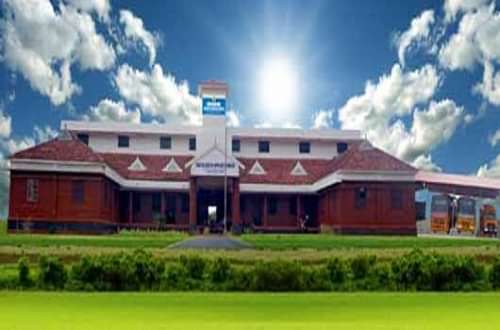
Our College of Applied Sciences
About
OfficialOur College of Applied Sciences is a other institution in Taliparamba, established in 1952. College of Applied Sciences (CAS), established in 2000, is a government-aided institution located in Taliparamba, a quiet town in Kannur district in northern Kerala. Founded with the mission to provide quality higher education in applied sciences and professional disciplines, CAS has evolved into a respected institution known for its practical, industry-aligned curriculum and strong emphasis on experiential learning. The college operates under the affiliation of Kannur University and is recognized by the University Grants Commission (UGC) and All India Council for Technical Education (AICTE). The institution offers a diverse portfolio of undergraduate and postgraduate programs spanning Engineering, Computer Science, Management, and Science streams. Its Engineering programs—particularly Civil Engineering, Mechanical Engineering, and Electrical Engineering—are popular among Kerala entrance examination (KEAM) applicants. The college has steadily built a reputation for producing graduates who are well-equipped for both industry placement and higher education pursuits. The faculty comprises experienced educators, many with industry exposure and research credentials, ensuring curriculum delivery remains contemporary and relevant. Academic programs are structured to balance theoretical knowledge with hands-on practice. Labs are equipped with modern instruments, and the college maintains tie-ups with industry partners for internships and project work. The college's proximity to Kannur's emerging tech ecosystem and its location in God's Own Country (Kerala) provides unique opportunities for collaborative research and field-based learning, particularly in marine biology, sustainable technology, and plantation agriculture. Placement performance has shown steady improvement, with major IT companies like Infosys, TCS, Wipro, Accenture, and Amazon recruiting regularly. The median salary for engineering graduates stands around 4.8-5.2 lakhs annually, with highest packages reaching 12-14 lakhs. The college maintains an average placement rate of 78-82% for engineering branches and 65-70% for science programs. However, placement outcomes vary significantly by branch—computer science achieves near 95% placement while civil engineering sits around 60-65%. Campus infrastructure is functional but modest. The college operates with resource constraints typical of government-aided institutions in tier-3 towns. The library houses approximately 18,000 volumes and provides digital access to major academic databases. Wi-Fi connectivity spans the campus but can be inconsistent during peak hours. Hostels are available for both male and female students, though accommodation is limited and students often seek private lodging in nearby towns. Student life at CAS is characterized by a close-knit community atmosphere. The college has active technical clubs (IEEE, CSI, Rotaract), cultural societies, and sports teams. Annual fests like Techfest and Culturefest attract participation from nearby institutions. However, the rural setting means limited urban entertainment and nightlife—students often travel to nearby Kannur city (25 km away) for recreation. The college has historically maintained discipline and reported minimal ragging incidents, with a strong institutional culture around academic focus. The institution serves as a gateway for talented students from northern Kerala who cannot access opportunities in Kochi or Thiruvananthapuram. It is particularly strong for students seeking engineering education with lower competition than tier-1 colleges, reasonable fees (approximately 45,000-60,000 per year for engineering), and a learning environment that prioritizes individual attention. CAS is ideal for students who value affordability, practical education, and a supportive community over cosmopolitan campus amenities. Weaknesses include limited research infrastructure compared to central universities, modest placement packages for non-CS branches, and geographical distance from major tech hubs limiting industry partnerships. The rural setting, while conducive to focused academics, means fewer co-curricular opportunities and networking chances compared to urban college locations. Alumni network, though growing, remains concentrated in Kerala and Middle East (significant diaspora recruitment).