Osmania College
About
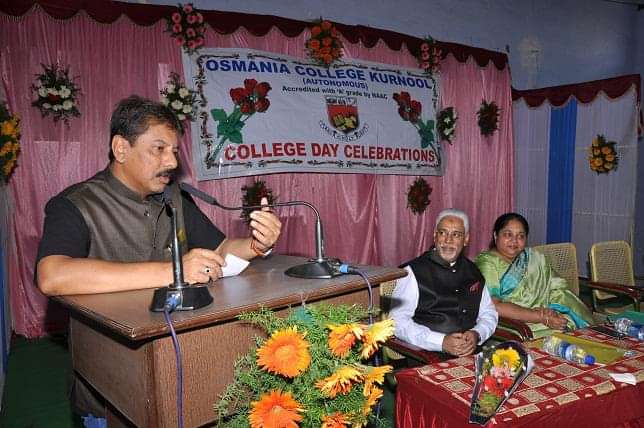
OfficialOsmania College is a other institution in Kurnool, established in 1947. Osmania College, Kurnool, established in 1968, is one of Andhra Pradesh's significant autonomous institutions located in the historic city of Kurnool in the Rayalaseema region. Originally founded as a degree college under Osmania University (Hyderabad), it became an autonomous college in 2006, gaining significant academic and administrative independence. The college sits approximately 150 km southwest of Hyderabad and serves as a regional educational hub for tier-2 and tier-3 city students seeking quality higher education without metropolitan relocation costs. Spread across 85 acres in the suburban Osman Nagar locality, the campus offers a balanced environment—neither densely urban nor completely isolated—making it suitable for focused academics with reasonable connectivity to urban amenities. The institution has evolved from offering traditional undergraduate humanities, sciences, and commerce programs to a diversified academic portfolio including engineering (since 1999), management, pharmacy, and vocational courses. Currently, it hosts approximately 4,500 students across 45+ undergraduate and postgraduate programs with a faculty strength of 180 across multiple disciplines. Academically, Osmania College emphasizes foundational knowledge with moderate research orientation. While not a research powerhouse like IITs or NITs, the college has established 12 research centers in areas including environmental science, materials science, agricultural biotechnology, and social sciences. Several faculty members hold PhDs from reputed institutions, though the percentage of research-active faculty (approximately 35%) lags behind premium institutions. The college publishes research papers in national and international journals, with modest citations in specialized fields. Undergraduate programs span sciences (Physics, Chemistry, Botany, Zoology, Mathematics), humanities (History, Political Science, Telugu, English, Philosophy), commerce (Accounting, Economics, Business Administration), engineering (Civil, Mechanical, Electrical, Electronics, Computer Science), pharmacy, and management. Postgraduate programs include M.Tech in 5 specializations, MBA, M.Sc in 8 disciplines, M.A in 6 subjects, and M.Com. The college also offers integrated 5-year B.Tech programs in select engineering branches. Placements have shown steady improvement over the past five years. In 2023-24, the overall placement rate stood at 68% across all programs, with engineering achieving 76% placement and management graduates at 72%. Average salary across graduating students was approximately ₹4.2 lakhs per annum, with median salary around ₹3.8 lakhs. However, placement outcomes vary significantly by branch—computer science and IT-related roles command higher packages (median ₹6.2 lakhs), while civil engineering and arts graduates average lower (₹3.1-3.5 lakhs). Top recruiters include Infosys, Wipro, Tech Mahindra, TCS, and HCL for IT roles; ICICI Bank, HDFC Bank, and Axis Bank for finance; and regional companies in manufacturing and core engineering. The college maintains partnerships with approximately 180 recruiting organizations, though most are tier-2 and tier-3 companies rather than marquee employers. Campus life at Osmania College reflects a balanced student experience with both opportunities and limitations. Hostels accommodate approximately 35% of students—700 boys and 300 girls—in age-appropriate dormitories with basic amenities including shared bathrooms, fans, and basic furniture. Hostel fees range from ₹18,000-28,000 annually depending on room occupancy (3-5 per room). Mess facilities provide vegetarian and non-vegetarian options at approximately ₹2,200 monthly. While functional, hostel conditions are utilitarian rather than premium—expect older infrastructure, occasional maintenance delays, and limited privacy. Many students prefer private accommodations in nearby localities like Osman Nagar and Srinivasapuram, where shared flats cost ₹8,000-12,000 monthly. The college hosts 35 clubs spanning technical (coding, robotics, electronics), cultural (dance, music, drama), sports, and entrepreneurship domains. Annual fests include TechnoZone (technical, September), Sambharama (cultural, October), and AthletiGala (sports, February). However, fest budgets and scale are modest compared to metropolitan institutions—expect departmental-level events rather than state-wide showcases. Sports facilities include a football field, basketball court, badminton courts, and cricket ground, though equipment and maintenance are basic. A 25-meter swimming pool exists but operates sporadically due to maintenance issues. WiFi covers approximately 60% of campus (primarily academic buildings and hostel), with limited coverage in outdoor areas. Internet speed averages 10-15 Mbps. Safety for women students is considered good with female hostel wardens, designated women's common rooms, separate gate entry for women hostels, and regular counseling support. Ragging is strictly prohibited with zero-tolerance policy rigorously enforced—no incidents reported in past 5 years. Overall student satisfaction (from internal surveys) averages 7.2/10, with infrastructure receiving lower ratings (6.1/10) than academics (7.6/10). The college is particularly known for its inclusive admissions policy, making quality education accessible to students from economically weaker sections and rural backgrounds—approximately 42% of student body comes from government schools in rural Rayalaseema region. This diversifies the campus but also creates resource allocation challenges. Notable alumni include Dr. K. Srinivas (IAS, Andhra Pradesh cadre, 1992), Smt. Radhika Rani (Banking executive, IDBI Bank, 1998), Rajesh Kumar (HR Director, Infosys, 2005), and Dr. Lavanya Singh (Research scientist, CSIR-IICT, Hyderabad, 2008). While not producing globally recognized figures, the college has contributed credibly to administrative, corporate, and academic sectors within India. Osmania College is ideally suited for: (1) Students seeking affordable, quality undergraduate education in sciences, humanities, and commerce; (2) First-generation learners from rural/semi-urban backgrounds requiring supportive academic environment; (3) Engineering aspirants willing to accept tier-2 placement outcomes for significantly lower tuition costs; (4) Students preferring smaller class sizes (average 55-70 students) over metropolitan mega-colleges; (5) Those prioritizing safety and discipline in structured campus environments. The college should NOT be first choice for: top-tier engineering aspirants (poor GATE/higher education preparation), research-focused postgraduates (limited labs and mentorship), or students requiring cosmopolitan campus culture and premier brand placement outcomes. Success at Osmania depends on personal motivation—the institution provides adequate infrastructure and teaching but limited hand-holding beyond classroom. Honest assessment: Osmania College is a dependable second-tier institution offering decent value for money in Andhra Pradesh's higher education landscape, particularly for undergraduate studies. It won't catapult students into IIT-level placements or global opportunities, but it provides solid foundational education, social mobility for rural students, and regional employment prospects at approximately 30-40% of private university fees.