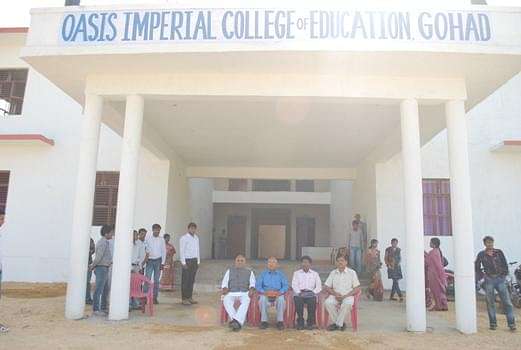
Oasis Imperial College of Education
About
OfficialOasis Imperial College of Education is a other institution in Bhind, established in 2011. Oasis Imperial College of Education is a private teacher education and allied professional studies institution established in 2008, located in Bhind, Madhya Pradesh. The college was founded with the primary mission of training quality educators and educational professionals to address the critical shortage of trained teachers in India's formal and informal education systems. Over its 16-year existence, the institution has evolved from a single-discipline teacher training college to a multi-faceted educational organization offering programs across education, arts, sciences, commerce, and digital learning domains. The college operates under the governance of the Oasis Educational Society and is recognized by the National Council for Teacher Education (NCTE) for its B.Ed and M.Ed programs. It holds affiliation with Barkatullah University, Bhopal, for postgraduate programs and maintains partnerships with the State Council of Educational Research and Training (SCERT), Madhya Pradesh. Academic Programs and Strengths: Oasis Imperial offers a comprehensive portfolio of undergraduate and postgraduate programs primarily focused on teacher education. The flagship B.Ed (Bachelor of Education) program, designed as a 2-year integrated course, follows the NCF 2005 guidelines and integrates contemporary pedagogical methodologies with field-based learning. The M.Ed (Master of Education) program emphasizes specialization in curriculum studies, educational administration, and inclusive education. The college has expanded into B.A, B.Sc, and B.Com degree programs through affiliated university arrangements, enabling diversification of its student base. Research and Academic Rigor: While primarily a teaching-focused institution, the college maintains a modest research agenda centered on educational innovation, learning science, and teacher professional development. Faculty members have published research in regional and national educational journals, and the college organizes annual seminars on contemporary educational challenges. However, compared to research universities, the publication output and doctoral research infrastructure remain limited. The institution does not currently offer PhD programs. Campus Infrastructure and Facilities: The 18.5-acre suburban campus is equipped with modern classroom blocks, a digital learning resource center, a library with approximately 15,000 volumes, and computer labs with internet connectivity. Science labs support practical instruction in psychology, education, and social sciences. The campus includes a multi-purpose auditorium, sports ground with facilities for volleyball, badminton, and cricket, and residential hostels segregated by gender. Internet connectivity across campus operates at 10-15 Mbps average speed with periodic congestion during peak hours. Placement and Career Outcomes: The college maintains a dedicated placement cell that tracks graduate employment. Most B.Ed graduates secure positions as teachers in government and private schools across Madhya Pradesh and neighboring states. The average starting salary for teachers recruited through the college ranges from ₹18,000-28,000 per month depending on school category and location. A notable percentage of graduates pursue government teacher recruitment examinations (CTET, MPSET) with reasonable success rates. The college reports approximately 78-82% placement rate within six months of graduation, though "placement" is often defined as securing any teaching position or appearing in competitive recruitment exams. Student Profile and Demographics: The student body comprises approximately 1,850 students, majority of whom are from middle-class backgrounds seeking teacher education as a stable career path. The college attracts significant enrollment from rural and semi-urban areas of Madhya Pradesh, with approximately 35% of students being first-generation college graduates. Gender distribution is roughly 60% female and 40% male, reflecting the demographic trend in teacher education programs nationally. Campus Culture and Student Life: The college fosters an environment emphasizing academic discipline, community engagement, and professional development. Student clubs focus on educational innovation, community service, and cultural expression. Annual events include an educational research symposium (typically in March), cultural festival (September), and sports day (November). The culture is generally conservative and structured, with emphasis on professional conduct befitting teaching profession expectations. Ragging is strictly prohibited and monitored. Notable Aspects and Limitations: Oasis Imperial's primary strength lies in its focused mission of teacher education with dedicated faculty experienced in pedagogical instruction. The college maintains relatively small class sizes (35-40 students) enabling personalized attention. However, the institution faces several limitations: (1) Limited research infrastructure compared to central universities, (2) Geographic isolation in a tier-3 city restricts access to major corporate recruiters, (3) Modest placement rates in non-teaching sectors for allied programs, (4) Infrastructure maintenance issues occasionally reported (water supply, sanitation), (5) Limited international exchange programs or global partnerships, (6) Relatively fewer merit scholarships compared to centrally-funded institutions. Who Should Apply: Oasis Imperial is ideally suited for aspiring teachers committed to the profession, students from middle-income families seeking affordable quality education, candidates from rural backgrounds aiming for stable government or private school teaching positions, and individuals interested in pursuing education-related research at the postgraduate level. The college is NOT recommended for those seeking high-paying corporate placements, international exposure, or research-intensive technical programs. Students should have genuine interest in pedagogy and educational service rather than viewing teacher education as a fallback option. Admission Philosophy: The college maintains a relatively open admission policy for undergraduate programs with merit-based selection. Postgraduate admissions involve written entrance examinations assessing subject knowledge and pedagogical reasoning. The institution values applicants demonstrating social awareness, communication skills, and commitment to educational service.