OAS Institute of Technology and Management
About
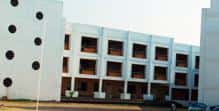
OfficialOAS Institute of Technology and Management is a other institution in Chennai, established in 2010. OAS Institute of Technology and Management (OASITM) was established in 2009 as a private engineering and management institution in Chennai, Tamil Nadu. Located in the Taramani industrial corridor, approximately 25 km south of Chennai's city center, the institute was founded with the objective of providing quality technical education combined with management and soft skills training. The institution is affiliated with Anna University, one of India's premier technical universities, and operates under the regulatory framework of the All India Council for Technical Education (AICTE). The institute's founding vision centered on bridging the gap between academic excellence and industry readiness. Over the past 15 years, OASITM has evolved from a modest engineering college into a multi-disciplinary institution offering undergraduate and postgraduate programs across engineering, management, and applied sciences. The campus, spread across 18 acres in the suburban Taramani area, provides a balanced environment—away from city chaos but with reasonable connectivity to industrial hubs and IT parks. Academic Structure: OASITM offers 8 undergraduate engineering programs (B.Tech) in Civil Engineering, Mechanical Engineering, Electrical & Electronics Engineering, Electronics & Communication Engineering, Computer Science & Engineering, Information Technology, Automobile Engineering, and Biomedical Engineering. Each program has an intake of 60-120 students per batch. The institute also offers 6 postgraduate programs including M.Tech in various specializations and an MBA with specializations in Finance, Marketing, and Operations Management. The curriculum is designed with industry consultation, featuring internship opportunities, industry-sponsored projects, and live case studies. Research & Innovation: While OASITM is primarily teaching-focused, it has established research centers in renewable energy, IoT applications, and manufacturing processes. Faculty members have published over 450 research papers in national and international journals in the last 5 years. The institute encourages students to participate in innovation clubs and has incubated 3 student startups that have gone on to secure angel funding. Research partnerships exist with companies like Bosch, Siemens, and various SMEs in Tamil Nadu. Placement Profile: OASITM maintains a placement percentage of 87-92% across engineering programs, with median starting salaries ranging from ₹4.2-6.8 lakhs per annum depending on branch. Top recruiters include Cognizant, Infosys, TCS, HCL Technologies, Mahindra & Mahindra, Bosch, Hero MotoCorp, and various mid-tier IT and core engineering companies. The MBA program achieves 96% placements with average salaries around ₹8.5 lakhs. However, salary growth beyond first 3 years is modest compared to tier-1 institutions, and startup opportunities are limited. Campus Infrastructure: The campus features modern academic blocks with smart classrooms, a central library with 35,000+ books and e-resources, 4 computer labs with 200+ systems, dedicated labs for civil, mechanical, electrical, and electronics engineering. The institute has a sports complex with badminton courts, basketball courts, cricket ground, and gymnasium. Hostel facilities are available for 1,200+ students (both male and female), with separate blocks and 24-hour security. The mess serves multi-cuisine food with reasonable hygiene standards. Campus Wi-Fi covers most areas with 30-50 Mbps speeds. Campus Life & Culture: OASITM has 45+ active clubs spanning technical (Robotics Club, Coding Club, IoT Club), cultural (Music, Dance, Drama), sports (NSS, Sports Committee), and entrepreneurship domains. Annual fests include Technovate (technical fest in September), Abhiyantran (cultural fest in March), and Mahendra Cup (sports tournament in November). Student participation in national competitions is encouraged, with several teams winning accolades in robotics, coding competitions, and engineering challenges. However, the suburban location means limited off-campus entertainment options. Faculty & Development: The institute employs 185 full-time faculty members, of which approximately 42% hold PhDs from recognized universities. Faculty qualifications are mixed—many have industry experience (average 8-10 years), but research publications per capita are lower than tier-1 institutions. The institute provides faculty development programs, but research funding is limited. Student-teacher ratio averages 15:1 in theory classes and 8:1 in labs. Student Demographics: OASITM admits students primarily through JEE Main merit-based entrance, with some seats reserved for management quota. The average JEE Main rank of admitted students hovers around 80,000-120,000 for the top branches (CSE, IT, ECE) and 160,000-220,000 for lower branches. Students come from Tamil Nadu, Andhra Pradesh, Telangana, and other states, creating a diverse campus. The gender ratio is approximately 25% female students, higher than many engineering colleges but still skewed toward males. Who Should Apply: OASITM is ideal for students seeking solid foundational engineering education with decent placement prospects at a moderate fee structure. It suits students from middle-income backgrounds who value practical learning over pure research. The college is particularly good for those interested in core engineering (civil, mechanical, automobile) or looking to transition into IT careers. Students seeking world-class research infrastructure, global exposure, or brand value comparable to IITs/NITs should consider limitations. The suburban location is a pro for focused studies but a con for those seeking urban college experience. Key Differentiators: Industry-aligned curriculum, good placement rate for tier-2 college, affordable fees (₹2.8-3.2 lakhs annually), emphasis on soft skills and communication training, emerging research initiatives in emerging technologies. However, the institution faces competition from established colleges like SSN, Saveetha Engineering, and Sairam Institute in the Chennai market. Faculty retention has been a challenge, and brand recognition outside Tamil Nadu is limited. Notable Limitations: The college's tier-2 status means limited brand value in top-tier companies' perception; research output remains modest; campus placement is good but not exceptional; administrative processes can be bureaucratic; sports facilities, while present, lag behind tier-1 institutions; and the semi-industrial location offers limited cultural/entertainment proximity.