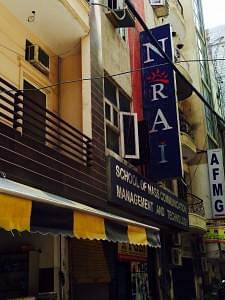
NRAI School of Mass Communication
About
OfficialNRAI School of Mass Communication is a other institution in New Delhi, established in 2001. NRAI School of Mass Communication (NRAI SMC) is a specialized institution established in 2008 in the heart of New Delhi's Dwarka institutional area, focusing exclusively on media, journalism, and mass communication education. The institution emerged from the vision of promoting professional excellence in the rapidly evolving media industry in India. Located in one of Delhi's planned suburban zones, the campus sits within proximity to Delhi's financial and institutional hub, making it strategically positioned for media house internships and collaborative projects. The school currently serves approximately 450 students across undergraduate and postgraduate programs, with a dedicated faculty strength of 28 academics and industry professionals. Founded during the digital revolution's early phases in Indian media, NRAI SMC has positioned itself as a bridge between traditional journalism and new-age digital storytelling. The institution emphasizes hands-on learning through a well-equipped media production facility, including TV studios, radio labs, digital editing suites, and a student-run newsroom that produces daily digital content. The curriculum is deliberately structured around real-world media scenarios—students work on live news production, documentary filmmaking, investigative journalism projects, and social media campaigns as core academic activities rather than peripheral exercises. What distinguishes NRAI SMC from larger mass communication departments at conventional universities is its specialized focus and industry-aligned approach. Faculty members include working journalists from leading media organizations, news editors, and digital content strategists who bring current industry practices directly into the classroom. The institution has developed partnerships with media organizations like Aaj Tak, India Today, The Hindu, The Indian Express, and several digital-first platforms, enabling structured internship rotations where students work on actual news assignments. The placement record reflects this positioning—approximately 78% of graduates secure roles in media and communication sectors within 6 months of graduation, with median salaries ranging from 3.5-4.5 lakhs for fresh graduates, and higher packages for those with strong portfolio work. The student body at NRAI SMC is notably diverse, with representation from across India, though skewed toward Delhi-NCR region candidates (approximately 60%). The gender ratio leans toward female students (approximately 58%), reflecting broader trends in Indian media workforce composition. Campus culture emphasizes journalistic ethics, storytelling skills, and entrepreneurial thinking. The institution encourages student journalism through its publication 'NRAI Today', broadcast news bulletins, and digital media channels. However, the institution faces typical limitations of a mid-sized specialized college: limited research facilities compared to larger universities, relatively smaller alumni network compared to institutions founded in 1990s, and less diverse career outcomes (primarily focused on media/communications sector rather than adjacent industries). The campus infrastructure is modern and functional but constrained by limited space—the 3.5-acre suburban campus accommodates facilities efficiently but offers limited scope for extensive sports complexes or sprawling residential areas. Living experience for students is largely shaped by Delhi's intense academic pressure and cost of living—off-campus accommodation is typically necessary for non-local students, with many residing in paying guest accommodations in Dwarka, Sector 12-13 areas. The institution is particularly suited for students passionate about journalism, digital content creation, broadcasting, public relations, and media entrepreneurship. Students should enter with realistic expectations about media industry job market volatility, irregular working hours during internships, and competitive placement dynamics. The institution is less suitable for those seeking traditional corporate career paths or requiring extensive co-curricular diversity in sports and extracurricular activities. Admission is merit-based through entrance examinations and portfolio reviews. The institution does not require CUET but conducts its own entrance test evaluating general awareness, communication skills, and media literacy. International students are occasionally admitted on a limited basis. The institution maintains moderate difficulty in securing admission compared to tier-1 universities but higher selectivity than open-enrollment journalism departments at larger universities. Notable alumni include journalists working at major news networks, digital content creators with substantial social media following, documentary filmmakers who have exhibited at international film festivals, and public relations professionals at leading corporations. The institution's unique value proposition lies in its singular focus on media education, industry immersion approach, and practical skill development in an increasingly digital media landscape.