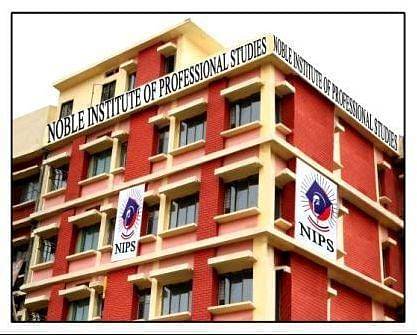
Noble Institute of Professional Studies
About
OfficialNoble Institute of Professional Studies is a other institution in Delhi, established in 2005. Noble Institute of Professional Studies (NIPS), established in 2009, is a private educational institution located in Dwarka, Delhi, operated under the aegis of educational entrepreneur and industry leader Sameer Saxena. The institute emerged during India's higher education expansion phase with a specific mandate to bridge the gap between traditional academic learning and industry-relevant skill development. Over 15 years of operation, NIPS has positioned itself as a mid-tier professional studies college serving primarily Delhi and NCR students seeking management, engineering, and technology-focused education outside the highly competitive IIT/NIT system. The institute operates from a 8.5-acre campus in Dwarka, West Delhi, one of Delhi's newer suburban localities with significant student population concentration. NIPS is recognized by the All India Council for Technical Education (AICTE) and the University Grants Commission (UGC), and offers UG and PG programs primarily in Management, Engineering, and IT domains. The college's academic structure comprises four main schools: School of Engineering & Technology, School of Management, School of Design & Architecture, and School of Applied Sciences. The engineering programs span Computer Science & Engineering, Electronics & Communication, Mechanical Engineering, and Civil Engineering with annual intakes ranging from 60-120 students per branch. Management education is offered through PGDM (Post-Graduate Diploma in Management) and MBA programs with specializations in Finance, Marketing, Human Resources, and Operations. The institute positions itself as a 'skill-first' institution, emphasizing industry partnerships, internship placements, and practical learning over pure theoretical academics. This positioning reflects the ground reality that NIPS attracts students with moderate JEE Main scores (typically 150-200 rank bands in NIPS cutoff zones) and CAT scores above 50th percentile, positioning it as an accessible alternative for middle-tier engineering and management aspirants. Administratively, the institute operates under AICTE approval for engineering programs and UGC affiliation for management studies. The campus is well-connected to South Delhi and Central Delhi via the metro system, specifically near the Dwarka Metro Station on the Blue Line, making it reasonably accessible for day scholars. However, it is not strategically located for students seeking proximity to India's major tech hubs or corporate centers, as Dwarka is increasingly residential and suburban rather than commercial. The institute's key strength lies in its placement network and industry connect programs. NIPS has established relationships with over 400+ companies across IT, finance, consulting, and manufacturing sectors. Companies like Cognizant, TCS, Infosys, Wipro, ICICI Bank, HDFC Bank, Amazon, and various startups have been regular recruiters at NIPS campus. The average placement rate for engineering programs hovers around 78-85%, while management programs achieve 82-88% placements, reflecting moderate but respectable outcomes for a private institution. Notably, however, placement rates have shown slight decline post-2021 due to market saturation in the IT sector and increased competition from other Delhi-based private colleges. NIPS also emphasizes value addition through international partnerships. The college has MOUs with universities in the UK, USA, Canada, and Australia for student exchange programs, faculty development, and research collaborations. This allows select students to pursue '2+2' or '3+1' international degree programs, though participation rates remain low (typically 5-8% of cohort). The campus infrastructure includes modern computer labs with 250+ systems, dedicated experimental labs for engineering branches, a 10,000+ book library with digital access, smart classrooms with audio-visual aids, a cafeteria, sports complex with basketball and badminton courts, and a health center. Internet connectivity across campus is fiber-based with 30+ Mbps speed, though connectivity in hostel areas occasionally experiences bottlenecks during peak hours. One significant limitation of NIPS is its hostel capacity. The institute can accommodate only 300-350 out of 1,850 students, resulting in approximately 82% of students being day scholars or staying in private PGs and shared accommodations. This creates practical challenges for students from non-Delhi regions who cannot commute daily. The hostel infrastructure, while basic, is gender-segregated and reasonably safe with CCTV surveillance and 24-hour security. However, hostel life at NIPS is relatively muted compared to campus-based residential institutions, limiting the immersive 'college experience' that many students expect. From an academic quality perspective, NIPS faculty comprises a mix of PhD-holding academics (approximately 35-40% with PhD qualifications) and industry practitioners. This blend creates both strengths and inconsistencies—while some faculty members bring cutting-edge research and industry insights, others are primarily teaching-focused without significant research output. The college does not emphasize research heavily; the primary focus remains on curriculum delivery and industry alignment. Very few faculty members are publishing in national or international journals, and research funding remains minimal. The institute does not have recognized research centers or significant collaborations with IITs or other premier institutions, which limits research opportunities for ambitious students. Fee structure at NIPS is moderate compared to tier-1 private colleges but substantially higher than government institutions. Annual tuition fees for engineering programs range from 2,10,000 to 2,60,000 INR per annum, while MBA programs cost 5,50,000 to 6,50,000 INR per annum. When combined with hostel, mess, and other charges, the total 4-year engineering cost can reach 10-12 lakhs, and 2-year MBA can exceed 15 lakhs, making it economically significant for middle-class families. Placements have been a selling point for NIPS. Average package for engineering graduates ranges from 6.5-8.5 LPA with top 20-25% of students achieving 10-15 LPA packages. MBA graduates average 10-12 LPA, with some high-performers crossing 18-20 LPA, particularly those securing consulting or investment banking roles. However, it is crucial to note that placement statistics presented by the college sometimes include internship offers and job offers from concurrent campus drives—not all 'placements' represent permanent employment. The institute publishes 'placement percentage' rather than 'placement rate', and the distinction matters for students evaluating realistic employment odds. Geographic and demographic diversity at NIPS is moderate. While the majority of students are from Delhi and NCR (approximately 70%), the institute does attract students from Tier-2 and Tier-3 cities across India. This creates a relatively cosmopolitan campus environment, though student groups tend to form along geographic and linguistic lines. Women constitute approximately 30-35% of the student body in engineering programs and 45-50% in management programs, reflecting broader gender ratios in Indian professional education. Student sentiment about NIPS is mixed. The institution is viewed as a 'stepping stone' rather than a destination college—students recognize it as a viable platform for securing decent placements and building professional networks, but simultaneously acknowledge its lack of prestige, limited research opportunities, and weaker alumni networks compared to tier-1 institutions. Many students view NIPS as a pragmatic choice when JEE scores fall short of NIT cutoffs or when financial constraints prevent admission to top private colleges like BITS Pilani, VIT, or Manipal. Campus life at NIPS is functional but underdeveloped. While the college conducts annual fests, technical symposiums, and student clubs, the engagement levels are moderate. Major events include 'TechFest' (a technical symposium), 'Artistry' (a cultural fest), and various departmental events. However, compared to major colleges, NIPS events attract limited external participation and media coverage. Sports facilities exist but are underutilized. The college fields teams for cricket, badminton, basketball, and table tennis in inter-college tournaments, but doesn't have a strong sporting culture or tradition of winning championships. Safety on campus is reported as good. NIPS maintains security checkpoints, CCTV surveillance, and security personnel. No major security incidents have been publicly reported, and the campus is perceived as safe for both men and women students. However, the surrounding Dwarka area, while rapidly developing, is not as safe as central Delhi localities. Students living in private accommodations in Dwarka report occasional concerns about street safety and local crime, though these incidents are not frequent. The college environment is generally free from ragging. Administrative policies against ragging are strictly enforced, senior-junior interactions are professional, and the relatively smaller class sizes (60-120 per branch) facilitate better oversight compared to massive government colleges. Ragging-related incidents at NIPS are virtually non-existent in recent years. Who should apply to NIPS: Students whose JEE Main scores fall in the 150-220 rank range within NIPS cutoff categories, those who scored 50-65 percentile in CAT and seek affordable MBA education, students from non-metros seeking exposure to industry-connected professional education, and pragmatists prioritizing placements over college prestige. Who should NOT apply: Students expecting a world-class research environment, those seeking a strong alumni network and prestigious college brand, students prioritizing campus life and residential experience (given limited hostel capacity), and academically-driven students interested in pursuing higher studies and research careers in top institutions. The institution's unique positioning is as a 'value-for-money, placement-focused professional college'—it delivers on placement outcomes and skill development but does not offer the prestige, research opportunities, or comprehensive campus experience that premium colleges provide. NIPS represents a rational middle ground for middle-class Indian students unwilling to compromise on professional education quality but unable to access premier institution slots.