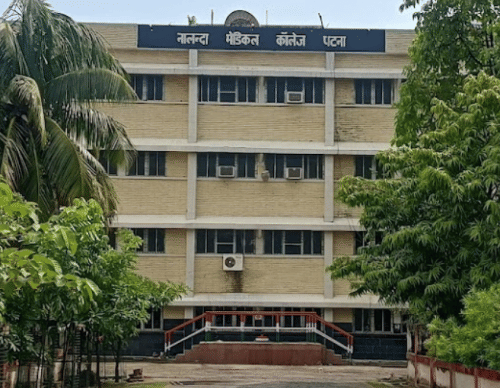
Nalanda Medical College & Hospital
About
OfficialNalanda Medical College & Hospital is a other institution in Patna, established in 1970. Nalanda Medical College & Hospital, established in 1971, is one of Bihar's premier medical institutions and operates under the Department of Health and Family Welfare, Government of Bihar. The college is named after the ancient Nalanda University, one of the world's oldest learning centers, reflecting its commitment to medical excellence and historical significance. Located in Kankarbagh, Patna, the institution has evolved into a comprehensive teaching hospital with strong emphasis on clinical training, research, and community health. The medical college is affiliated with Rajendra Institute of Medical Sciences (RIMS), Ranchi, for postgraduate programs, making it an integral part of Bihar's medical education ecosystem. The institution houses a 500-bed teaching hospital that serves as a primary training ground for medical students while also providing affordable healthcare to the local community. With over five decades of operational history, Nalanda Medical College has produced thousands of medical professionals who practice across India and internationally. The college offers undergraduate and postgraduate programs in various medical disciplines with a focus on developing clinically competent and socially responsible healthcare providers. The curriculum emphasizes community medicine and public health, recognizing Bihar's healthcare challenges. Nalanda Medical College maintains active affiliations with national and international medical bodies, facilitating knowledge exchange and collaborative research. The institution has made significant contributions to medical research in areas such as infectious diseases, maternal and child health, and tropical medicine—issues particularly relevant to Bihar's epidemiological profile. The college actively participates in medical conferences and publishes research in peer-reviewed journals. Student life at Nalanda is characterized by rigorous academic training combined with practical clinical exposure through rotations in various hospital departments. The college maintains a relatively conservative institutional culture with emphasis on discipline and professionalism. Infrastructure development has been an ongoing priority, with recent investments in laboratory facilities, digital learning resources, and medical equipment. The institution struggles with some infrastructure limitations compared to premier medical colleges in metros, but compensates through dedicated faculty mentorship and personalized training. Hostel facilities are available but basic, reflecting the college's resource constraints. The college has been working on improving its research infrastructure and has established research centers for emerging health issues. Placements and career prospects for graduates are strong, with MBBS graduates finding positions in government hospitals, private practice, and postgraduate education across India. The college's alumni network has been instrumental in mentoring current students and creating placement opportunities. For students seeking a genuine medical education focused on clinical skills and community health in a tier-2 city setting, with lower living costs and strong government institution reputation, Nalanda Medical College offers solid value. It suits students who are committed to medicine rather than seeking prestige badges, who want strong government connections, and who are willing to work within resource constraints for quality training. The college is particularly suited for students interested in pursuing government medical services and those from Bihar seeking quality local education.