NIT Nagaland
About
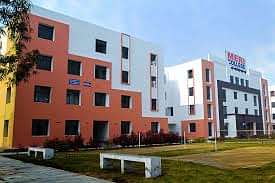
OfficialNIT Nagaland is a other institution in Dimapur, established in 2010. NIT Nagaland is one of India's youngest National Institutes of Technology, established in 2010 with a mission to deliver world-class engineering education in the North-Eastern region of India. Located in Chumukedima, Dimapur—a developing tier-3 city in Nagaland—the institute serves as a crucial educational hub for the region. The college has grown from its nascent stages to become a significant engineering institution with structured undergraduate and postgraduate programs across multiple engineering disciplines. Foundation and Growth: NIT Nagaland was created as part of the NIT expansion initiative to bring quality engineering education to underserved regions. Starting with basic infrastructure, the institute has systematically developed its facilities, faculty base, and academic programs over the past decade. The college currently offers 14-year integrated UG programs in Civil, Mechanical, Electrical, Electronics & Communication, Computer Science & Engineering, and newer specializations like Data Science and Environmental Engineering. Postgraduate programs include M.Tech, M.Sc, and PhD tracks. Academic Structure and Programs: The institute follows the semester system with a curriculum designed around engineering fundamentals, core domain knowledge, and emerging technologies. Core engineering programs have intake capacities ranging from 60-120 students per branch. The college has invested in modern labs including structural mechanics, fluid dynamics, digital signal processing, microprocessor systems, and programming facilities. Computer Science & Engineering remains the most competitive and highest-demand branch, followed by Electronics & Communication. Research and Innovation: NIT Nagaland has established research clusters in areas like renewable energy, civil infrastructure, materials science, and IoT applications. The institute encourages faculty-student collaboration through its research centers and innovation lab. Industry partnerships exist with organizations in telecom, power, and IT sectors. However, research output in terms of publications and patents remains modest compared to older IITs or NITs, primarily due to the relative youth of the institution and limited research funding. Placement Performance: The 2023-24 placement cycle showed approximately 82-85% placement rates overall, with Computer Science achieving near 95% placements. Average salary ranges from 5.5-7.5 LPA, with Computer Science graduates commanding 8-12 LPA packages. Top recruiters include TCS, Infosys, Wipro, Accenture, HCL, Amazon, and core companies like NTPC, Power Grid, and HAL. The institute maintains a dedicated placement cell and conducts regular training programs for soft skills and technical aptitude. Campus and Infrastructure: The 185-acre campus in Chumukedima is spread across a semi-rural setting with developing infrastructure. The main academic complex houses classrooms, computer labs, and seminar halls. Hostel facilities are segregated by gender with separate mess systems. The library has a collection of approximately 35,000 books and digital access to major journal databases. Wi-Fi connectivity covers academic buildings but is intermittent in hostels. The campus has a health center with basic medical facilities but requires referral to Dimapur city hospital for serious cases. Student Life and Culture: NIT Nagaland hosts a vibrant cultural calendar with two major fests annually—Technova (technical fest in October) and Euphoria (cultural fest in March). The institute has over 40 clubs covering technical domains, cultural activities, sports, and entrepreneurship. Student communities are close-knit due to the relatively small size and isolated location. The student body is diverse, comprising students from across India with strong representation from the North-East. Ragging is minimal and strictly monitored by the administration. Location and Living Environment: Dimapur is the commercial hub of Nagaland but remains a tier-3 city by Indian standards. The city has limited entertainment options, average food diversity, and fewer cosmopolitan amenities compared to metro cities. However, the cost of living is significantly lower than major Indian cities. The climate is subtropical with moderate summers (25-32°C), cool winters (10-18°C), and substantial monsoon rainfall from June to September. This can be isolating for students accustomed to urban environments but offers a focused academic ecosystem. Unique Aspects: NIT Nagaland's distinctiveness lies in its role as a bridge to higher education for North-Eastern India. The institute has fostered a community-oriented approach where local industry connections are developing. The smaller size compared to established NITs creates intimate faculty-student relationships and easier access to mentorship. However, this comes with the trade-off of lower brand recognition outside the North-East and limited alumni network in corporate sectors. Placement Challenges: While overall placement rates are respectable, placements are concentrated in IT and core sectors. Consulting, finance, and business roles are limited. Companies heavily recruiting from tier-1 NITs sometimes skip NIT Nagaland. Several non-CS branches (Civil, Mechanical) face extended placement timelines with starting salaries around 4.5-5.5 LPA. Who Should Apply: NIT Nagaland is ideal for students seeking serious engineering education at affordable costs in a focused, less-distracting environment. It suits those who can handle semi-rural living, want to pioneer the growth of engineering education in the North-East, or have regional roots. It is less suitable for students prioritizing metropolitan lifestyle, seeking maximum career optionality, or dependent on a large alumni network. The college delivers fundamental engineering competence but requires proactive students to build competitive profiles independently. Future Outlook: The institute is gradually improving infrastructure and faculty research credentials. Recent government focus on North-Eastern development suggests increased funding potential. However, growth will remain measured, and competition from newer IIITs and state universities in the region may impact recruitment quality.