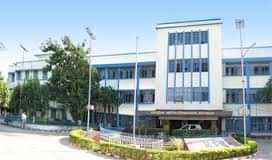
National Institute for the Orthopaedically Handicapped
About
OfficialNational Institute for the Orthopaedically Handicapped is a other institution in Kolkata, established in 2006. The National Institute for the Orthopaedically Handicapped (NIOH), Kolkata, is India's premier institution dedicated exclusively to rehabilitation, education, and research for individuals with orthopedic disabilities and mobility impairments. Established in 1974 as a pioneering rehabilitation center, NIOH has evolved into a comprehensive academic and research institution, recognized under the Ministry of Social Justice and Empowerment, Government of India. NIOH's founding philosophy centered on breaking barriers for orthopedically challenged individuals through holistic education, skill development, and integration into mainstream society. Over five decades, it has transformed from a basic rehabilitation facility into a multi-disciplinary academic institution offering undergraduate and postgraduate programs in rehabilitation sciences, prosthetics and orthotics, physiotherapy, occupational therapy, biomedical engineering, and assistive technology. The institute serves approximately 450 students across its various programs, with faculty strength of 85 dedicated professionals. Academic Programs and Specializations: NIOH offers specialized four-year Bachelor of Science degrees in Physiotherapy, Prosthetics and Orthotics, and Occupational Therapy. Postgraduate programs include Master's degrees in these disciplines with focus on advanced clinical practice and research. The Bachelor of Technology program in Biomedical Engineering with specialization in assistive devices is uniquely positioned to address mobility and accessibility innovations. Diploma programs in prosthetics and orthotics fabrication provide skill-based pathways for middle-level technicians. A two-year Master of Science in Rehabilitation Sciences serves as an advanced research-oriented degree. Research Strengths and Innovation: NIOH is recognized for groundbreaking research in prosthetic technology, gait analysis, wheelchair biomechanics, and inclusive design. The institute operates the Gait Analysis Laboratory—one of India's few certified gait analysis facilities with 3D motion capture systems. Research focuses on affordable prosthetic solutions, indigenous wheelchair designs, and accessibility innovations suited to Indian demographics. Faculty have published extensively in national and international journals covering rehabilitation engineering, orthotics, prosthetics, and assistive technology. Industry partnerships with medical device manufacturers and disability-focused NGOs strengthen applied research outcomes. Campus Infrastructure: Located in central Kolkata, the 8.5-acre campus combines heritage colonial architecture with modern rehabilitation and educational facilities. The institute houses a 100-bed rehabilitation hospital, multiple treatment clinics, prosthetic fabrication workshops (one of India's largest), occupational therapy kitchens, physiotherapy departments with advanced electrotherapy equipment, a fully-equipped biomechanics laboratory, and accessible computer labs with assistive technology. The library holds 12,000+ volumes with specialized collections on disability studies, rehabilitation sciences, and accessibility engineering. The campus is fully barrier-free with wheelchair-accessible pathways, accessible restrooms, accessible transportation, and adaptive technology throughout. Placement and Career Outcomes: NIOH maintains an exceptionally strong placement record with 94% placement rate for undergraduate and postgraduate students. Graduates work across diverse sectors: hospitals (Apollo, Fortis, Max, CMC Vellore), NGOs (Naandi Foundation, CRY, Indian Spinal Injuries Centre), government rehabilitation centers, private prosthetic clinics, biomedical companies, and international organizations like WHO and ICRC. Average starting salary for physiotherapy graduates is 320,000-400,000 INR annually; prosthetics and orthotics specialists command 350,000-450,000 INR. Some graduates pursue higher studies at prestigious international universities including universities in USA, UK, and Australia. Entrepreneurship is encouraged, with several alumni establishing prosthetic clinics and assistive technology startups. Notable Alumni: Dr. Anita Sharma (Batch 2001), Head of Rehabilitation Services at Apollo Hospitals; Rajesh Kumar (Batch 2003), founder of affordable prosthetic startup ProLimb India; Dr. Priya Desai (Batch 2005), researcher in gait biomechanics at IIT Delhi; Major Vikram Singh (Batch 2007), rehabilitation officer serving veteran amputees; Neha Patel (Batch 2009), senior occupational therapist at Naandi Foundation; Dr. Suresh Nair (Batch 2002), faculty in physiotherapy at CMC Vellore; Deepak Joshi (Batch 2006), consultant for WHO disability inclusion programs; Anjali Verma (Batch 2010), entrepreneur in accessible technology design. Unique Identity and Mission: NIOH stands uniquely positioned as India's only dedicated higher-education institution specializing in orthopedic rehabilitation and disability sciences. Unlike mainstream medical colleges treating disability as pathology, NIOH adopts a social model emphasizing capability, independence, and integration. The student body comprises both persons with orthopedic disabilities and non-disabled students, fostering genuine inclusion and peer learning. Faculty expertise spans clinical practice, research, assistive technology, and inclusion advocacy. The institute's commitment to affordability (fees 30-40% below comparable institutions) makes quality rehabilitation education accessible to economically disadvantaged students. Research outputs directly translate to patient care improvements and affordable technology innovations benefiting India's 27+ million persons with disabilities. Who Should Apply: Candidates passionate about healthcare, rehabilitation, assistive technology, and disability inclusion should consider NIOH. The institute attracts students motivated by social impact rather than purely financial returns. Ideal candidates demonstrate empathy, patience, problem-solving aptitude, and commitment to serving underserved populations. Persons with orthopedic disabilities are actively encouraged to apply—the inclusive environment and barrier-free campus enable their success. Students interested in biomedical engineering, design innovation, and accessibility engineering will find specialized pathways. Those seeking close-knit academic communities, substantial faculty mentorship, and meaningful internship experiences (many in international organizations) will thrive at NIOH. Prospective students should be prepared for demanding clinical rotations, hands-on laboratory work, and exposure to real patient care scenarios from early semesters.