Nimra College of Engineering and Technology
About
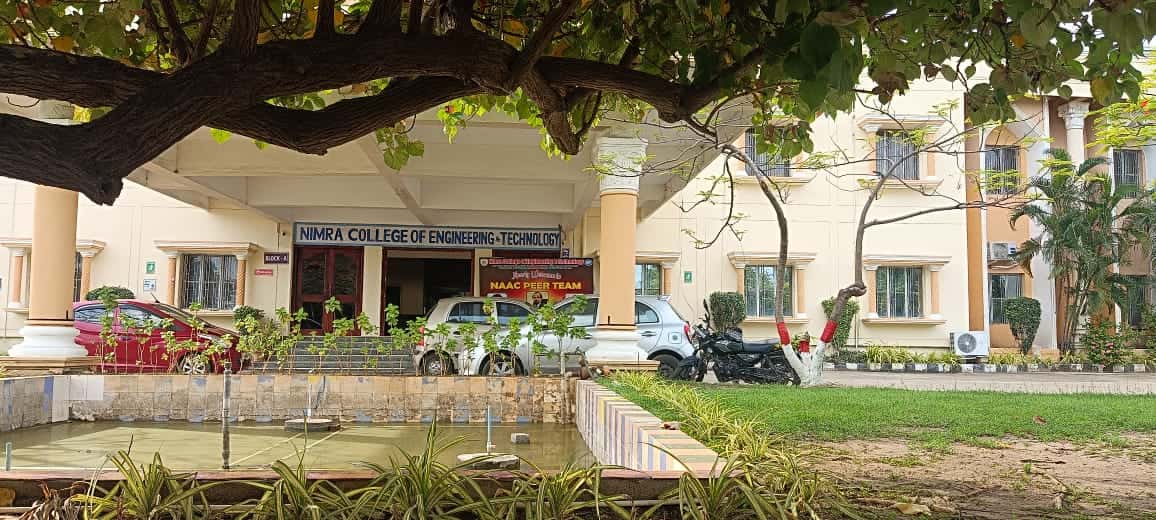
OfficialNimra College of Engineering and Technology is a other institution in Vijayawada, established in 1997. Nimra College of Engineering and Technology (NCET) was established in 2008 in Vijayawada, Andhra Pradesh, as a private engineering institution affiliated with JNTU Kakinada. Over the past 16 years, it has evolved into a moderate-tier engineering college serving approximately 3,200 students across undergraduate and postgraduate programs. The college is situated on a 18.5-acre suburban campus near Ibrahimpatnam, about 15 km from Vijayawada city center, providing a relatively peaceful learning environment away from urban congestion while maintaining reasonable connectivity to the city. The academic portfolio includes eight engineering disciplines at the undergraduate level: Civil Engineering, Mechanical Engineering, Electrical & Electronics Engineering, Electronics & Communication Engineering, Computer Science & Engineering, Information Technology, Chemical Engineering, and Aeronautical Engineering. Additionally, NCET offers postgraduate programs in Civil Engineering, Mechanical Engineering, and Computer Science & Engineering with specializations in structural analysis, thermal engineering, and machine learning respectively. The college also runs diploma programs in select streams with a 2-year duration, catering to students seeking shorter qualification pathways. Academic infrastructure includes 45+ faculty members with PhD qualifications, research laboratories equipped for undergraduate projects, a central library with over 32,000 books and 25+ e-journals, and computing facilities with 8 computer labs. The college has obtained NAAC accreditation with a B+ grade (valid until 2027) and maintains NBA accreditation for 5 core engineering programs. However, research output remains modest—the college publishes approximately 40-50 research papers annually through faculty and postgraduate scholars, primarily in regional and national journals rather than high-impact international venues. Placement performance in 2023-24 showed an overall placement rate of 72% across all branches, with significant variation. CSE and IT branches achieved 88-92% placements with median salaries around 4.8-5.2 LPA, while Civil and Mechanical Engineering branches recorded 55-65% placements with median salaries around 3.2-3.8 LPA. Core engineering sectors (manufacturing, core engineering) remain weak recruiters, with most placements concentrated in IT services, software development, and support roles. Major recruiters include TCS, Infosys, Wipro, HCL Technologies, Tech Mahindra, and Cognizant—predominantly service-based companies rather than product firms or specialized domain experts. The campus offers hostel facilities for approximately 40% of the student population, with separate boys and girls hostels. Hostel rooms are 2-3 sharing arrangements with basic amenities including attached bathrooms, ceiling fans, and Wi-Fi connectivity. Mess food operates under contract vendors and quality varies—generally adequate with rice-dal-vegetable cuisine, occasionally criticized by students for repetitive menus and inconsistent preparation. Monthly hostel + mess cost averages around 23,000-25,000 INR. Campus life includes 18+ student clubs spanning technical (robotics, coding, CAD), cultural (dance, music, drama), and sports categories. The annual festival "TechNexus" celebrates technical innovations with paper presentations, project exhibitions, and coding competitions, while "Samvaad" is the cultural fest featuring performances and competitions. Sports facilities include a basketball court, badminton courts, cricket ground (synthetic), volleyball court, and a basic gymnasium. However, these facilities are modest compared to tier-1 engineering colleges—the cricket ground is synthetic rather than natural grass, and the gymnasium has limited equipment. Campus connectivity includes Wi-Fi coverage across academic buildings and hostels with average speeds of 15-20 Mbps, occasionally experiencing bottlenecks during peak usage hours. The college operates a shuttle service connecting the campus to Vijayawada railway station and major bus terminals, with 3-4 trips daily. This is crucial given the suburban location—students without personal transport heavily rely on these shuttles. The college has received moderate recognition in regional engineering college rankings (appearing in 101-150 band in NIRF Engineering rankings for 2024), but lacks national prominence. Notable alumni include several software engineers at major IT companies, a few government officers who qualified UPSC exams, and entrepreneurs running small software startups. The alumni network remains relatively underdeveloped compared to older, established institutions. Faculty quality is mixed—while some professors hold PhDs and actively guide research projects, others lack industry experience and research publications. Student feedback indicates teaching effectiveness varies significantly by department; CSE and IT faculty are generally stronger, while Civil and Mechanical Engineering departments face occasional faculty shortages and higher reliance on contract lecturers. Admissions are primarily through JEE Main cutoffs (varying between 80th-95th percentile depending on branch and category) and EAPCET (Engineering, Agriculture and Medical Common Entrance Test—Andhra Pradesh's state-level exam). The college also accepts students through management quota (approximately 15-20% of seats), which has led to quality variations in classroom diversity. Fees for engineering programs average around 95,000-110,000 INR annually for self-financing seats, considerably lower than metro-based private colleges but higher than state NIT/IIIT options. Who should apply: NCET is suitable for students seeking an affordable, moderately-ranked engineering education in Tier-2 city with decent placement opportunities in IT services sectors. It's appropriate for students scoring 75th-90th percentile in JEE Main who cannot afford top-tier private colleges and have not qualified for NIT/IIIT entry. The college provides a safe learning environment and basic infrastructure sufficient for conventional engineering education. However, it's NOT recommended for students pursuing advanced research aspirations, seeking premier corporate internships, or requiring cutting-edge laboratory facilities. The core engineering branches (Civil, Mechanical, Chemical) should be avoided unless cost is the only factor—they attract weaker recruitment attention. IT/CSE branches offer the most reliable placement outcomes. Key concerns include: (1) Limited industry-academia research collaborations, (2) Modest infrastructure compared to tier-1 colleges, (3) Concentration of quality placements in non-core IT services rather than specialized domains, (4) Occasional governance transparency issues in management quota admissions, (5) Relative isolation from major tech hubs (Bengaluru, Hyderabad core cities), (6) Faculty retention challenges in key departments.