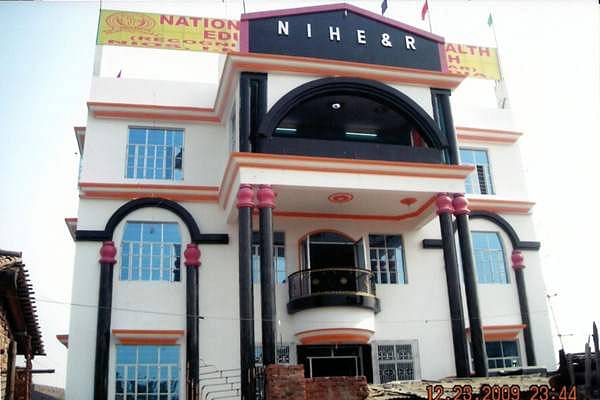
National Institute of Health Education and Research
About
OfficialNational Institute of Health Education and Research is a other institution in Patna, established in 1997. The National Institute of Health Education and Research (NIHER), established in 2009, is a relatively young but rapidly growing autonomous institution located in Patna, Bihar. It was created with the mission to address the critical shortage of skilled health professionals in Eastern India and to conduct health research aligned with India's healthcare challenges. Unlike traditional medical colleges focused exclusively on clinical training, NIHER bridges the gap between public health education, health management, and medical research, making it a distinctive institution in the Indian health education landscape. The institute operates under the Ministry of Health and Family Welfare, Government of India, and is recognized by the Medical Council of India (now NMC - National Medical Commission). NIHER's founding vision was to create a center of excellence that would not only train medical professionals but also contribute to evidence-based health policy and community health initiatives in Eastern India, a region historically underserved by premium medical education institutions. Academic Programs and Strengths: NIHER offers a unique blend of clinical medicine, public health, and health management programs. The undergraduate medical program (MBBS) follows the standard Indian curriculum but with emphasis on community-oriented medical education. The institution has earned recognition for its strong public health programs at postgraduate level, including MSc in Public Health, MSc in Health Systems Management, and specialized diplomas in epidemiology and health informatics. These programs are designed to create health professionals who understand not just individual patient care but also population-level health challenges. The institute's research focus is centered on health systems research, infectious disease epidemiology, chronic disease prevention, and health policy implementation. Faculty members have published extensively in peer-reviewed journals and contribute to national health policy discussions. NIHER has established research partnerships with organizations like ICMR (Indian Council of Medical Research), state health departments, and international health organizations, providing research opportunities for both students and faculty. Campus Infrastructure: The 45-acre campus is located in Phulwari, approximately 25 km south of Patna city center. While the campus is spacious and relatively peaceful, it remains somewhat isolated from city amenities, which impacts student lifestyle and convenience. The medical college building is modern with well-equipped laboratories for pathology, microbiology, biochemistry, and other subjects. The teaching hospital attached to NIHER has 200+ beds and provides exposure to diverse patient cases, though resources are not at par with premier All India Institute of Medical Sciences (AIIMS) facilities. The library houses a decent collection of medical textbooks and journals, with digital access to major medical databases. Internet connectivity across campus is decent but not exceptional. Hostel Facilities: The institute provides separate hostels for men and women students. Boys' hostel accommodates around 150 students with 2-3 students per room, while girls' hostel accommodates around 100 students. The hostel rooms are basic but functional with attached bathrooms. Hostel fees are reasonable at approximately ₹35,000-45,000 per year. The mess provides vegetarian and non-vegetarian food options, though quality varies and remains a consistent point of feedback from residents. Water supply and electricity are reliable. Internet connectivity in hostels is patchy and often requires personal investment in WiFi solutions. Placement and Career Outcomes: NIHER graduates have diverse career pathways. Medical graduates typically pursue post-graduation in various specialties, with many qualifying for prestigious government positions through NEET-PG. The institute has a decent placement record with government hospital placements (particularly in Bihar and neighboring states) being common. Private sector placements are emerging but limited. Average salary for medical graduates securing private sector roles ranges from ₹12-18 lakhs per annum, though many opt for government service which offers better job security. Public health graduates secure positions in organizations like state health departments, NRLM, NGOs focused on health, and international health organizations. Some graduates pursue further studies abroad, particularly in public health programs at reputed universities. Placement Cell Performance: The placement cell is functional but not as aggressive as those at AIIMS or premier private medical colleges. The institute has established tie-ups with major hospitals, healthcare consulting firms, and international health organizations. Placement percentage for UG medical is around 80-85% in direct roles post-graduation (many pursue further studies). For PG programs in public health, placement is higher at around 90%+ with varied salary structures. Notable Alumni and Institution Profile: Alumni include bureaucrats in state health departments, faculty members at other medical colleges, researchers at ICMR institutes, and health policy consultants. While NIHER hasn't produced globally renowned names yet (it's still young), its alumni are making meaningful contributions to India's health sector, particularly in Eastern India. What Makes NIHER Unique: 1. Strong Public Health Focus: Unlike many medical colleges that are purely clinical, NIHER actively promotes public health education and research 2. Community Health Orientation: Curriculum emphasizes understanding healthcare systems, health policy, and community needs 3. Research Opportunities: Strong emphasis on health systems research with ICMR collaborations 4. Eastern India Connect: Positioned to address specific health challenges of Eastern India with research and trained professionals 5. Reasonable Fees: As a government-aided institution, fees are substantially lower than private medical colleges 6. Growing Recognition: Rapidly gaining reputation in health research circles Challenges and Honest Concerns: 1. Limited Resources: Hospital infrastructure and equipment lag behind AIIMS facilities 2. Geographic Isolation: Located outside city proper, affecting student lifestyle and internship opportunities in premium hospitals 3. Limited PG Seats: Very few postgraduate seats, so most students must compete nationally through NEET-PG 4. Infrastructure Gaps: Some specialties have limited teaching staff and equipment 5. Emerging Institution: Still building brand recognition compared to established medical colleges 6. Bihar Context: State has limited private sector healthcare infrastructure, limiting clinical exposure diversity 7. Library Resources: While improving, still lacks some premium journal subscriptions available at AIIMS Who Should Apply: 1. Students interested in Public Health and Health Systems: If you're passionate about population-level health challenges, this is ideal 2. Future Policymakers: Strong platform for those wanting to influence health policy in India 3. Research-Oriented Students: If academic research appeals to you more than pure clinical practice 4. Students from Eastern India: Particularly suitable for those wanting to serve their region 5. Budget-Conscious Applicants: Want quality medical education at government-aided costs 6. Community Medicine Enthusiasts: More exposure to community health than typical medical colleges 7. NEET Qualifiers: Those scoring well in NEET but not topping enough for AIIMS or top-tier colleges Who Should Reconsider: 1. Pure Clinical Specialists: If you want world-class tertiary care exposure, AIIMS offers better infrastructure 2. International Aspirants: Those targeting US/UK medical practice might find NIHER's public health focus misaligned 3. Premium Urban Lifestyle Seekers: The suburban location and Bihar context won't suit urban preferences 4. Private Sector Focused: If private practice is your goal, Delhi/Mumbai medical colleges have better networks 5. Specialization Seekers: Very few advanced equipment/specialists for niche specialties Campus Culture: NIHER has a balanced, academic-focused culture with growing student engagement. The atmosphere is less competitive than AIIMS but more serious than average private colleges. Student politics is minimal. Extracurricular activities include annual health seminars, research symposiums, cultural programs, and sports. The institution encourages research participation from 2nd year onwards, which is a significant value addition. Future Trajectory: The institution is on an expansion path with plans to increase bed capacity, add new specialties, and enhance research infrastructure. Government has been investing in Eastern India medical education expansion, and NIHER is positioned to benefit from this push. Over the next 5-7 years, it's likely to become significantly more competitive and recognized.