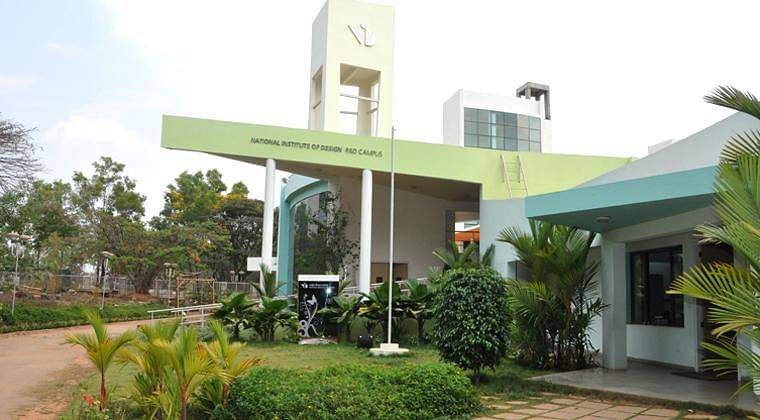
National Institute of Design, Bangalore
About
OfficialNational Institute of Design, Bangalore is a other institution in Bengaluru, established in 2006. The National Institute of Design, Bangalore is a premier autonomous design institution established in 2001 as a satellite campus of NID Ahmedabad, India's flagship design school. Formally, NID Bangalore operates as an autonomous institution under the Ministry of Education and is globally recognized for its innovative design education and research. The institute began operations with the vision of democratizing quality design education beyond the traditional hubs, establishing itself in the IT corridor of Bangalore where technology and creative thinking converge. Historically, NID was founded in Ahmedabad in 1969 as an institution of national importance by the Government of India, with Charles and Ray Eames providing foundational pedagogical guidance. The Bangalore campus inherited this legacy of design thinking excellence while adapting to the city's thriving tech ecosystem. Over two decades, NID Bangalore has evolved from a satellite campus to a robust autonomous institution with its own faculty, research initiatives, and industry partnerships. Academic Programs: NID Bangalore offers comprehensive design education across multiple disciplines. The primary undergraduate offering is the 4-year Bachelor of Design (B.Des) program with specializations in Communication Design, Product Design, and Interaction Design. These programs emphasize experiential learning, live projects with industries, and design thinking methodologies. The institute also offers 2-year Master of Design (M.Des) programs in Advanced Design, Material Science & Technology, and Design Entrepreneurship. Additionally, short-term diploma programs, certificate courses, and executive education offerings cater to working professionals and entrepreneurs. The design philosophy centers on human-centered design, sustainability, and innovation for real-world problem-solving. Research Strengths: NID Bangalore has developed strong research capabilities in Design for Sustainability, Social Design, Digital Transformation, and Materials & Innovation. The institution hosts research centers focused on Design Science, Interaction Design Research, and Future Studies. Faculty-led research projects often collaborate with industries like IT companies, automotive manufacturers, and social enterprises. The institute emphasizes design research that bridges academic inquiry with practical application, producing insights relevant to India's developmental challenges and global design discourse. Research outputs include peer-reviewed publications, design patents, and industry-applied innovations. Campus Infrastructure: The Whitefield campus features dedicated design studios with industry-standard software, prototyping labs, fabrication workshops, a state-of-the-art library with extensive design resource collections, photography and video production studios, and collaborative spaces designed for interdisciplinary work. The campus is strategically located in Bangalore's innovation hub, enabling seamless industry engagement and student exposure to cutting-edge technology companies. The environment itself is a learning space, with thoughtfully designed buildings reflecting design principles. Placement and Career Outcomes: NID Bangalore graduates have consistently strong placement records, with approximately 85-92% placement rates across batches. Graduates secure positions as Design Leads, Senior Designers, UX/UI Specialists, Product Strategists, and Innovation Managers across top-tier companies. Key recruiters include Google, Meta, Microsoft, Amazon, Flipkart, Adobe, SAP, KPMG, and numerous design consultancies like Pentagram, Frog Design, and Doreen Design. Many graduates transition into entrepreneurship, launching successful design-driven startups. Median salary packages range from 8-12 LPA for fresh graduates, with experienced hires commanding 15-25 LPA. The design sector's growth and India's digital transformation have created abundant opportunities for NID graduates. Notable Alumni: The institute counts accomplished designers and entrepreneurs among its alumni. Designers who have won international design awards, founded successful design agencies, led design functions at Fortune 500 companies, and contributed to India's design discourse. Several alumni lead in-house design teams at major tech companies and have authored influential publications on Indian design practice. Unique Aspects: NID Bangalore's unique positioning lies in its location within India's technology epicenter, enabling profound integration of design with software, AI, and digital innovation. Unlike traditional fine arts institutions, NID emphasizes design as a strategic problem-solving discipline. The curriculum balances design theory, craft-based making, and digital tools, preparing students for both traditional design roles and emerging areas like UX design, digital product design, and design leadership. The institute's autonomy allows curriculum flexibility and rapid adaptation to industry needs. Strong mentorship from practicing design professionals and direct engagement with real projects distinguishes the learning experience. Campus Culture: The student community at NID Bangalore is characterized by creative thinking, collaborative spirit, and entrepreneurial orientation. Students work on live projects for external clients, participate in national and international design competitions, and engage in social design initiatives addressing community needs. The culture emphasizes iterative thinking, embracing failure as learning, and designing for real impact. Regular design talks, workshops, and exhibitions expose students to global design trends and practices. Who Should Apply: NID Bangalore is ideal for high school graduates with demonstrated interest in design, creative problem-solving aptitude, and strong visual-spatial reasoning. Candidates should possess portfolio-quality creative work, articulate design thinking, and commitment to developing human-centered solutions. The program suits those interested in careers as UX/UI Designers, Product Designers, Communications Designers, Interaction Designers, Design Strategists, and Design Entrepreneurs. Professionals seeking design upskilling through master's programs will find the advanced curriculum rigorous and industry-relevant. The institute attracts students passionate about design as a vehicle for social change, technological innovation, and cultural expression. Strong English communication skills are essential as most curriculum is delivered in English. Students comfortable with ambiguity, iterative processes, and interdisciplinary collaboration thrive here. Admissions Competitiveness: Admissions are highly selective. NID Bangalore receives 5000+ applications for approximately 120 UG seats, resulting in acceptance rates around 2-3%. The selection process includes portfolio review, design aptitude test (assessing visual reasoning, creativity, problem-solving), written examination, and personal interview. Academic merit alone is insufficient; demonstrated creative potential through portfolios and design thinking demonstrated in assessments are paramount. International students are welcome, though majority are domestic. The competitive nature ensures a motivated, talented peer group.