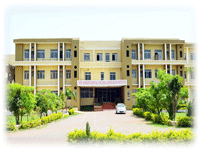
New Horizon Dental College and Research Institute
About
OfficialNew Horizon Dental College and Research Institute is a other institution in Bilaspur, established in 2006. New Horizon Dental College and Research Institute, established in 2008, is a private dental education institution located in Bilaspur, Chhattisgarh. The college was founded with the vision of providing quality dental education aligned with international standards while maintaining affordability for Indian students. Over its 16-year operational history, it has evolved from a nascent institution to become one of the notable dental colleges in central India, though it remains significantly less known than premier dental colleges like those affiliated with major medical universities. The institution is recognized by the Dental Council of India and affiliated with Chhattisgarh Swami Vivekanand Technical University (CSVTU). It operates under the private college framework in a state where dental education infrastructure is still developing. The college's founding was driven by addressing the gap in quality dental education in the Chhattisgarh region, which has limited premier dental institutions compared to metropolitan states. Academic Programs and Structure: New Horizon Dental College offers a Bachelor of Dental Surgery (BDS) program as its flagship 4-year undergraduate degree with an annual intake of 60 students. This is the primary entry point for most students, requiring NEET qualification. Additionally, the college offers postgraduate programs including Master of Dental Surgery (MDS) in multiple specializations such as Prosthodontics, Orthodontics, Pedodontics, Periodontics, Oral and Maxillofacial Surgery, and Conservative Dentistry & Endodontics. The PG intake varies from 2-4 seats per specialty annually. The institution also conducts research-oriented programs and has been working toward establishing a doctoral research division, though formal PhD programs in dentistry remain limited. The BDS curriculum follows the Indian Dental Council guidelines with emphasis on both theoretical knowledge and clinical hands-on training. Students gain practical experience through rotations in various dental departments including General Dentistry, Oral Surgery, Orthodontics, Periodontics, Prosthodontics, and Pediatric Dentistry. The college maintains 120+ dental chairs distributed across teaching and practice clinics, allowing adequate clinical exposure. However, compared to centrally funded dental colleges under AIIMS or government universities, the infrastructure for advanced research-grade equipment remains moderate. Research and Innovation: The college has established a Research and Development wing but research output remains limited compared to tier-1 institutions. Faculty are engaged in clinical research projects primarily focused on oral health epidemiology, prosthodontic innovations, and orthodontic treatment outcomes relevant to the Indian population. The institution has published papers in national dental journals but international publication rate is relatively low. Collaborations with industry are minimal, with most engagement limited to dental product suppliers rather than pharmaceutical or biotechnology firms. The college is developing laboratory facilities for oral microbiology and dental materials research but infrastructure for cutting-edge research like stem cell therapy or digital dentistry remains nascent. Campus Infrastructure: The 12.5-acre suburban campus features purpose-built structures including a dental hospital with 120+ chairs, a library with approximately 8,000 dental textbooks and journals, digital learning resources, well-equipped laboratories including prosthodontics lab, operative dentistry lab, oral pathology lab, and orthodontics lab. Teaching is conducted through a mix of traditional lectures, clinical demonstrations, and simulation-based learning. The campus has adequate hostel facilities (separate for men and women) with capacity for approximately 350 students. Computer labs are available though Wi-Fi coverage, while present across campus, experiences intermittent connectivity issues during peak hours. The campus is relatively modern for a private dental college in central India but lacks the sprawling infrastructure of premier institutions. Placement and Career Outcomes: New Horizon Dental College achieves approximately 75-80% placement rate among BDS graduates, which is moderate for private dental colleges. Most placements are self-placements into private dental clinics, multi-specialty hospitals, or entrepreneurial ventures establishing individual practices. Major recruiters include Apollo Hospitals, Fortis Healthcare, Max Healthcare, and regional chains like Aastha Dental Care and Dental365. However, the college lacks exclusive recruitment partnerships with global dental organizations or advanced research institutions. Many graduates pursue further studies (MDS) rather than direct employment, which is typical in dentistry. BDS graduates typically earn between 3-5 lakhs annually in entry-level positions, with experienced practitioners earning significantly more through private practice. The college's placement cell is functional but operates at a basic level compared to larger institutions. Post-graduation and Specialization: The MDS programs have good placement outcomes with graduates typically securing positions in dental hospitals, corporate chains, or academic institutions. However, competition for PG seats is intense nationally, and students must clear the All India NEET-PG examination. The college's PG programs are moderately ranked in the national spectrum. Graduates often migrate to metros for better career prospects, reducing the visible alumni presence in the local region. Student Profile and Campus Culture: The student body comprises primarily NEET-qualified candidates from Chhattisgarh, Madhya Pradesh, and neighboring states. A significant portion comes from middle-class professional backgrounds. Gender ratio is relatively balanced with approximately 55-60% female students. Campus culture is academic-focused with emphasis on clinical competency development. Student clubs include Rotaract, NSS (National Service Scheme) focused on oral health awareness, sports team, and cultural activities. Annual fests like 'Dental Fest' showcase clinical skills and cultural programs. Ragging is not a reported issue, and the institution actively promotes a supportive learning environment. However, the college town setting means limited metropolitan-style extracurricular ecosystem. Location and City Life: Bilaspur is a tier-3 city in Chhattisgarh, approximately 190 km from state capital Raipur. While it is a district headquarters with developing infrastructure, it lacks the cosmopolitan appeal of metro cities. The city is primarily industrial and administrative with limited entertainment options typical of smaller Indian cities. However, this translates to lower living costs and a quieter environment conducive to focused studies. Public transportation is adequate through local buses and auto-rickshaws. The Bilaspur-Raipur railway line connects the city, and air connectivity is available via Raipur airport (3 hours drive). Students accustomed to metropolitan life may find the city limiting socially, though this has improved with recent development. Fees and Affordability: The total fees for the 4-year BDS program range from 28-32 lakhs, making it a mid-range private dental college. Annual fees are approximately 7-8 lakhs. This is lower than dental colleges in metros but higher than government dental colleges. Hostel accommodation costs approximately 30,000-40,000 annually. Scholarship programs exist for meritorious and financially disadvantaged students, though not as extensive as government institutions. The college does not have a no-loan policy, but several banks offer education loans for medical/dental education. Who Should Apply: New Horizon Dental College is suitable for NEET-qualified students seeking quality dental education in a focused, lower-cost environment who are willing to study in a tier-3 city. It is particularly valuable for students from Chhattisgarh region seeking local dental education, or those from central India unable to secure seats in government colleges but desiring formal dental training. The college serves students primarily oriented toward clinical practice rather than research. It is NOT recommended for students exclusively pursuing global research opportunities or those requiring metropolitan exposure for career networks. The institution is honest about its positioning as a mid-tier private dental college rather than a premium one, and it delivers reasonably on its promise of quality clinical training and local accessibility. Strengths include good clinical exposure through high faculty-to-student ratio, affordable fees relative to metro private colleges, safe campus environment, and reasonable placement outcomes in healthcare sector. Limitations include moderate research output, limited international collaborations, tier-3 city location with restricted job market diversity, and less prestigious alumni network compared to government or premier private colleges. The college represents a practical choice for dentistry aspirants seeking sustainable career pathways without the financial burden of metropolitan institutions.