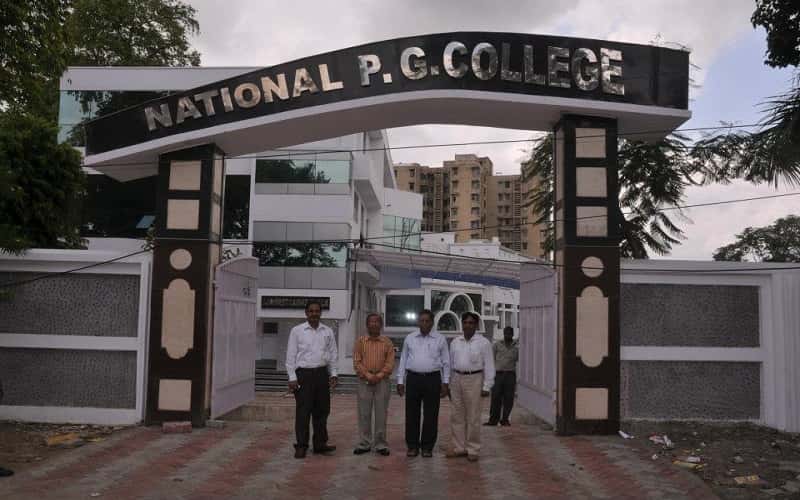
National P.G. College
About
OfficialNational P.G. College is a other institution in Gorakhpur. National P.G. College, Gorakhpur is one of the oldest and most established autonomous post-graduate institutions in eastern Uttar Pradesh, founded in 1923. Located in the historic city of Gorakhpur, which holds immense religious and cultural significance in India, the college has evolved into a multi-disciplinary academic center serving students from across northern India and beyond. The institution was established with the vision of providing quality higher education accessible to middle-class students while maintaining academic rigor comparable to premier institutions. The college's academic heritage spans over a century, during which it has produced numerous professionals, academics, administrators, and social leaders. It is one of the few autonomous colleges in Uttar Pradesh with recognized research programs and Ph.D. opportunities across multiple disciplines. The college maintains historical significance as it predates many of India's modern universities and has weathered social transformations while remaining academically relevant. Academically, National P.G. College offers 8+ post-graduate and under-graduate programs across Sciences, Arts & Humanities, Commerce, and Law. The institution emphasizes research and has emerged as a notable center for work in comparative literature, ancient Indian history, molecular biology, and environmental sciences. Faculty members regularly publish in national and international journals, though research funding remains a constraint compared to centrally funded institutions. The campus is spread across 28 acres within the city limits, featuring a mix of heritage colonial architecture and modern academic buildings. The infrastructure includes science laboratories with functional equipment, a library with 85,000+ volumes and digital access, computer centers, and sports facilities. However, budget constraints typical of state-affiliated institutions sometimes limit resources available per student compared to private alternatives. Placement outcomes have improved significantly in the last 5 years, with growing recruitment from IT companies, media houses, educational institutions, and government sectors. The median salary for undergraduate commerce graduates hovers around 3.5-4.2 lakh per annum, while science graduates secure positions in 4.8-5.8 lakh range. The placement cell is increasingly active in industry partnerships, though the college does not guarantee placements like premier private institutions. Student life at National P.G. College is characterized by active academic clubs, cultural societies, and annual festivals. The annual 'Saraswati Fest' and 'College Day' celebrations draw participation from hundreds of students. Sports facilities are decent with cricket, badminton, and lawn tennis grounds, though some facilities require modernization. The hostel infrastructure accommodates approximately 1,200 students with separate hostels for men and women. Gorakhpur as a city offers the unique advantage of a spiritual and cultural atmosphere without the chaos of metro cities. The cost of living is significantly lower than Delhi, Mumbai, or Bangalore, making it accessible for students from economically modest backgrounds. The city has good connectivity via rail and road, with the airport nearby. The college is best suited for students seeking quality academics at an affordable cost in a less competitive, more intellectually collaborative environment. It appeals to candidates who prefer a city without extreme commercialization, value cultural and spiritual dimensions of education, and seek strong foundational knowledge rather than quick corporate placements. The institution is particularly strong for students pursuing research-oriented paths in Sciences and Humanities, or those preparing for civil services and academic careers. However, prospective students should be aware that the college is not a tier-1 institution by national rankings. Infrastructure, while functional, lags behind private alternatives. The city's limited urban development means fewer corporate offices nearby, potentially reducing on-campus recruitment from tech giants. The student body is regionally concentrated, which some find limiting for networking beyond the Hindi heartland. Faculty research output, while respectable, is constrained by limited funding. Additionally, the college's governance model, while autonomous, sometimes moves slower on policy changes compared to private institutions.