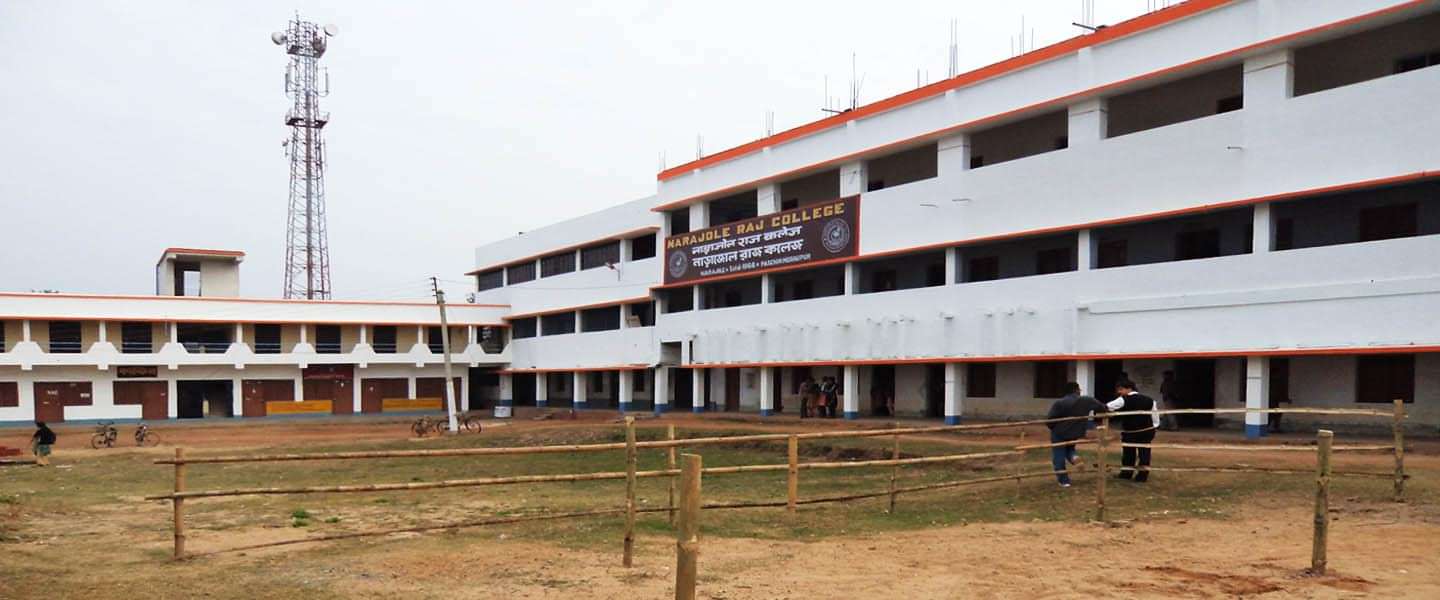
Narajole Raj College
About
OfficialNarajole Raj College is a other institution in Ghatal, established in 1966. Narajole Raj College, established in 1885 by Maharaja Sir Bijay Pratap Singh Dev of Narajole, is one of West Bengal's oldest and most historically significant educational institutions. Located in Ghatal, a small town in the Medinipur district, the college has a rich legacy of academic excellence and community contribution spanning nearly 140 years. The institution was founded during the colonial era and has consistently served as a beacon of higher education in the eastern Indian region, particularly for students from rural and semi-urban backgrounds who aspire to quality college education without migrating to major metropolitan centers. The college began as a liberal arts institution and has evolved into a multi-disciplinary college offering undergraduate and postgraduate programs across sciences, arts, and commerce disciplines. The founding by the royal family of Narajole reflects the educational vision of the princely state, and the college maintains its legacy of accessibility and quality education even today. Narajole Raj College is affiliated with Vidyasagar University, a central university established by the Government of India, which ensures academic standards and recognition at the national level. The college's academic programs span humanities, social sciences, natural sciences, and professional streams, with particular strength in science education. Notable areas of focus include chemistry, physics, botany, zoology, and English literature, where the institution has built strong departmental traditions. The college maintains a faculty-to-student ratio of approximately 1:25, enabling relatively personalized academic interaction compared to larger institutions. Research at Narajole Raj College is emerging, with faculty members actively engaged in projects related to agricultural science, environmental studies, and local development issues pertinent to rural West Bengal. The college has established research partnerships with Vidyasagar University and participates in sponsored research schemes under DST (Department of Science and Technology) and similar government bodies. Campus infrastructure reflects a blend of heritage and modernity—the college preserves several colonial-era buildings that house administrative offices and lecture halls, while contemporary science labs and a digital library have been added in recent years. The library contains over 45,000 volumes, primarily focused on undergraduate and postgraduate curricula, with growing digital resources. The college has recently upgraded its computing facilities with a new computer lab and internet connectivity across campus, though bandwidth constraints sometimes limit optimal usage. Sports facilities include a cricket ground, basketball court, and volleyball court, with an active physical education department. The college's placement record reflects its positioning: while not matching tier-1 institutions, Narajole Raj College achieves placement rates of 45-55% in recent years, primarily in teaching, banking, and administrative sectors. Many graduates pursue higher education at prestigious universities rather than seeking immediate employment. The student demographic is predominantly from West Bengal, with the majority coming from rural and semi-urban backgrounds. Significant numbers of students are first-generation college-goers, making the institution's role in social mobility particularly important. The college has produced notable academics, administrators, and social workers, though it does not have the high-visibility alumni network of major metropolitan colleges. Campus life at Narajole Raj College reflects rural Bengal culture with emphasis on intellectual discourse, cultural programs, and community engagement. Annual events include freshers' ceremonies, annual cultural festivals, sports days, and specialized seminars. The college has over 30 registered student clubs covering technical, cultural, and social interests. Hostel facilities are available for approximately 600 students—roughly a quarter of the student body—split between men's and women's hostels. Hostel life is considered a significant formative experience, with communal living fostering strong peer relationships. However, hostel conditions are modest by modern standards; rooms are typically shared by 3-4 students, and amenities are functional rather than luxury-oriented. The college administration maintains strict discipline codes, which some students appreciate for safety while others find restrictive. Ragging is formally prohibited and actively monitored; incidents are rare and dealt with severely. The college's commitment to women's safety includes dedicated women's hostel staff, restricted visiting hours, and campus security. Women report feeling relatively safe, though the rural location means reduced outdoor mobility compared to urban centers. The college environment encourages academic seriousness and social responsibility. Admission is merit-based through the West Bengal Higher Secondary Examination (Class XII) results, with separate merit lists for arts, science, and commerce streams. Reserved seats are provided for SC, ST, OBC, and EWS categories in accordance with government regulations. The admissions process is transparent and conducted centrally by Vidyasagar University for affiliated colleges. This institution is ideal for students seeking quality undergraduate education in a rural setting, those from small towns who want to study closer to home, and those prioritizing academic discipline and community values over cosmopolitan campus life. It suits students planning to pursue postgraduate studies and those interested in working in educational, administrative, or development sectors. The college is less suitable for students seeking cutting-edge research facilities, multinational corporate placements, or urban college experiences. It represents genuine educational access for rural India rather than a prestige brand, but that accessibility and authentic academic environment is its distinctive strength.