Nagarjuna College of Education
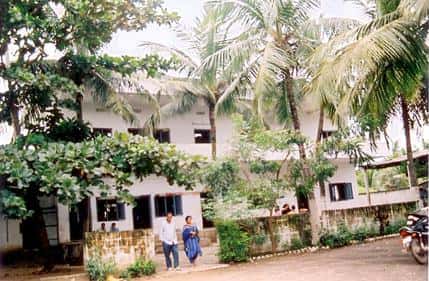
About
OfficialNagarjuna College of Education is a other institution in West Godavari, established in 2002. Nagarjuna College of Education (NCE) is a private, co-educational institution located in Tadepalligudem, West Godavari district, Andhra Pradesh. Established in 1998, the college emerged from the Nagarjuna Educational Trust's vision to provide quality higher education in the Godavari region. Over the past two decades, NCE has grown into one of the significant educational institutions in West Godavari, serving approximately 2,840 students across undergraduate, postgraduate, and diploma programs. The college operates under the regulatory framework of Andhra University and maintains affiliation with various statutory bodies. NCE positions itself as a bridge between traditional education and industry-ready skill development, with a deliberate focus on merging classroom learning with practical application. The institution operates seven academic departments spanning engineering, education, commerce, and sciences. Founded during a period when Andhra Pradesh was experiencing rapid industrial growth, NCE was designed to cater to the skill development needs of the region, particularly in emerging technical fields. The founding trust invested significantly in establishing laboratory facilities and library resources, positioning the college as a technical education hub in the district. Today, the college serves students from West Godavari, East Godavari, Krishna, and neighboring districts, with approximately 35-40% of its student body coming from outside the immediate locality. The campus architecture reflects a pragmatic approach to space utilization, with academic blocks, laboratory wings, and administrative centers arranged in a linear layout that facilitates pedestrian movement despite the suburban setting. The college has maintained steady growth in student enrollment, particularly in engineering disciplines, though it faces the common challenge of private institutions in tier-3 cities: the perception among students that reputation is concentrated in metros and major cities. Academically, NCE's strength lies in practical education. The engineering programs, particularly Mechanical and Civil Engineering, emphasize hands-on laboratory work and industry-aligned curricula. The education department produces teachers for secondary and higher secondary schools, with placement success primarily in government and private educational institutions across Andhra Pradesh. The college's commerce program serves students interested in accounting, finance, and business management, attracting students from trading families in the region. Research activities at NCE are modest compared to tier-1 institutions but growing. Faculty members engage in curriculum-linked research projects, and the college has established departmental research centers in civil engineering (water resources) and mechanical engineering (thermal systems). However, the research output is not publication-heavy, and doctoral programs remain limited. The campus life at NCE reflects the character of West Godavari: hardworking, academically focused, but with limited exposure to metropolitan student culture. The student body comprises a significant portion of first-generation learners and students from middle-class backgrounds, creating an ecosystem where academic achievement is genuinely valued. However, this also means that access to cutting-edge technical resources, visiting lectures from industry leaders, and exposure to startups and innovation ecosystems is limited compared to institutions in tech hubs. Placements at NCE are respectable for a tier-3 college. Engineering graduates typically secure positions in tier-2 manufacturing companies, IT services firms with development centers in Visakhapatnam and Hyderabad, and increasingly in logistics and infrastructure companies. The median salary for engineering graduates hovers around 3.2-3.5 lakh per annum, with top performers breaking into the 5-6 lakh range through consulting roles or specialized technical positions. Teaching graduates from the education program secure positions almost universally, but salaries remain modest (2.2-2.8 lakh for government school positions). Commerce graduates find placement in banking, insurance, and accounting firms, with median salaries around 2.8-3.2 lakh. The college's placement cell, while functional, operates with limited connections to major corporate recruitment drives that happen in metros. Instead, placement relies heavily on regional companies, direct employer contacts developed by faculty, and academic networks. Notable achievements include being recognized as an NBA-accredited engineering program (2019-2024 cycle) and maintaining NAAC accreditation at the B+ level. These accreditations lend credibility to the institution but do not dramatically alter employer perceptions, particularly for students aspiring to work outside Andhra Pradesh. Alumni networks remain primarily regional, with notable alumni working in senior roles at Visakhapatnam Steel Plant, regional banks, education department leadership, and infrastructure companies. Few alumni have achieved national prominence, which reflects both the institution's location and the relatively recent establishment compared to century-old colleges. What makes NCE distinctive is its commitment to affordable quality education. Tuition fees are substantially lower than private institutions in metros while maintaining reasonable academic standards. The college operates on a sustainability model where profits are reinvested into infrastructure, creating a slow but steady improvement in facilities. The campus, while not luxurious, is functional and continuously upgraded. Another distinguishing feature is the college's deep integration with the local community. Faculty members are involved in teacher development programs at district level, and student projects often address local problems (water quality in Godavari, agricultural mechanization, local governance issues). This creates a sense of purpose beyond mere credential acquisition. However, prospective students should be aware of significant limitations. The city of Tadepalligudem, while culturally rich, offers limited amenities compared to metros or even tier-2 cities. There is no strong tech ecosystem, limited high-quality food options, limited entertainment infrastructure, and transportation requires careful planning. Internet connectivity, though improved, remains inconsistent during peak hours in hostels. The intellectual environment, while sincere, lacks the competitive intensity and diversity of perspectives found in larger institutions. Faculty expertise, while solid for undergraduate teaching, sometimes lags in cutting-edge technical developments. Research opportunities are limited. International exposure through exchange programs or collaborations is minimal. The college is best suited for students who: (1) prioritize affordable, quality undergraduate education over prestige branding; (2) are comfortable with a regional, community-focused campus culture; (3) have realistic expectations about post-graduation geography (may need to relocate to metros for career advancement); (4) value practical, industry-aligned education over theoretical depth; (5) are from Andhra Pradesh or nearby states and want to remain rooted in the region; (6) seek admission into engineering or education fields specifically. The college is not ideal for students with aspirations toward highly competitive sectors like investment banking, strategy consulting, or top-tier tech companies, unless they possess exceptional individual merit and can compensate for institutional limitations through personal initiative.