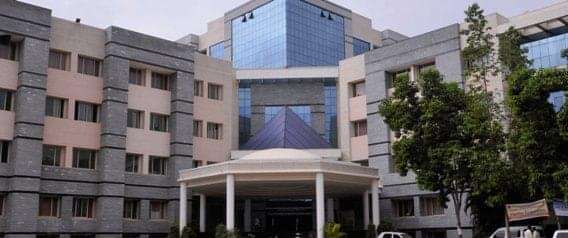
M.S. Ramaiah Institute of Technology
About
OfficialM.S. Ramaiah Institute of Technology is a private institution in Bengaluru, established in 1962. M.S. Ramaiah Institute of Technology (MSRIT) was established in 1962 by the visionary philanthropist M.S. Ramaiah, founder of the Ramaiah Group. Over six decades, it has grown into one of Bangalore's premier engineering institutions, consistently ranked among the top 100 engineering colleges in India by NIRF. The institute is located in the MSR Nagar area of South Bangalore, approximately 25 km from the city center, on a sprawling 28-acre campus that successfully balances academic rigor with modern amenities. The institute offers undergraduate and postgraduate programs across 13 engineering disciplines: Computer Science & Engineering (CSE), Electronics & Communication Engineering (ECE), Electrical & Electronics Engineering (EEE), Mechanical Engineering (ME), Civil Engineering (CE), Chemical Engineering (CHE), Information Science & Engineering (ISE), Artificial Intelligence & Machine Learning (AI&ML), Cybersecurity, Data Science, Aerospace Engineering, Biotechnology, and Electronics & Instrumentation. The CSE and AI&ML branches are particularly competitive, with admission cutoffs typically requiring JEE Main ranks below 2,000. Most undergraduate programs have annual intakes of 60-120 students, while flagship branches like CSE admit 240+ students across multiple shifts. Postgraduate programs in MTech specializations across various disciplines attract strong candidates with GATE scores in the 500-700 range. Academically, MSRIT emphasizes a balanced curriculum combining theoretical foundations with practical skills. The institute has established centers of excellence in IoT, Cybersecurity, Artificial Intelligence, and Data Analytics. Faculty members actively engage in research collaborations with institutions like IISc Bangalore and international universities. The library houses over 80,000 titles and provides digital access to numerous e-journals and databases. The infrastructure includes modern laboratories with current-generation equipment, though some students report that certain lab facilities could benefit from more frequent updates. Placements remain a significant strength of MSRIT. In the 2023-24 academic year, approximately 89-92% of engineering graduates secured placements before graduation. The median salary for CSE graduates hovers around 12-14 LPA, with top performers in competitive branches securing offers exceeding 25 LPA from companies like Google, Microsoft, Amazon, and Goldman Sachs. However, non-CSE branches experience more moderate placement outcomes, with median salaries ranging from 6-10 LPA. Notable recruiters include TCS, Infosys, Wipro, Cognizant, Accenture, Flipkart, and numerous startups. Core engineering placements have improved but remain below tier-1 IIT standards. The Placement Cell actively engages with industry partners and conducts pre-placement preparation programs. Campus life at MSRIT is vibrant but somewhat constrained by its suburban location. The institute hosts multiple technical and cultural festivals, including Ramaiah Fest (annual cultural extravaganza), Yugabharathi (technical festival), and numerous departmental events. Over 50 student clubs and societies span technical, cultural, sports, and entrepreneurship domains. The sports facilities include a cricket ground, basketball court, volleyball court, and gymnasium, though dedicated infrastructure for certain sports remains limited compared to residential universities. The campus has adequate WiFi coverage, though students report occasional connectivity issues in certain dormitory wings. The student body is diverse, with representation from across India and a few international students. Hostel facilities accommodate approximately 2,500 students (roughly 35% of total enrollment), making off-campus accommodation a necessity for majority. On-campus hostels offer separate facilities for men and women, with 2-4 sharing arrangements common in older blocks and upgraded 1-2 sharing in newer accommodations. Hostel mess food receives mixed reviews—while nutritionally adequate, variety and quality can be inconsistent. Monthly hostel costs range from 8,000-15,000 INR (including mess), with newer facilities at the higher end. Many students opt for private accommodations in surrounding areas like Banashankari, Puneeta, and Maratha Halli, where quality PGs and shared apartments are available at 10,000-20,000 INR monthly. Safety on campus and surrounding areas is generally good. The institute maintains 24-hour security with CCTV coverage in most areas. Women students report feeling reasonably safe, though like most suburban Bangalore locations, late-night travel to/from college warrants precaution. Ragging is officially prohibited with zero-tolerance policies; reported incidents are rare. The health center on campus provides basic medical services; serious cases are referred to nearby multi-specialty hospitals like St. John's Medical College and Apollo Hospitals. The city of Bangalore presents both advantages and challenges for students. As India's IT capital and a metro city, it offers unparalleled exposure to technology companies, innovation ecosystems, and entrepreneurial opportunities. However, it is increasingly expensive, with accommodation, food, and transport costs rising annually. The city's traffic congestion, particularly during peak hours, affects commute times—some students spend 1-2 hours daily traveling to college. Public transport via BMTC buses and Namma Metro provides connectivity, though suburban areas around MSRIT have limited metro access. MSRIT is most suitable for students who prioritize engineering education quality, industry exposure, and career outcomes over top-tier brand prestige (IIT/NIT). It appeals to merit-driven candidates comfortable with rigorous academics and competitive peer environments. The college is ideal for CSE/AI&ML aspirants in particular, as these branches command excellent placements and industry partnerships. Students seeking regular interaction with Bangalore's startup and corporate ecosystems will find valuable networking opportunities. However, those prioritizing campus life and residential community experiences might find the suburban location and accommodation constraints challenging. The institute is not recommended for students averse to competitive pressure or seeking a more relaxed academic environment. Key differentiators include strong alumni networks in tech companies, consistent NAAC A+ accreditation, NBA-accredited engineering programs, industry-relevant curriculum updates, and a substantial placement infrastructure. Challenges include limited on-campus housing, higher private fees compared to government colleges, suburban location necessitating long commutes, and varying quality across different branches and program cohorts.