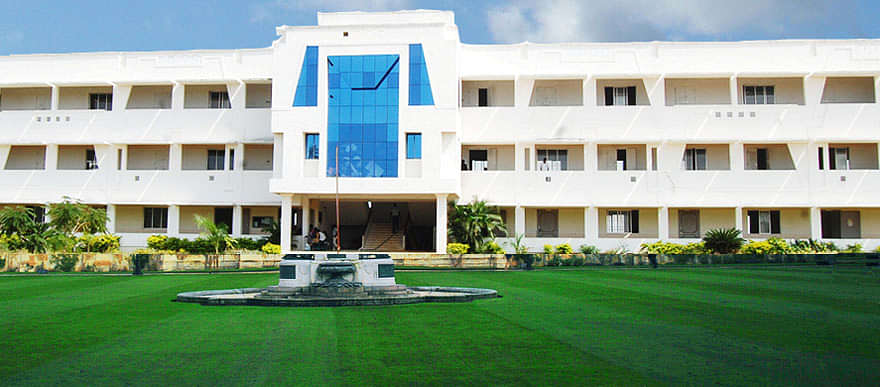
Mother Teresa College of Education, Pudukkottai
About
OfficialMother Teresa College of Education, Pudukkottai is a other institution in Pudukkottai, established in 2005. Mother Teresa College of Education (MTCE) is a private teacher education institution located in Pudukkottai, Tamil Nadu, established in 2001 by the Missionaries of Charity, an organization founded by Mother Teresa. The college operates under the aegis of a deeply rooted Catholic missionary tradition, though it welcomes students of all faiths. Pudukkottai, a historic town in Tamil Nadu known for its cultural heritage and temples, provides a peaceful, intellectually conducive environment for educational pursuits without the overwhelming urban pressures of major metropolitan centers. The institution is primarily known for its teacher training and education programs, offering courses in elementary education, secondary education, and special education across undergraduate and postgraduate levels. The college has a strong focus on developing competent, compassionate educators who can serve diverse student populations with sensitivity to inclusive pedagogical approaches. With over two decades of operational history, MTCE has carved out a reputation as one of the more established teacher education colleges in the Pudukkottai district, though it remains relatively small and boutique in nature compared to major universities. Academic Programs: The college offers Bachelor of Education (B.Ed.), Master of Education (M.Ed.), and Diploma in Elementary Education programs. B.Ed. programs are structured as 2-year full-time courses designed on the lines of RTE (Right to Free and Compulsory Education) Act standards. The curriculum emphasizes practical classroom experience through extensive internship periods, observation in schools, and microteaching components. M.Ed. programs cater to working educators seeking specialization in curriculum studies, pedagogy, and educational administration. Special Education programs specifically train educators to work with children having diverse learning needs, a niche area where MTCE has developed some expertise. Research and Academic Strengths: While not a research-intensive institution, MTCE maintains a focus on pedagogical research, teacher effectiveness studies, and educational innovation. Faculty members engage in action research projects examining classroom practices, curriculum effectiveness, and inclusive education models. The college has established partnerships with state and national educational bodies for research dissemination. However, research output is modest compared to major research universities, reflecting the college's primary commitment to teaching and teacher formation. Campus and Infrastructure: The 8.5-acre campus is well-maintained with separate academic blocks, a well-stocked library focusing on education literature and research journals, science and psychology labs, and practice school facilities. The college operates its own practice school on campus where B.Ed. students conduct teaching practice, providing direct supervision and feedback. Hostels accommodate around 200 students with basic but adequate facilities. Connectivity is good with high-speed internet across campus and in hostel blocks. The campus is noticeably quieter and less competitive than engineering or management colleges, creating a more contemplative academic environment. Placement and Career Outcomes: MTCE graduates primarily secure positions as teachers in government and private schools across Tamil Nadu and neighboring states. The placement rate hovers around 75-80%, with many graduates opting for further studies (M.Ed., Ph.D. in Education) or pursuing independent coaching centers. Average starting salary for school teachers typically ranges from 18,000-25,000 INR monthly, though this varies based on school type and location. Some graduates transition into educational leadership roles, curriculum development, or non-governmental organizations working on education accessibility projects. Unlike engineering or management colleges, MTCE cannot promise corporate sector placements, as teaching is the primary career trajectory. Student Body and Campus Life: With approximately 850 students, the college maintains an intimate learning environment where faculty-student relationships are closer. The student demographic is largely from Tamil Nadu and neighboring states, with a significant proportion coming from semi-urban and rural backgrounds aspiring to become teachers. The campus culture is academically focused but relatively conservative, with emphasis on discipline and ethical conduct aligned with the Catholic educational philosophy. Ragging is virtually non-existent due to strict institutional policies and the nature of the student body (most are education-focused and relatively mature). Female students comprise around 65-70% of the student body, which is typical for teacher education institutions. Notable Aspects: MTCE's primary differentiator is its focus on values-based education and moral formation alongside academic training. The institution strongly emphasizes that teaching is not merely a profession but a calling requiring ethical commitment. This appeals to students genuinely interested in education rather than those treating it as a fallback career option. The college has produced numerous school principals, curriculum specialists, and educational administrators who have made significant contributions to Tamil Nadu's education landscape, though individual alumni are not widely recognized in mainstream media or corporate circles. Whom Should Apply: MTCE is ideal for students genuinely passionate about teaching and educational leadership. It suits individuals who value a supportive, values-driven educational community and prefer a calm, small-town environment over competitive metropolitan settings. Students interested in special education, curriculum development, or educational research will find focused programs here. However, it is NOT suitable for those treating education as a temporary stepping stone to corporate careers or those seeking high salary packages immediately. The college explicitly appeals to idealistic educators with a mission to transform education in India. Limitations to Consider: The college's location in a tier-3 city limits industry networking and exposure to cutting-edge corporate educational technology. Research output and international collaborations remain limited compared to major universities. The salary packages for graduates are modest, and career progression often requires further studies or geographical relocation. Hostel facilities, while adequate, lack the luxuries available in premium institutions. The campus social scene is quieter than large universities, which may not suit students seeking vibrant urban college culture. Alumni network, though growing, is primarily concentrated in education sector and government institutions rather than spanning diverse industries.