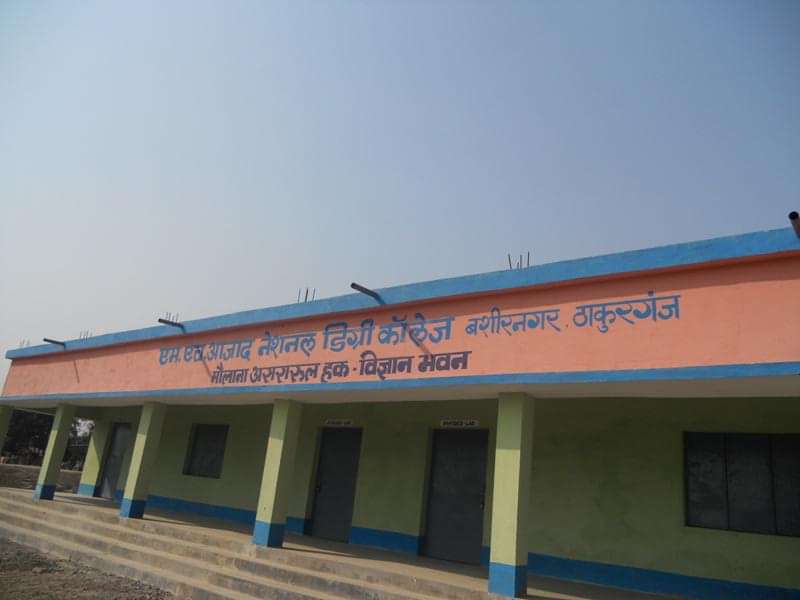
Mohammad Hussain Azad National Degree College
About
OfficialMohammad Hussain Azad National Degree College is a other institution in Madhepura, established in 1979. Mohammad Hussain Azad National Degree College, established in 1962, is one of Bihar's historic educational institutions located in the small industrial town of Madhepura. Named after the 19th-century Urdu poet and scholar Mohammad Hussain Azad, the college has evolved from a small undergraduate institution to a multi-disciplinary degree college serving the educational aspirations of students primarily from Bihar and neighboring states. The college is affiliated with Lalit Narayan Mithila University (LNMU) and operates under the academic regulations of the University Grants Commission (UGC). With a student strength of approximately 1,850 across undergraduate and postgraduate programs, MHANDC serves a significant role in providing accessible higher education in a region where quality institutions are sparse. The college's founding coincided with India's nation-building phase, and it has maintained continuity through decades of educational transformation. The institution offers 12 undergraduate programs spanning Sciences, Commerce, and Arts, along with 4 postgraduate programs in select disciplines. The college's primary strength lies in its commitment to affordable, quality education for students from economically disadvantaged backgrounds and first-generation learners. The faculty comprises 78 members, of which approximately 35% hold doctoral degrees from Indian and international universities. Academic programs emphasize core competency development with particular strength in physics, chemistry, mathematics, and commerce disciplines. The college has established a dedicated placement cell that has facilitated employment for graduating students with major recruiters primarily from Bihar-based manufacturing and FMCG sectors, along with emerging IT services companies establishing centers in Patna and nearby cities. Research activities are limited but emerging, with faculty members publishing papers in regional and national journals. The college library houses over 45,000 volumes and provides access to digital resources through INFLIBNET. The campus infrastructure includes science laboratories for physics, chemistry, and biology, a computer center with 80 operational systems, and a multimedia classroom. Student life is characterized by cultural programs, sports activities, and professional development workshops. The college hosts an annual inter-college festival 'Azad Utsav' attracting participation from neighboring institutions. Women students constitute approximately 38% of the student body, and the institution has implemented strict anti-ragging policies with dedicated women's grievance cells. The college is particularly suited for students from first-generation backgrounds, those seeking affordable quality education in Bihar, students interested in teaching or civil service preparation, and those prioritizing local employment opportunities over metropolitan placements. Notable challenges include limited research infrastructure, fewer international collaborations compared to metropolitan colleges, and geographic constraints that limit access to major corporate recruiters. The college's unique positioning as a historic, affordable, community-focused institution makes it valuable for students prioritizing stability, ethical learning environment, and regional career development over brand prestige. Madhepura's location in north Bihar's industrial corridor provides unique internship opportunities in manufacturing and textile sectors. The institution has produced several notable alumni in civil services, education, and public administration. The college maintains strong connections with local industries and government departments, facilitating practical learning opportunities.