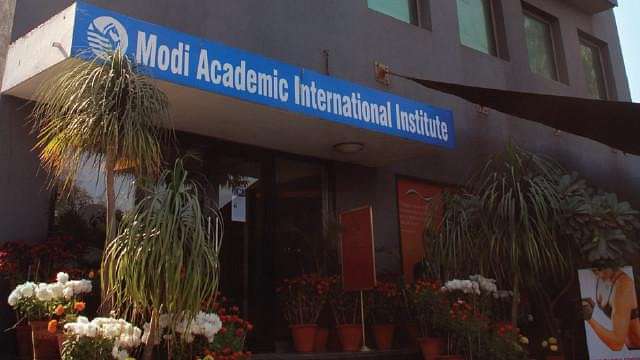
K.K. Modi International Institute
About
OfficialK.K. Modi International Institute is a other institution in Delhi, established in 2002. K.K. Modi International Institute (KKMII) is a relatively young private institution established in 2009 in the heart of Delhi's Moti Nagar area, representing the educational vision of the Modi Group. Located in one of India's most congested yet vibrant metro areas, the institute operates from a compact urban campus that maximizes vertical expansion and smart infrastructure rather than sprawling grounds. The institution has positioned itself as a bridge between Indian academic rigor and international educational standards, with a particular focus on engineering, business, and applied sciences. Founding History: KKMII was established with the mission to create globally competent graduates rooted in Indian values. The Modi Group, known for its diversified business interests, committed substantial resources to build an institution that could compete with top-tier private universities while remaining accessible to merit-based students. The institute received its first accreditation in 2014 and has been on a trajectory of incremental improvement since then. Academic Programs: The institute offers undergraduate and postgraduate programs primarily in Engineering (with branches in Computer Science, Electronics & Communication, Mechanical, and Civil), Business Administration (MBA with various specializations), and Sciences. Unlike sprawling campuses in Bangalore or Hyderabad, KKMII operates in Delhi's dense urban fabric, which presents both advantages (proximity to national capital infrastructure, internship opportunities) and constraints (limited space for expansion). Research Strengths: Research at KKMII is emerging rather than established. The institute has particular strength in IoT applications, renewable energy systems, and business process optimization. However, compared to older institutions or those with significant endowments, research publication volumes and impact are moderate. Faculty collaboration with industry partners (particularly in the Delhi-NCR tech corridor) is more developed than pure academic research output. The institute lacks significant government research grants, limiting doctoral opportunities. Campus Life: Being located in urban Delhi means students don't experience the "bubble" campus culture of institutions in smaller cities. The nearby areas of Moti Nagar, Karol Bagh, and Patel Nagar offer restaurants, markets, and entertainment, making off-campus social life very accessible. This is a double-edged sword—some students appreciate the city energy; others miss the tight-knit residential campus community. Hostel availability is limited due to space constraints, forcing many students into private accommodations or daily commutes. Placement Record: KKMII has achieved approximately 85-90% placement rates in recent years, with average salaries ranging from 5.5-7 LPA for engineering graduates and 7-9 LPA for MBA graduates. Technology companies (Infosys, TCS, Wipro), consulting firms (Deloitte, EY), and financial services firms dominate recruitment. Engineering placements skew toward IT roles rather than core engineering, which is a pattern across private engineering colleges in Delhi-NCR. The institute benefits from Delhi's location as a major corporate hub, but competition from established institutions (BITS, IITD, DTU, NSIT) keeps salaries moderate relative to national top performers. Notable Alumni: The institution, founded in 2009, has a relatively young alumni base. Some graduates have founded startups in the fintech and ed-tech space, but there are no nationally prominent figures yet. This is both a limitation (no powerful alumni network effects) and an opportunity (students help build the institution's reputation). What Makes It Unique: (1) Urban Delhi location with access to startup ecosystems, government bodies, and multinational offices; (2) Relatively affordable tuition compared to international schools (25-30 LPA for engineering 4-year program); (3) Strong industry connections in NCR region; (4) International partnerships enabling student exchange; (5) Compact but technology-enabled campus. Challenges: (1) Limited hostel capacity means most students must arrange private accommodation or commute; (2) Urban setting creates commute stress for outstation students; (3) Limited green space and sports facilities compared to suburban campuses; (4) Intense competition from nearby DTU, NSIT, and BITS with lower fee structures; (5) Emerging brand compared to 50+ year old institutions; (6) Research output not yet at top-tier levels; (7) Placement quality varies significantly by branch and skill level. Who Should Apply: Students who (1) value urban location and independent living; (2) are serious about technology or business careers in Delhi-NCR; (3) prefer a manageable class size and personalized attention over large batches; (4) can afford 25-30 LPA for engineering or 16-20 LPA for MBA; (5) are comfortable with compact campus and off-campus lifestyle; (6) want international exposure; (7) are from Delhi-NCR and can avoid hostel costs. Who Should Reconsider: Students seeking (1) sprawling green campuses; (2) legacy institutions with powerful alumni networks; (3) heavily subsidized education; (4) significant pure research opportunities; (5) residential college experience; (6) programs in law, medicine, or humanities (limited offerings); (7) guaranteed core engineering placements.