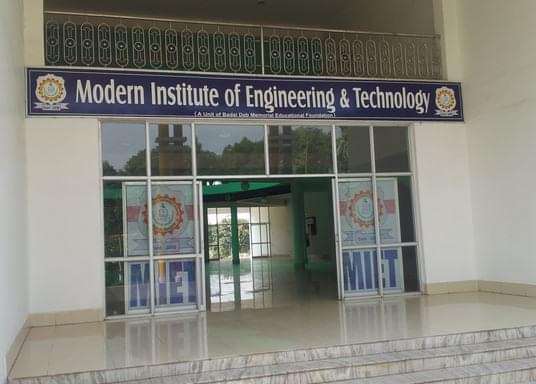
Modern Institute of Engineering & Technology, Hooghly
About
OfficialModern Institute of Engineering & Technology, Hooghly is a other institution in Hooghly, established in 2010. Modern Institute of Engineering & Technology (MIET), established in 2007, is a private engineering college located in Hooghly, West Bengal, approximately 55 km from Kolkata. Founded with the mission to provide quality engineering education at affordable costs, MIET has grown into one of the significant engineering institutions in eastern India, though it remains relatively less known compared to IITs and older NITs. The institute operates under the All India Council for Technical Education (AICTE) approval and is affiliated with Maulana Abul Kalam Azad University of Technology (MAKAUT), West Bengal. The campus is situated in a semi-rural setting with good road connectivity to Kolkata, making it accessible yet relatively peaceful for focused academic pursuits. Academic Structure: MIET offers undergraduate Bachelor of Technology (B.Tech) programs across seven engineering disciplines: Civil Engineering, Mechanical Engineering, Electrical Engineering, Electronics and Communication Engineering, Computer Science and Engineering, Information Technology, and Electronics and Instrumentation Engineering. The college maintains an intake capacity of approximately 420 students in the B.Tech program distributed across these branches. The engineering curriculum is designed with a balance between theoretical knowledge and practical application, with mandatory internships and industry-driven project work. The institute also offers a 2-year Master of Technology (M.Tech) program in select branches like Structural Engineering, Thermal Engineering, VLSI Design, and Power Systems, with an annual intake of around 60 students. Additionally, MIET provides diploma programs in collaboration with polytechnic institutes, serving students from vocational backgrounds. Engineering Strengths & Academic Excellence: The computer science and information technology branches are the strongest performers academically and in placements, attracting students with decent JEE-Main scores. The civil and mechanical engineering branches maintain respectable standards with practical focus on construction projects and manufacturing respectively. Faculty strength stands at 145 members, with approximately 35-40% holding doctoral degrees, though this percentage is below that of premier institutions. Research activities are limited compared to IITs/NITs, with focus areas including civil infrastructure, embedded systems, renewable energy, and IoT applications. The institute has established a few research labs and innovation centers but lacks the depth of sponsored research projects typical of tier-1 institutions. Industry partnerships exist with companies like TCS, Cognizant, and Infosys, primarily for recruitment rather than collaborative research. Placement & Career Outcomes: MIET's placement record shows approximately 75-80% placement rate across all branches, with significant variance based on branch and individual performance. The average salary package stands around 5-6.5 LPA, with median salary approximately 5.2 LPA (2023-24 data). Top performing students from CSE/IT branches secure packages ranging from 12-18 LPA with companies like TCS, Cognizant, Infosys, Wipro, and Amazon. Core engineering sectors (manufacturing, construction) see lower average packages (3.5-5 LPA) compared to IT services. A notable concern is the 20-25% of students who remain unplaced even by final year, often lacking competitive programming skills or practical experience. The placement cell has limited international placement connections, with most placements concentrated in India, primarily in software services and IT domains. Campus Infrastructure & Facilities: The 15.5-acre suburban campus features separate academic blocks for different engineering disciplines, a central library with approximately 25,000 volumes, computer labs with modern systems, physics/chemistry labs, and engineering workshops. The hostel infrastructure includes separate facilities for boys and girls with 3-4 students per room in older sections and 2-3 in recently built wings. Hostel amenities include 24-hour internet connectivity (variable speed), basic furniture, and a common mess serving vegetarian and non-vegetarian food. The quality of mess food receives mixed reviews from students, with complaints about monotony and occasional hygiene concerns. The campus has a sports complex with badminton courts, cricket ground, basketball court, and a gymnasium. A 24-bed health center provides basic medical facilities with a resident doctor available during working hours. Campus Life & Student Experience: Student life at MIET reflects a mix of academic rigor and moderate extracurricular engagement. The student body of 2,800 is primarily from West Bengal (70%) and northeastern states (20%), with limited pan-India diversity. Student clubs and societies exist across technical (coding clubs, robotics, electronics), cultural (drama, music, dance), and sports categories, though participation outside academics remains moderate. Annual fests include an engineering technical fest (usually in March-April) and a cultural fest, both drawing participation from neighboring colleges. Overall student satisfaction rating is approximately 6.8/10, with praise for affordable fees and dedicated faculty but criticism regarding infrastructure limitations and placement consistency. Ragging incidents have been rare in recent years with strict institutional policies, and the campus is considered reasonably safe for women students with dedicated women's support cell and campus security. Admissions & Eligibility: Admission to B.Tech programs is primarily through JEE-Main counseling under the West Bengal-DASA (Direct Admission to State Universities through All India Council for Technical Education Counseling System), with some seats available through private merit-based counseling. JEE-Main cutoff ranks typically range from 50,000-150,000 for various branches (General category), varying by demand and competition in specific years. Merit-based admissions for private seats consider board exam scores and JEE-Main percentile. The acceptance rate is relatively high (approximately 15-20% of applicants) due to higher cutoffs compared to NITs, making it accessible to students with decent JEE-Main scores but not qualifying for NIT counseling. Fees & Financial Accessibility: Annual tuition fees for B.Tech are approximately 185,000-195,000 INR, making MIET significantly more affordable than private engineering colleges in metros but costlier than government NITs. This cost accessibility is a major strength, attracting middle-class students unable to secure NIT seats. Hostel fees approximately 45,000-55,000 per year, with mess charges around 30,000-35,000 annually. Some merit scholarships (10-50% fee reduction) are available for top scorers in entrance exams, but the scholarship amount is limited. No substantial need-based financial aid program exists. Competitiveness & Placement Concerns: MIET remains competitive but occupies a distinct tier below NITs and above average private engineering colleges. Student feedback indicates good value-for-money positioning but realistic acknowledgment that placements may be more limited and salary packages lower compared to NIT/IIT graduates. The institute has successfully placed students across IT services, hardware companies, manufacturing sectors, and some core industries, but not at the premium tiers achieved by top-tier institutions. Recommended For: MIET is particularly suitable for students who (1) scored decently in JEE-Main (rank 50,000-150,000) but missed NIT cutoffs, (2) value affordable engineering education and suburban campus setting over metropolitan location, (3) seek placement in IT services and mid-tier companies, (4) are from West Bengal or northeastern states preferring closer location to home. The college is less ideal for students targeting top multinational companies, research-focused careers, or those prioritizing cosmopolitan campus culture and world-class infrastructure. The suburban location in Hooghly provides relative peace for studies but limits exposure to major metros' networking opportunities.