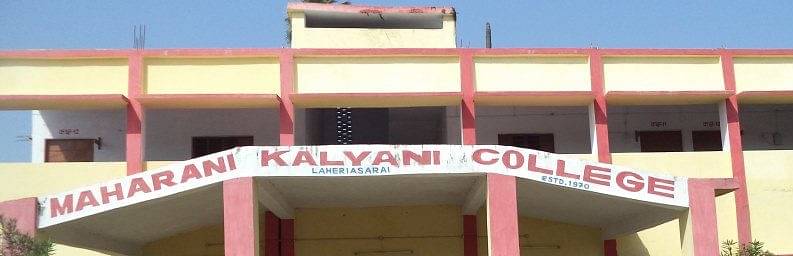
Maharani Kalyani College
About
OfficialMaharani Kalyani College is a other institution in Darbhanga, established in 1970. Maharani Kalyani College stands as one of Bihar's oldest and most respected women's institutions, established in 1906 with a mission to empower women through quality education. Located in Darbhanga, a city historically significant in Bihar's intellectual landscape, the college has evolved from a traditional women's college into a multidisciplinary institution offering undergraduate and postgraduate programs across sciences, humanities, and commerce. The college operates under affiliation with Kameshwar Singh Darbhanga Sanskrit University and maintains recognition from the University Grants Commission (UGC). With over a century of existence, Maharani Kalyani College has built a legacy of producing educated, socially conscious women who have contributed across academia, administration, social work, and entrepreneurship. The institution is particularly known for its strong emphasis on women's education in a historically patriarchal region, serving as a beacon for girls' education in North Bihar. The college caters to approximately 2,150 students across various undergraduate and postgraduate programs, supported by a faculty of 95 dedicated educators. The campus, spanning 8.5 acres, provides a relatively spacious environment for a women's college in Bihar, though infrastructure development remains an ongoing initiative. The college's undergraduate programs in sciences include Physics, Chemistry, Botany, and Zoology with 3-year duration, while commerce programs cover Accountancy, Economics, and Business Studies. Postgraduate offerings include MA programs in Hindi, English, History, and Political Science, as well as MSc in Chemistry and Botany. The institution has recognized the importance of modern skill development and has introduced vocational and skill-enhancement courses aligned with NEP 2020. Admissions are primarily merit-based, following state board examination scores for undergraduate programs and merit lists for postgraduate programs. The college maintains reasonable fee structures making higher education accessible to middle and lower-middle-class families across Bihar. A significant strength is the college's understanding of regional student demographics, with the majority of students coming from surrounding districts in North Bihar, ensuring a culturally cohesive student body. The placement record, while not matching premier institutions, shows steady improvement with placement percentages around 35-40% in recent years, primarily in education, banking, civil services coaching, and administrative positions. Many students pursue civil service examinations, with several successful UPSC and BPSC aspirants graduating from the institution. The college actively encourages research and has established tie-ups with various government and private organizations for internship and research opportunities. The library is reasonably well-stocked with approximately 45,000 books covering all disciplines, and digital access to several journals has been implemented recently. The college operates a computer laboratory with internet connectivity, supporting students in digital literacy and technical skill development. Cultural activities form an integral part of campus life, with annual festivals, debates, sports days, and various student societies encouraging holistic development. The sports complex includes facilities for badminton, volleyball, and athletics. However, students should be aware that as a government-affiliated college in Bihar, infrastructure improvements are often slow due to bureaucratic procedures and funding constraints. The hostel facilities, while adequate, operate on limited budgets and may not match the amenities of private institutions. The college's location in Darbhanga is both an advantage and limitation—while it reduces cost of living, the city lacks the cosmopolitan environment and career exposure of metros or major tier-2 cities. The academic environment is rigorous for serious students pursuing civil services, academia, or research, but professional placement opportunities in technology and corporate sectors are limited compared to colleges in metropolitan areas. Maharani Kalyani College is ideal for women who prioritize affordable, quality education in a culturally comfortable environment, are academically motivated, and are interested in pursuing teaching, civil services, research, or public administration. The institution particularly serves students from Hindi-medium backgrounds transitioning to English-medium education, with supportive systems in place for such transitions. Students considering this college should have realistic expectations about placement in corporate sectors but should recognize the strong academic foundation and social responsibility values the institution inculcates.