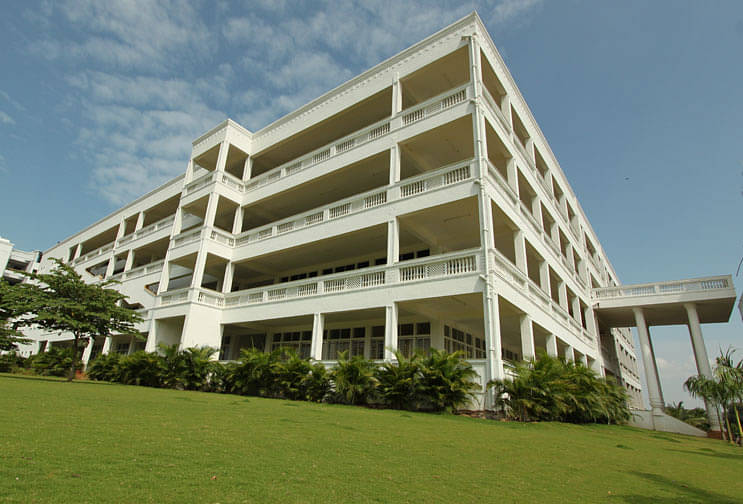
Maeer's MIT Institute of Design
About
OfficialMaeer's MIT Institute of Design is a other institution in Pune, established in 2006. Maeer's MIT Institute of Design (MIIT) was established in 2014 as a specialized design and engineering institution under the Maeer's Trust, a non-profit organization founded in 1988 with a mission to advance technical education and skill development in rural Maharashtra. Located in Khed, on the Lonavala Road approximately 50 km from Pune city center, the institute represents a unique attempt to establish a design-focused engineering college in a semi-rural setting. The campus sits at an elevation of around 600 meters above sea level, offering a serene environment conducive to academic pursuits while maintaining connectivity to Pune's job market. The institution focuses primarily on design and engineering disciplines with a strong emphasis on user-centered design thinking, innovation, and practical application. Unlike conventional engineering colleges that prioritize theoretical knowledge and conventional branches (CSE, Mechanical, etc.), MIIT has carved a niche by offering specialized B.Tech programs in design engineering, product design, and innovation alongside traditional engineering streams. The college is among the first in India to offer undergraduate programs explicitly branded as 'Design' engineering, recognizing the growing global demand for design professionals. Academic programs include B.Tech in Design Engineering (4 years), B.Tech in Product and Innovation Engineering (4 years), B.Tech in Mechanical Engineering (4 years), B.Tech in Electrical Engineering (4 years), and B.Tech in Civil Engineering (4 years). The college also offers M.Tech programs in Design Engineering and Advanced Manufacturing Systems, as well as diploma programs in mechanical and electrical trades. Total annual intake across all undergraduate programs is approximately 480 students, with the institute maintaining relatively small class sizes (30-50 students per batch depending on the program). This contrasts sharply with NIT and IIT standards, where engineering colleges typically maintain 60-100 student batches. The institute holds NAAC accreditation (B+ grade, valid until 2025) and several programs have been accredited under the National Board of Accreditation (NBA). The B.Tech programs in Design Engineering and Mechanical Engineering carry NBA accreditation, lending credibility to the curriculum and making degrees recognized for higher studies and international opportunities. However, compared to tier-1 institutions, the college's accreditation grades are moderate. Placement outcomes for MIIT remain a mixed narrative. The 2023-24 batch achieved approximately 82% placement, with median package around ₹7.5 lakhs and highest package reaching ₹16.2 lakhs. This is respectable but trails behind comparable private engineering colleges in Pune like Pune Institute of Computer Technology (PICT) or MIT-WPU. The placement disparity is notable across branches: design and product engineering graduates secure significantly better packages (median ₹9-10 lakhs) compared to civil engineering (median ₹5.5-6 lakhs). Top recruiters include companies like TCS, Infosys, Wipro, Cognizant, Amazon, Flipkart, Bajaj Auto, Siemens, L&T, and various product design startups. However, placements in core design and manufacturing roles remain limited; most students transition into IT services, which somewhat contradicts the institute's design-centric positioning. Campus infrastructure is modern and thoughtfully designed. The 35-acre campus features dedicated design studios, rapid prototyping labs, robotics laboratories, 3D printing facilities, computer labs with industry-standard software (CATIA, AutoCAD, Adobe Creative Suite), a well-stocked central library with 45,000+ volumes, Wi-Fi enabled classrooms, and maker spaces. The library subscribes to premium databases like IEEE Xplore and ProQuest, though e-journal access is more limited compared to NIT or IIT libraries. The campus is equipped with a health center staffed by a full-time doctor and paramedic, sports complex with basketball, badminton, and volleyball courts, and a swimming pool—a rarity among engineering colleges in India. The mess facilities serve quality food with both vegetarian and non-vegetarian options, though some students report repetitive menus. Research and innovation are positioned as key pillars, with faculty encouraged to pursue external grants and industry collaborations. The college has established industry partnerships with companies like Bajaj Auto, Siemens, and several design studios, enabling final-year projects and internship placements. However, research output in terms of publications, patents, and funded research remains modest compared to central universities. PhD percentage among faculty is approximately 52%, lower than ideal for engineering colleges aiming for research excellence. Student life at MIIT is characterized by a tight-knit community due to smaller cohort sizes. The hostel accommodates approximately 60% of students, with separate facilities for male and female students. Hostels feature single and double-occupancy rooms, Wi-Fi connectivity, and common recreation areas. Hostel life is generally described as good, with regular cultural and sports events creating community bonding. Annual festivals include Impulse (technical fest held in October), Spectrum (cultural fest in February), and Euphoria (sports festival). The institute has active student clubs covering robotics, coding, web design, debate, drama, and sports. One notable strength is the institute's focus on design thinking and entrepreneurship. Several student groups have participated in national and international design competitions, and there is an incubation cell supporting student startups. This differentiates MIIT from purely conventional engineering colleges. However, the lack of proximity to Pune's startup ecosystem (being 50 km away) somewhat limits spontaneous networking opportunities compared to colleges within the city. Challenges and criticisms: Location in semi-rural Khed, while offering tranquility, limits student access to Pune's wider networking, entertainment, and coaching resources. The commute from Pune city is 1.5-2 hours by road, making daily travel impractical. Though a shuttle service operates to Pune city, it is infrequent. Second, while design is the unique proposition, industry adoption of pure design engineering graduates remains limited in India compared to traditional IT or mechanical engineers. Third, placements, though respectable, are not exceptional compared to tier-2 private colleges; most design graduates end up in IT services rather than design roles, suggesting a skills-industry mismatch. Fourth, the college's reputation, while growing, is still not widely recognized nationally, which can impact doctoral admissions, research collaborations, and career advancement. Who should apply: Students with a genuine passion for design, innovation, and user-centered problem-solving will find a nurturing environment. If you score above 85% in 12th and are interested in design engineering or product innovation rather than conventional IT or hardcore mechanical roles, MIIT offers a differentiated path. The smaller class sizes and hands-on approach suit independent, creative thinkers. However, if your sole goal is maximum salary, placement in top IT companies, or a college brand recognized globally, you might find larger tier-1 institutions or established Pune colleges more suited. The college is ideal for students seeking balance between academics, campus life, and personal growth in a less chaotic environment, though with the trade-off of limited city exposure and networking. The institution represents a conscious experiment in India's engineering education landscape—moving beyond rote learning toward design thinking and innovation. For the right student, it offers an enriching experience; for others purely chasing statistics, it may feel like a compromise.