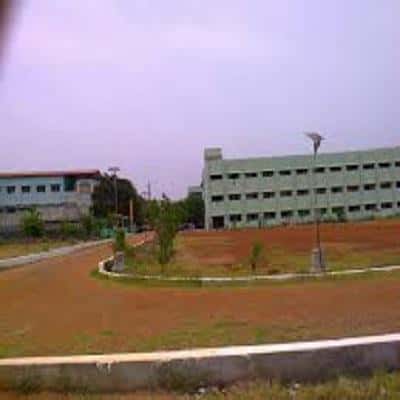
Misrimal Navajee Munoth Jain School of Architecture
About
OfficialMisrimal Navajee Munoth Jain School of Architecture is a other institution in Chennai, established in 2012. Misrimal Navajee Munoth Jain School of Architecture (MNJMJSA) is one of India's longest-established and most respected private architecture schools, founded in 1981 by the Jain community to promote excellence in architectural education and practice. Located in the heart of Chennai's Alwarpet neighbourhood, it stands as a heritage institution with deep roots in the city's architectural community. Over four decades, MNJMJSA has evolved from a niche architectural academy into a comprehensive design institution offering programs across architecture, interior design, and urban planning. The institution is housed in a restored heritage building that reflects early 20th-century Madras architectural sensibilities, creating an immersive learning environment where students study architecture within an actual architectural heritage site. This conscious pedagogical choice influences the curriculum and student mindset significantly. The school admits approximately 180-200 undergraduate architecture students annually across its B.Arch programme, maintaining deliberately small class sizes (typically 30-40 students per batch) to enable intensive studio-based learning. This is a significant differentiator from larger architecture schools where first-year batches often exceed 150 students. MNJMJSA's five-year B.Arch programme follows the Council of Architecture (CoA) curriculum with substantial institutional autonomy in elective design studios. The curriculum emphasizes design thinking, heritage conservation, sustainable design, and contextual architecture specific to Tamil Nadu's built environment. Students engage extensively with Dravidian architectural principles, temple architecture, vernacular design, and colonial-era building typologies through both theoretical courses and field-based projects. The school maintains active design studios in partnership with architectural practices, NGOs working on affordable housing, and heritage conservation organizations in Chennai and across Tamil Nadu. Internship opportunities are embedded into the curriculum from Year 2 onwards, with students typically spending 4-6 months in professional offices before their final year. Faculty comprises practicing architects, architectural historians, and design educators, roughly 50% of whom maintain active architectural practices alongside teaching. This creates direct industry-academia linkage but also means some faculty availability can be inconsistent during peak project seasons. The school is recognized by the Council of Architecture (CoA), accredited by NAAC with a B+ grade (last assessment 2019), and maintains affiliation with Anna University for degree conferment. Research strengths center on vernacular architecture documentation, sustainable design in tropical climates, heritage conservation methodologies, and affordable housing design. The school has published over 40 architectural research papers in the last five years and maintains collaborative research partnerships with Srishti School of Art, Design and Technology (Bangalore), Manipal School of Architecture, and international institutions like Bartlett School of Architecture (UCL) and Universität Stuttgart. Notable research projects include a 3-year study on Chettinad Palace architecture documentation (completed 2021), an ongoing project on water-resilient design for Chennai's coastal neighborhoods, and a heritage building adaptive reuse initiative focusing on converting disused textile mills into cultural spaces. Campus life at MNJMJSA reflects its design school ethos—the institution is known for its vibrant design festivals, critique culture, and strong student project exhibitions. The annual 'Architekt' festival (held in November) draws architecture students and professionals from across India and showcases student work alongside lectures by renowned architects. The campus hosts monthly 'design dialogues' where external practitioners conduct workshops and critiques. Student clubs include the Architecture Student Association (coordinates academic activities and competitions), Heritage Documentation Society (focuses on heritage survey projects), Sustainable Design Lab (explores eco-conscious architectural solutions), and the Chennai Architecture Forum (engages with the broader professional community). The campus lacks on-campus hostel facilities—a significant limitation for students from outside Tamil Nadu. Approximately 65-70% of the student body requires off-campus accommodation, and the institution provides limited support in identifying PG accommodations. This creates a genuine hardship for first-generation architecture students from smaller towns who face high out-of-pocket costs for hostel/PG arrangements in central Chennai. Students typically arrange shared flats in nearby localities like T. Nagar, Mylapore, and Teynampet, with monthly rent ranging from 8,000-18,000 INR depending on sharing arrangement and amenities. The absence of institutional hostel also means limited informal peer learning outside classroom hours compared to residential architecture schools. Placement outcomes are strong but merit contextual understanding. MNJMJSA students are recruited heavily by established architectural practices across India, with 87% placement rate for 2023-24 batch. However, unlike engineering/management schools, 'placement' for architects means primarily architecture firms rather than technology companies. Top recruiters include Hafeez Contractor Architects, Ar. Bimal Patel's architecture practice, Sthapati Designers, Ar. Anupama Aniruddhan's office, and national firms like SPA Design, Morphogenesis, and HCP Design. Median starting salary for fresh B.Arch graduates is approximately 3.5-4.5 lakhs annually, which is lower than engineering graduates but competitive within architecture education. Many graduates pursue further specialization through M.Arch programs at premier institutions (IIT Bombay, NID Bangalore, CEPT Ahmedabad) or establish independent practices within 3-5 years. The school has produced several nationally recognized architects who lead design practices, though it is not as widely known outside India as schools like CEPT or SPA. Notable alumni include Ar. Pon Ramaswamy (founding director of Sthapati Designers, known for heritage conservation projects), Ar. Girish Doshi (partner at Mumbai-based design collective), and Ar. Shreya Mitra (lead designer at Hafeez Contractor Architects). The institution uniquely serves students seeking architecture education deeply connected to South Indian context, heritage, and sustainable practice rather than aspirants seeking quick upward mobility into corporate roles. It attracts sincere design-thinking individuals, heritage enthusiasts, and socially-conscious students rather than those pursuing architecture as a fallback from engineering. The competitive entrance examination is the NATA (National Aptitude Test in Architecture), with MNJMJSA typically shortlisting candidates scoring above 80 percentile. Admission process involves portfolio submission, design aptitude test, and interview assessing design sensibility and motivation. The school deliberately maintains modest intake to preserve educational quality—this sometimes frustrates high-NATA-score applicants who feel the school is 'less selective' than IIT-JEE dependent institutions, but this reflects fundamentally different admission philosophies between architecture and engineering education. What makes MNJMJSA distinctive is its deep institutional commitment to contextual, heritage-conscious, and sustainable architecture within Tamil Nadu's specific geographic and cultural context. Students develop profound understanding of Dravidian temple architecture, colonial urbanism, temple tank networks, vernacular cooling strategies, and heritage conservation—knowledge assets less emphasized in generic architecture schools. The school's location in a heritage building and proximity to numerous heritage sites (Fort St. George, St. Mary's Church, Kapaleeshwarar Temple) facilitates hands-on learning unavailable in suburban campuses. However, prospective students must acknowledge genuine limitations: absence of hostel facility creates financial and social hardship, placement salaries are modest compared to engineering, geographic concentration on South Indian context may limit exposure to contemporary global architecture, and faculty inconsistency during busy professional seasons. The school is ideally suited for students passionate about architecture as a design-thinking discipline, interested in heritage and sustainability, capable of self-directed learning in intensive studio environments, and willing to invest additional effort in off-campus accommodation arrangements. It is NOT recommended for students seeking hostel comfort, expecting high starting salaries, or viewing architecture primarily as a lucrative career path. It represents a genuine, institution with real strengths and real limitations—suited to the right students but mismatched for others.