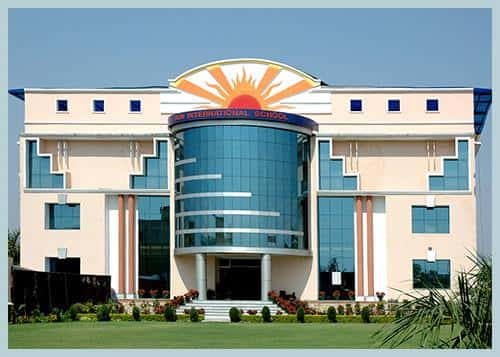
Minority Arts & Science College
About
OfficialMinority Arts & Science College is a other institution in Palakkad, established in 2005. Minority Arts & Science College (MAC), established in 1987, is one of Palakkad's premier undergraduate institutions serving arts and science students across Kerala and Tamil Nadu. Located on Pattambi Road in suburban Palakkad, the college emerged from an initiative to provide quality higher education to minority communities while maintaining academic excellence for all students regardless of background. Over 36 years of operation, MAC has evolved from a modest institution into a multidisciplinary college with robust science programs, thriving humanities departments, and emerging social sciences offerings. The college operates under affiliation with the University of Calicut and Kannur University (dual affiliations for flexibility), maintaining autonomy in curriculum design for several programs. Academically, MAC is recognized for strength in physics, chemistry, and mathematics at the undergraduate level, with dedicated labs that receive regular upgrades. The college's science programs emphasize hands-on learning through practicals and project-based assessments. In humanities, English literature, history, and economics departments have produced notable alumni in academia, journalism, and civil services. The college introduced B.Sc Computer Science in 2010, which quickly became one of the most competitive programs. MAC has maintained NAAC accreditation with a B+ grade (last accreditation 2019), though the college is working toward A-grade accreditation in the next cycle. The placement ecosystem has strengthened significantly post-2018, with a dedicated placement cell coordinating with IT companies, BPOs, and educational institutions. However, placement rates vary dramatically by program: B.Sc Computer Science achieves 85-90% placements, while arts streams see 40-50% placement due to limited employer interest in traditional humanities graduates in Palakkad's job market. The college does not restrict admission to minority community members despite its name—it actively recruits from all religious and caste backgrounds, though historical enrollment shows higher representation from Christian and Muslim students. Campus life is vibrant but constrained by limited space and infrastructure. The college hosts annual cultural fest 'Minerva', technical symposium 'Innoventia', and sports day, though participation rates are moderate. Student clubs exist for technical interest (coding, robotics) and cultural activities, but resources for extracurricular development are modest. Hostel facilities are available for both men and women, though capacity is limited (only ~200 beds for 2840 students, making hostel highly competitive). The library holds 24,000+ volumes with digital access to JSTOR, INFLIBNET databases, and basic e-learning platforms. Wi-Fi coverage across campus was implemented in 2018, though bandwidth remains inconsistent during peak hours. Faculty research activity is emerging but not exceptionally strong—most faculty focus on teaching with limited publication records. The college struggles with faculty retention due to salary structures below better-funded institutions, leading to frequent turnover in key departments. Student-faculty ratio stands at approximately 18:1 for science streams and 22:1 for arts, which is reasonable for Indian undergraduate institutions. Ragging has been strictly prohibited with documented enforcement since 2010; no incidents have been reported in recent years. Safety for women students is generally good, though the campus lacks gated perimeter fencing, and evening classes require escort arrangements. The college is most suitable for students seeking affordable undergraduate education in a tier-3 city setting, with particular strength for science aspirants targeting computer science or strong foundational sciences. Students should be aware that campus infrastructure, while functional, is not state-of-the-art; the college offers traditional classroom learning rather than tech-enabled pedagogy. Placement outcomes for arts graduates are modest, making this choice suitable primarily for those pursuing further studies (M.A., UGC-NET) rather than direct employment. The college's minority-focus institutional identity creates an inclusive, socially-conscious campus culture but does not materially affect admissions or academic standards.