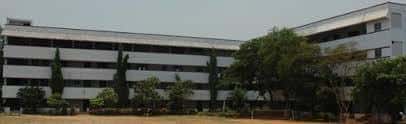
Mar Gregorios Arts & Science College
About
OfficialMar Gregorios Arts & Science College is a private institution in Chennai, established in 2014. Mar Gregorios Arts & Science College, established in 1958, is one of Chennai's prominent private arts and science institutions. Located on the prestigious East Coast Road in the affluent Nungambakkam area, the college has built a reputation for balanced academic rigor with inclusive educational philosophy. The institution emerged from the Syrian Christian tradition and maintains strong values of ethical education alongside intellectual development. The college offers undergraduate and postgraduate programs across humanities, social sciences, sciences, and professional studies. Its strength lies in traditional disciplines like English, Tamil, History, Political Science, Mathematics, Physics, Chemistry, and Biology, complemented by contemporary programs in Media Studies, Psychology, Commerce, and Computer Science. The institution has progressively modernized its curriculum to include skill-based courses and interdisciplinary offerings while maintaining academic depth. Research at Mar Gregorios is primarily faculty-driven with focus on humanities and social sciences scholarship. The college has established several research centers and encourages faculty publications, though research output is modest compared to specialized research institutions. The college has collaborations with universities abroad for faculty exchange and student exposure. The 15-acre campus features heritage buildings alongside modern facilities. The main library holds approximately 85,000 volumes with expanding digital resources. Science laboratories have been upgraded with contemporary equipment. The campus is well-connected via public transport despite its premium location, with direct access to ECR bus routes and proximity to metro connectivity. Placement performance has shown consistent improvement, with 65-70% of graduating students securing employment within 3-4 months. Media, education, corporate training, NGOs, and IT services are primary employment sectors. The college maintains a robust alumni network spanning multiple decades with presence in academia, journalism, civil services, and corporate sectors. Notable alumni include journalists, IAS/IFS officers, university academics, and media entrepreneurs. Campus life reflects Chennai's cosmopolitan character with diverse student body (local, regional, and national). The college organizes cultural festivals, academic seminars, and sports events though student engagement varies. Ragging has been strictly monitored with zero-tolerance policies. Safety on campus and in the neighborhood is generally good, particularly for women students, though late-night campus access is restricted. A critical reality: admission is primarily merit-based through 12th standard marks with no entrance examination. This creates heterogeneity in student academic preparation. While the college supports weaker students through remedial classes, academic expectations remain consistent. Students transitioning from vernacular backgrounds may face initial challenges with English-medium instruction despite institutional support. Hostel facilities exist but are limited—only 200-250 beds for 2,800 students. Most students commute or rent private accommodation in surrounding areas. This shapes campus culture significantly, creating more day-scholar oriented community than residential campus feel. Meal facilities and food quality are adequate but unremarkable. The institution appeals to: (1) Chennai-based families seeking quality local education without relocation; (2) students interested in humanities and social sciences with strong academic foundation; (3) those valuing traditional institutional values and safe urban campus environment; (4) aspirants for government sector careers (competitive examinations for UPSC, TNPSC). It is less suitable for: (1) students requiring extensive research or cutting-edge laboratory facilities; (2) those seeking 24x7 residential campus experience; (3) engineering/specialized science aspirants (though basic science programs exist); (4) students from extremely privileged backgrounds expecting elite internationalized curriculum. The college represents solid middle-ground: quality academics without excessive commercialization, traditional values without stagnation, affordable private education without compromise on infrastructure, urban convenience without metropolitan excess.