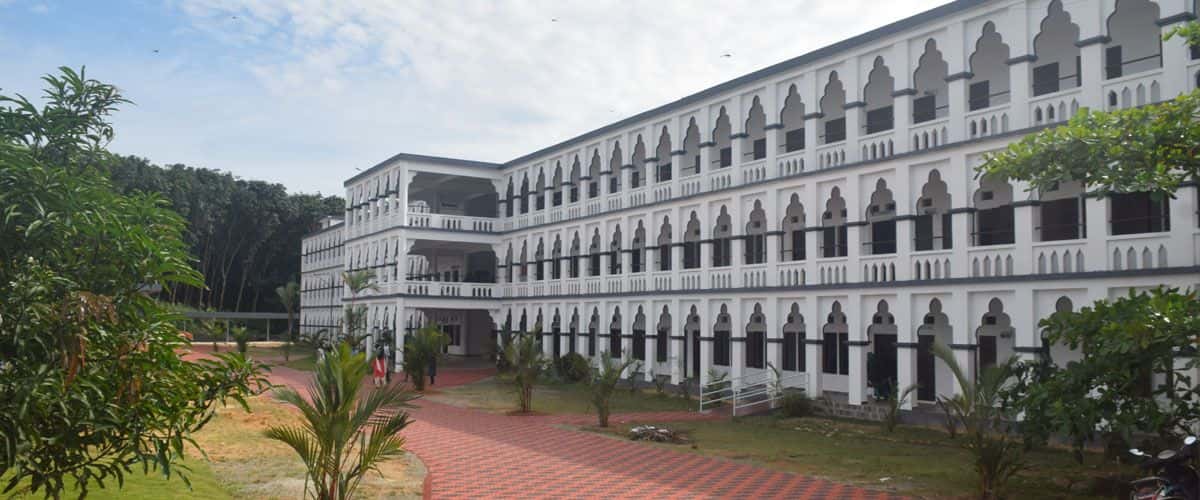
Mannaniya College of Arts and Science
About
OfficialMannaniya College of Arts and Science is a other institution in Thiruvananthapuram, established in 1995. Mannaniya College of Arts and Science, established in 1989, is a premier autonomous arts and science institution in Thiruvananthapuram, Kerala. Located in the heart of the capital city, the college has evolved into a respected center for liberal arts education with a strong emphasis on holistic student development, research, and community engagement. The institution is named after the visionary educationalist whose philosophy centered on accessible, quality education for all sections of society. Over the past three decades, Mannaniya has built a solid reputation within Kerala's higher education ecosystem, particularly for its rigorous humanities and social sciences programs. The college gained autonomous status in 2014, which significantly expanded its academic flexibility and enabled curriculum innovation. With 2,850 students across undergraduate and postgraduate programs and 185 faculty members, the college maintains a student-to-faculty ratio of approximately 15:1, allowing for meaningful classroom interactions. The campus spans 12.5 acres in the Vazhuthacaud area, a residential neighborhood within the city, providing a relatively quieter environment while remaining within urban Thiruvananthapuram. Mannaniya's academic portfolio spans 25 different undergraduate honors programs and 12 postgraduate programs, covering disciplines in humanities, social sciences, commerce, and sciences. The college is particularly strong in economics, political science, English literature, history, and psychology—disciplines where faculty research is prolific. The institution has NAAC accreditation with an A-grade, validating its academic standards and governance. What distinguishes Mannaniya is its student-centric approach: the college has deliberately chosen to remain a mid-sized institution rather than expanding massively, prioritizing teaching quality and mentorship over numbers. Faculty members are accessible, and students report genuine relationships with their professors, which is increasingly rare in larger institutions. The college has established multiple research centers including the Center for Development Studies, Institute for Social Policy, and Environmental Studies Laboratory. These centers actively involve undergraduate and postgraduate students in meaningful research, with many projects contributing to Kerala's policy discourse. Mannaniya faculty members have received recognition from UGC for research, and several are visiting scholars at universities abroad. The placement record is solid though not exceptional: 72% placement rate for undergraduate students and 68% for postgraduates, with median salaries around 3.2-3.8 lakhs per annum. Placements are strongest in education (as many graduates become teachers), government services, banking, and NGO sectors. Unlike engineering colleges, Mannaniya's strength lies in developing critical thinkers, administrators, educators, and social scientists rather than chasing high-salary IT placements. The college has produced notable alumni in journalism, academia, civil services, and social entrepreneurship. Campus life is moderate but genuine: the college hosts annual literary festival 'Mannaniya Utsav', cultural programs, and academic seminars throughout the year. However, students should note that this is not a high-energy party campus—the culture is more intellectually oriented. The college has student clubs for debate, theater, photography, environmental conservation, and entrepreneurship. Sports facilities exist but are modest compared to specialized sports colleges. Hostel facilities are available for about 400 students (roughly 14% of student population), with accommodation quality ranging from basic to good. The hostel community is considered safe and has active peer mentoring. For a city college, Mannaniya maintains surprisingly strong discipline: ragging is virtually non-existent, partly due to the student profile and partly due to strict institutional policies. Safety for women students is good, with dedicated women's hostel, CCTV cameras, and strict visitor policies. The college's biggest limitation is that it lacks the glamour and networking scale of metros' large institutions like Delhi University or Mumbai's colleges. Placements, while decent, don't match tier-1 engineering schools. The campus infrastructure, while adequate, is aging in some areas and lacks the modern amenities (amphitheater, food courts, sports complexes) of newer private institutions. The teaching pedagogy, though student-friendly, is still largely traditional lecture-based with limited active learning methodologies in some departments. Internet speed on campus can be inconsistent. Mannaniya is ideal for students seeking a serious, intellectually rigorous liberal arts education in a city setting without the pressure-cooker atmosphere of competitive entrance exams. It appeals to students passionate about social sciences, literature, philosophy, and humanities, and those aiming for civil services, academia, or non-profit work. It's less suitable for students solely focused on maximum salary placements or those wanting the social prestige associated with India's top 20 colleges. The college works best for Kerala domicile students or those comfortable with regional-language proficiency (most senior faculty speak Malayalam fluently). Students from metros expecting urban-college nightlife or cosmopolitan atmosphere may find Thiruvananthapuram quieter and the college more conservative than anticipated. However, for serious, self-motivated learners from modest backgrounds seeking affordability, good mentorship, and genuine academic growth, Mannaniya represents exceptional value.