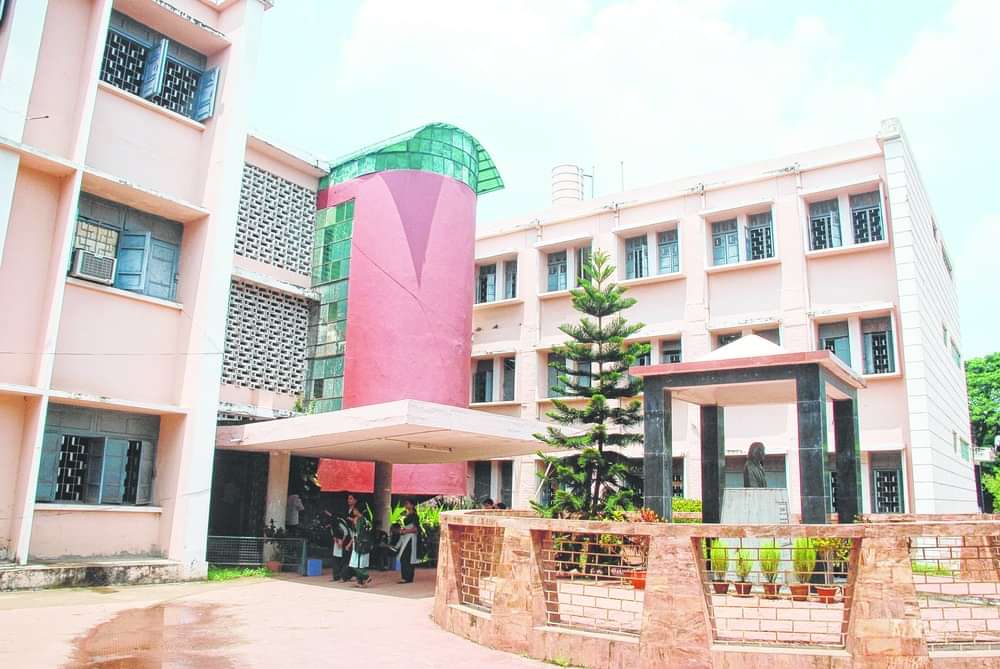
Malda Womens College
About
OfficialMalda Womens College is a other institution in Malda, established in 1970. Malda Women's College, established in 1987, is one of West Bengal's pioneering women-only higher education institutions located in Malda district. The college was founded with the vision of providing quality education to women from economically diverse backgrounds, particularly from Eastern India's underserved regions. Over 35+ years, it has evolved into a respected women's institution known for its commitment to academic excellence, social awareness, and gender-inclusive leadership development. The college is affiliated with University of Gour Banga and offers undergraduate and postgraduate programs across Sciences, Arts, and Commerce disciplines. Its mission centers on empowering women through education while maintaining strong ties to regional development and social responsibility. Academically, Malda Women's College offers 12 undergraduate honors programs and 6 postgraduate programs. The Sciences faculty is particularly noted for strength in Botany, Zoology, and Chemistry, with several faculty members actively involved in research on plant genetics and agricultural microbiology relevant to East India's farming communities. The Arts and Humanities division includes English, History, Political Science, and Philosophy, with emphasis on critical thinking and social analysis. Commerce programs attract students interested in business and finance careers. Research output has been modest but growing, with approximately 15-20 publications per year in regional and national journals, primarily in life sciences and social sciences. The college has established collaborative research initiatives with agricultural extension centers in North Bengal, reflecting its commitment to regional relevance. Campus infrastructure has improved significantly in the past 5 years with new science laboratories, a digital library, and improved hostel facilities. However, the college faces the typical constraints of tier-3 educational towns: limited access to specialized research facilities, smaller alumni network compared to metropolitan institutions, and fewer direct corporate recruitment linkages. Placements remain a critical weakness, with approximately 35-40% of graduates securing formal employment within 6 months of graduation, concentrated primarily in teaching, civil service preparation, and small-scale business ventures. Many graduates pursue further education (MA, MSc) or competitive exams (UPSC, WBPSC) rather than immediate employment. The institution has produced several accomplished women who work in education, public administration, and social work, though it lacks marquee alumni in corporate or research sectors. Student life emphasizes community engagement with active NSS units participating in rural development projects. The college maintains strict academic discipline with a focus on regular classes and practical learning. Campus safety is strong with round-the-clock security and proactive anti-ragging measures. The hostel system is well-established, accommodating 60% of students, many traveling from remote North Bengal districts. The college attracts students primarily from Malda, Murshidabad, Dinajpur, Jalpaiguri, and nearby districts seeking quality women's education at affordable fees. It is ideally suited for: (1) young women from middle and lower-middle-class backgrounds seeking quality education without major financial burden, (2) those committed to social service or teaching careers, (3) students preparing for competitive civil service examinations, (4) women from conservative family backgrounds who prefer women-only educational environment, and (5) those interested in regional agricultural and social sciences research. The college would NOT be ideal for students seeking: (1) cutting-edge research environments, (2) high-volume corporate placement support, (3) cosmopolitan campus culture with mixed-gender interaction, or (4) specialized engineering or professional programs. Malda Women's College represents a meaningful option for committed students prioritizing education quality, affordability, and social purpose over metropolitan prestige.